UDC’s College of Agriculture, Urban Sustainability, and Environmental Sciences (CAUSES) will be holding a Shared Commercial Kitchen Open House at UDC’s Lamond-Riggs campus on January 24, 2025, 4pm-6pm.
ATTENTION: UDC-CAUSES is looking for caterers, pop-up restaurant owners, food truck operators, bakers, and food entrepreneurs!
Join us for our Shared Commercial Kitchen Open House at UDC’s Lamond Riggs campus, and network with industry professionals from D.C.’s vibrant culinary community.
Explore our state-of-the-art shared kitchen, connect with fellow entrepreneurs, and learn about our small business incubation program to support your goals. The college supports small business owners and inspires culinary arts professionals to expand their impact and vision.
The informative guided tour will help you gain insights into the application process and access valuable resources to support your culinary journey.
Light refreshments will be served.
For more details, reach out to Dr. Carlton Crockett at carlton.crockett@udc.edu.
Proposed placemaking exterior concept for Bertie Backus Building at UDC Lamond-Riggs Campus
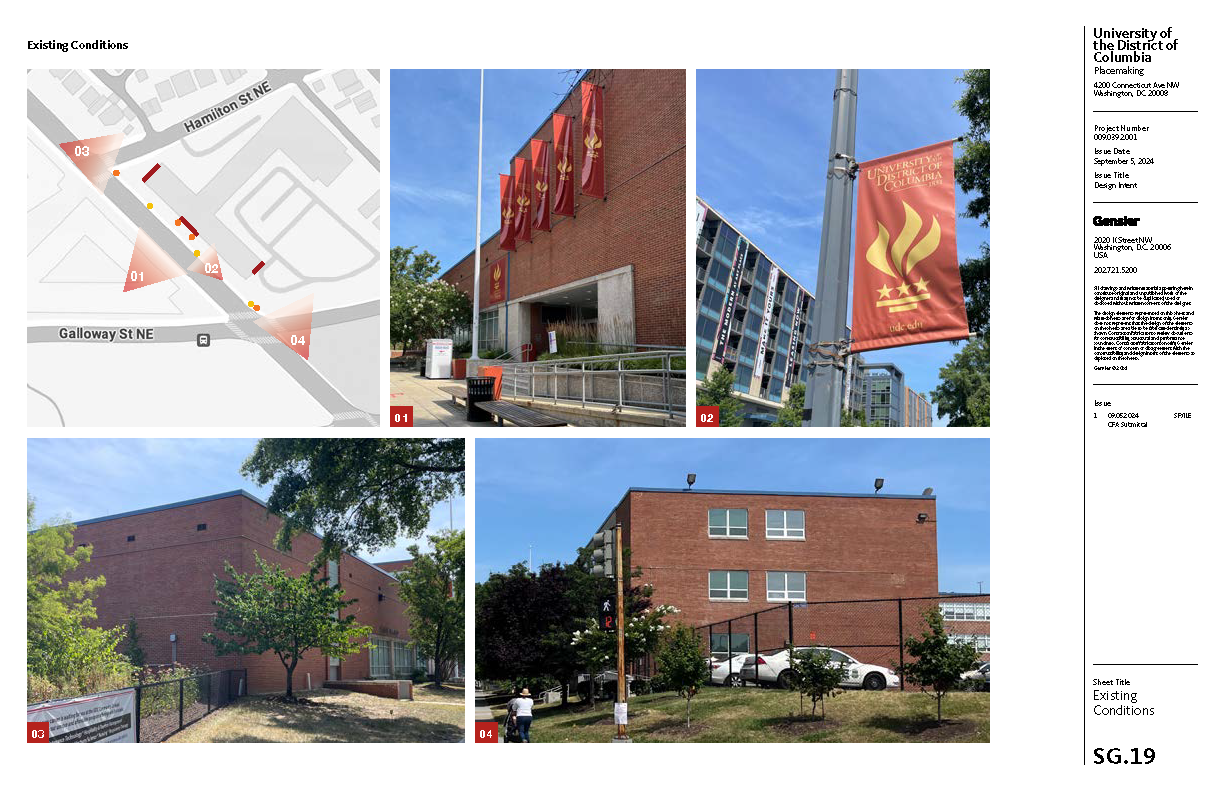
If you see large orange red banners and signage pop up on the Bertie Backus building at UDC’s Lamond-Riggs campus, do not be surprised. UDC is carrying out a placemaking initiative across all three of its campuses. By this November, UDC wants to install large-scale exterior graphic applications on buildings across its campuses in order to create a stronger identifier for UDC’s campus spaces. This is completely separate from the renovations that the university will be making to the Lamond-Riggs campus that were approved as part of the Lamond-Riggs campus plan that went into effect earlier this year.
I just happened to find this out when I was poking around the Commission of Fine Arts (CFA) website looking for something else and noticed that UDC was on the CFA’s September meeting agenda. I listened to the meeting on September 19, 2024.
CFA members asked UDC for more images depicting how the applications would look in surrounding neighborhood context for all three campuses. Members asked about the rationale for the style, height, and other aspects of the applications. They mentioned that there was the potential for “visual clutter.” They asked how the applications would hold up in extreme weather and sunlight and what the placemaking plan would entail after the applications reached the end of their shelf life. One member asked specifically about the Lamond-Riggs campus and how the graphics would play against the large-scale development taking place across the street on South Dakota Avenue. The CFA asked UDC to continue working with CFA staff to refine the concepts.
UDC’s representatives explained that the buildings at the Van Ness campus are different sizes and so they wanted to create exterior graphics that would provide the “best impact” for viewers. They said the material would be a sort of mesh material that could be applied to the buildings in such a way that they could be removed without damaging the exterior of the buildings. They said that the material has a shelf life of five to six years, but the goal would be to evaluate their impact after about three years and decide what to do from there, maybe have rotating images to keep things fresh, I guess.
Lamond-Riggs campus
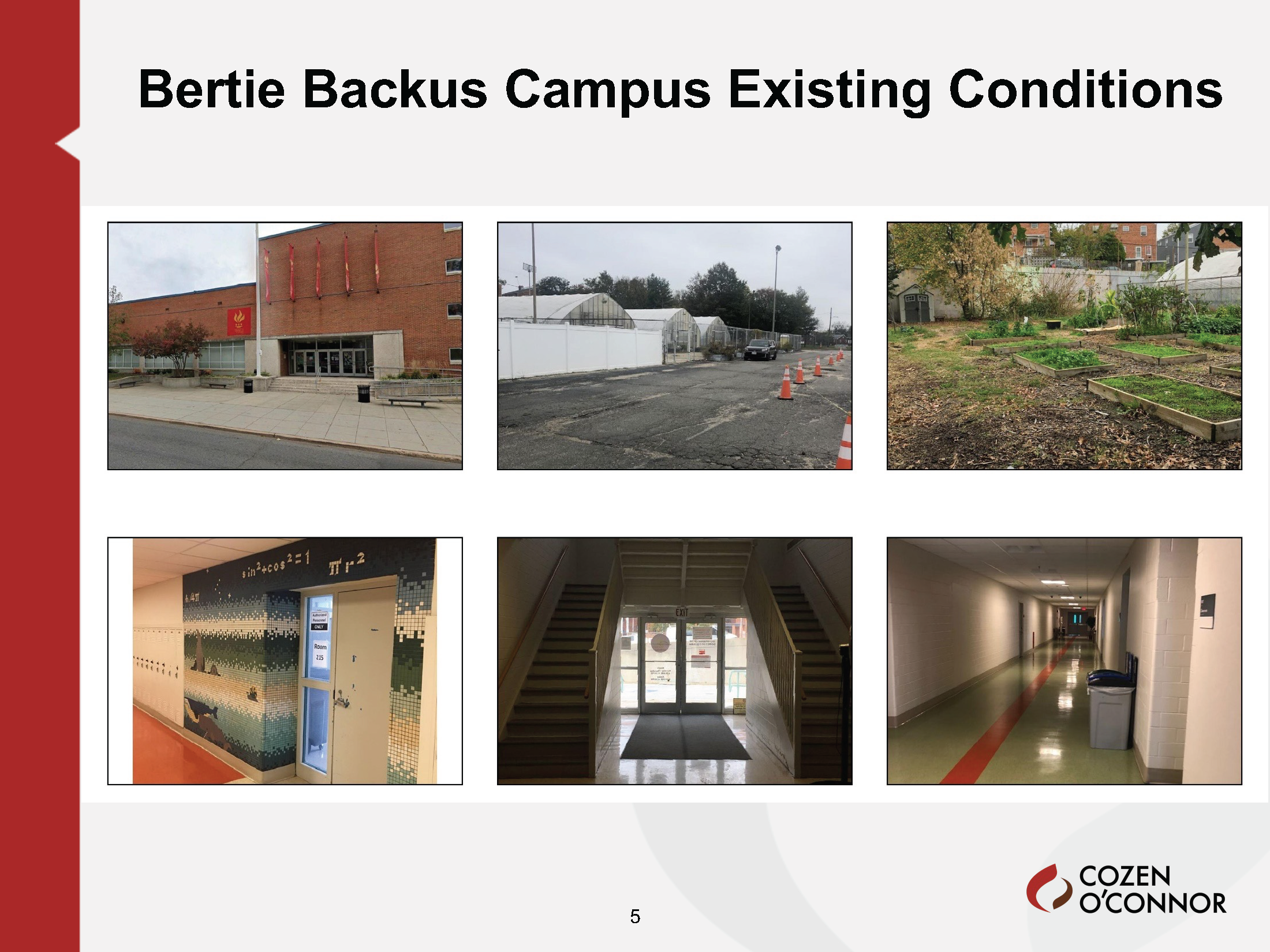
Existing conditions at Lamond-Riggs campus
I emailed UDC after the CFA meeting to find out more about what they are planning for the Lamond-Riggs campus. They said that the initiative actually started out just for the Van Ness campus, but then someone decided to include the Old Congress Heights and Lamond-Riggs campuses to the project. UDC said that “although the intention is to give the same level of attention to all the three sites, [they] may need to prioritize based on the capacity for the signage fabricator to produce the proposed amount of signage on this short amount of time.”
I personally think because the Lamond-Riggs campus is already a sea of warm color, layering large-scale warm color applications on top of the warm orange red brick of the Bertie Backus building may be a bit overwhelming. I think the campus could stand to use a bit more cool, neutral, and base colors to provide a more interesting visual palette. I do not think that every treatment needs to be done in the school’s bold colors to provide a sense of place. I know that UDC wants to create a “cohesive, integrated Identity” across its campuses with these exterior graphics, but I think they should take into consideration that the single Bertie Backus building at the Lamond-Riggs campus is very different from the varied architecture of the Van Ness campus.
In general, I have been advocating for more beautification and a cohesive streetscape plan by the large property owners along the avenue. These property owners consist mainly of the Cafritz Foundation, the District government, and a couple of other entities.
I think the Cafritz Foundation has done a really nice job with landscaping and having a cohesive streetscape plan for its large property holdings on the west side of South Dakota Avenue (the completed portions anyways).
I cannot say the same for the city. I will forever remain baffled as to why District officials installed a seemingly random, haphazard mix of black and gray streetlamps along the corridor. It really did seem like they took whatever was left in the warehouse from other projects around the city and installed them here.
I kinda think we need a pause on putting up a bunch of large banners along the corridor and get some basics done first, like literally starting with black bases upon which to build a cohesive streestcape plan.
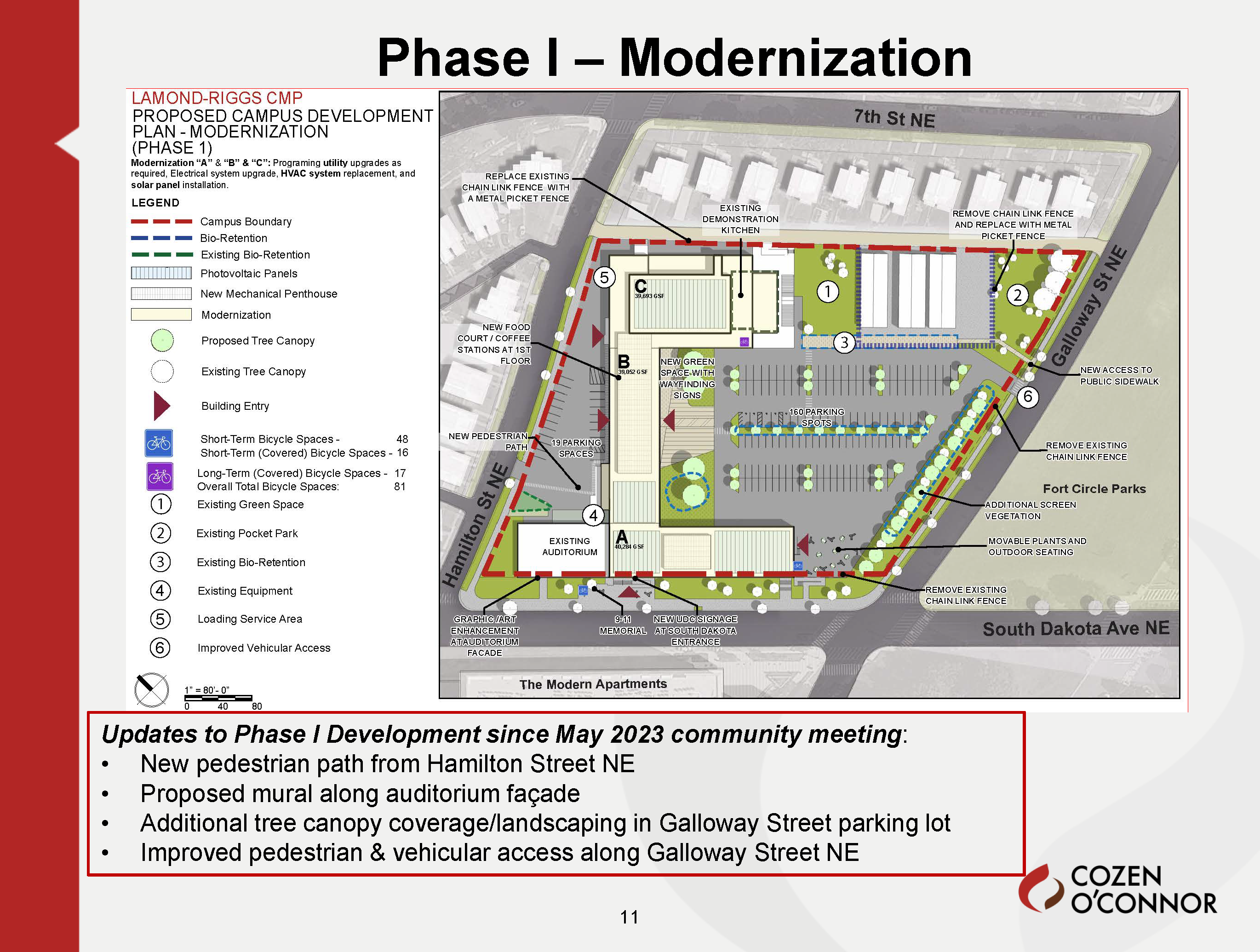
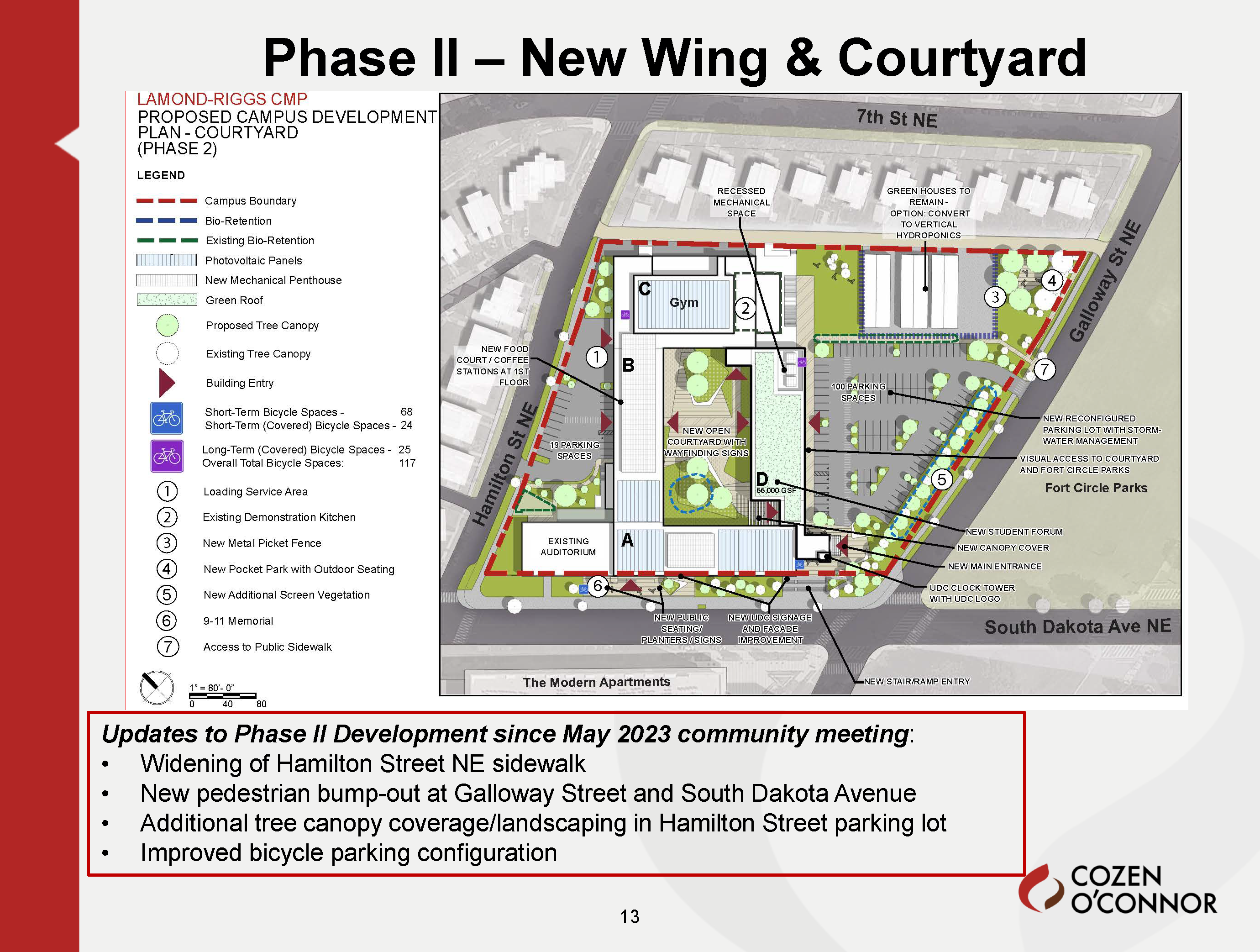
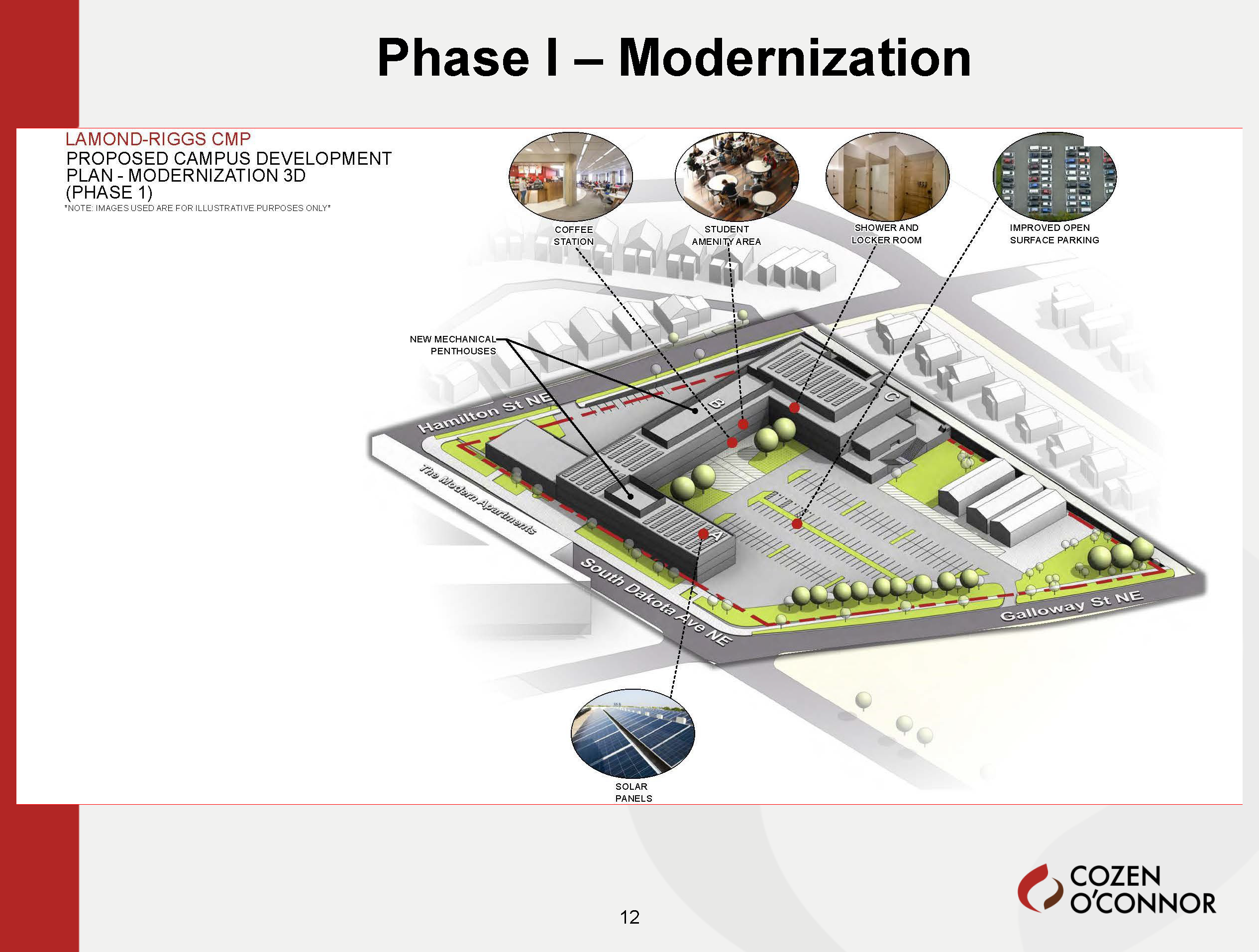
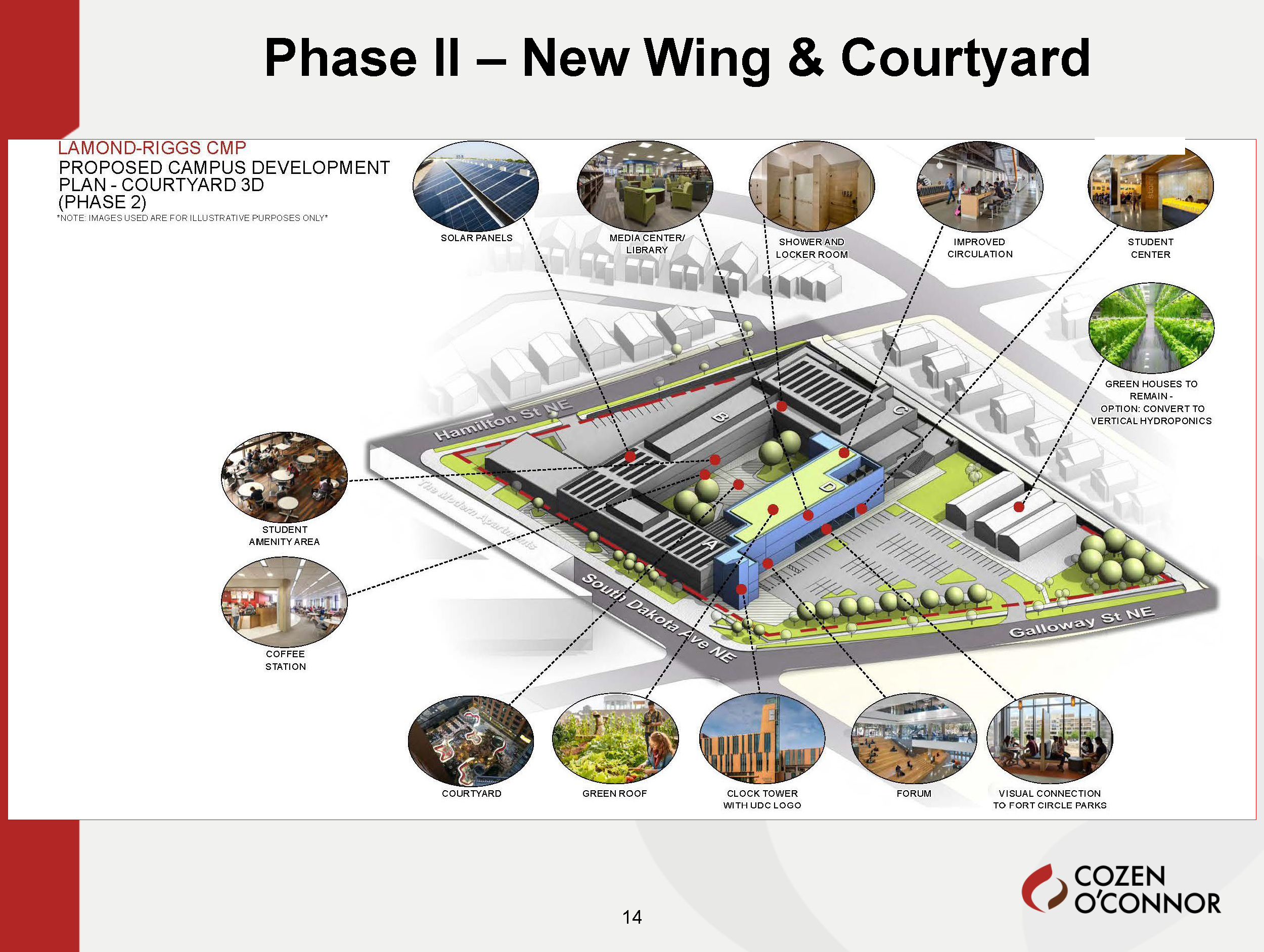
Phase I Lamond-Riggs campus development planPhase II Lamond-Riggs campus development plan
The DC Zoning Commission recently issued a final order for UDC’s Lamond-Riggs Campus Plan (2023-2033) (ZC case no. 23-16). A public hearing was held on October 30, 2023. The Zoning Commission took final action to approve the plan on November 30, 2023. The campus is located at 5171 South Dakota Avenue NE in Riggs Park in ANC 5A01. UDC’s campus plan website is https://www.udc.edu/campus-master-plan.
Formerly known as the Bertie Backus campus, the Lamond-Riggs campus houses the university’s community college program and a few workforce development programs. UDC plans to gradually increase student enrollment at the campus from roughly 1,800 students currently to 3,000 students.
(The grounds also house an American Job Center for the DC Department of Employment Services. The job center will eventually relocate).
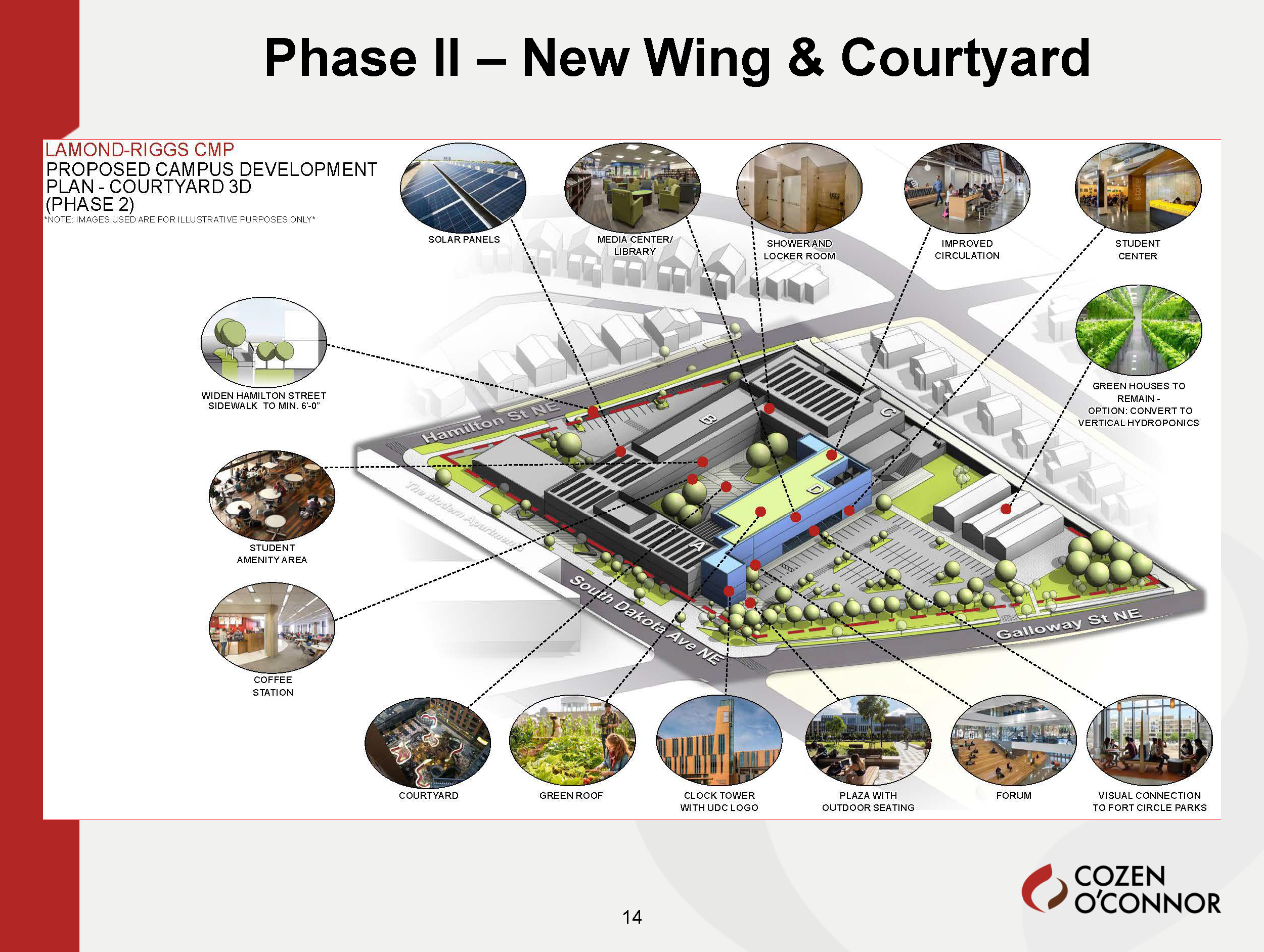
UDC plans a two-phase campus development process. Phase 1 will involve renovating the existing buildings on the campus. Phase 2 will involve constructing a new wing on the campus. Currently, there is no funding for Phase 2 activities.
The Zoning Commission order includes conditions related to campus enrollment, further processing, student conduct, a transportation demand management plan, a performance monitoring plan, and community outreach. Enrollment will be limited to 3,000 students with 118 faculty. UDC will have to return to the Zoning Commission for construction of the new wing and will have to provide 60 days’ notice to ANC 5A for review of the design.
This was a long process that I think could have been run a lot better by the university and their counsel. I do want to acknowledge ANC Commissioner Duvalier Malone (5A01), who I think did a nice job of listening to residents and making sure our voices were heard during this process. With a new university president in place, early collaboration with the DC Council and District agencies like DDOT, and better communication, I think UDC can make implementation of this campus plan a beneficial process for the university and the neighborhood.
UDC will kick off a few days of activities for the inauguration of UDC’s 10th president Dr. Maurice Edington the week of March 11, 2024. There will be an academic symposium at the Lamond-Riggs campus on March 13, 2024. View the full list of inauguration activities at https://www.udc.edu/inauguration.
Academic Symposium
Wednesday, March 13 Advancing the Mission of the Urban HBCU: Showcasing Excellence, Elevating Possibility 11:00 a.m. to 2:00 p.m. UDC Lamond-Riggs Campus Auditorium 5171 South Dakota Avenue NE Washington, DC 20017
Phase 1 rendering of renovation of existing campus buildings from UDC hearing presentationPhase 2 rendering of new campus wing from UDC hearing presentation
At its public meeting on November 30, 2023, the DC Zoning Commission voted (4-0-1) to take final action to approve UDC’s Lamond-Riggs Campus Plan (2023-2033) (Zoning Commission case no. 23-16). The (-1) is a vacant seat. The campus is located at 5171 South Dakota Avenue NE in Riggs Park. UDC’s campus plan website is https://www.udc.edu/campus-master-plan.
Formerly known as the Bertie Backus campus, the Lamond-Riggs campus houses the university’s community college program and a few workforce development programs. UDC plans to gradually increase student enrollment at the campus from roughly 1,800 students currently to 3,000 students.
Phase 1 of the campus development plan will involve renovating the existing buildings on the campus. Phase 2 will involve constructing a new wing on the campus. Currently, there is not funding for Phase 2 activities. UDC will have to provide notice and return to the Zoning Commission before proceeding with construction of the new wing.
On December 1, 2023, UDC issued a statement about the campus plan approval, stating in part:
The approved plan features five key changes to the Lamond-Riggs Campus, implemented in two phases:
Modernize and upgrade existing academic buildings and facilities
Strengthen enrollment opportunities and welcome an increase in students, faculty and staff
Promote the University’s distinct identity and wayfinding for public use of campus
Implement on-site urban design improvements along campus frontages
Construct a new wing to increase programs and provide an open-space courtyard for improved green landscaping and sustainable features
Questions about the campus plan may be directed to Avis Russell, UDC General Counsel, at avis.russell@udc.edu or Javier Dussan, UDC Vice President, Facilities and Real Estate Management, at javier.dussan@udc.edu.
Public Hearing
The Zoning Commission held a virtual public hearing on the plan on October 30, 2023.
DDOT Report The District Department of Transportation (DDOT) submitted a pre-hearing report stating that DDOT did not object to the plan with several conditions. DDOT requested that UDC develop a Transportation Demand Management (TDM) plan and a Performance Monitoring Plan (PMP). DDOT requested that UDC enroll students in Metro’s U-Pass program, that UDC address campus parking rates and enforcement mechanism, and that UDC provide covered or indoor bike parking for some of the bike spaces.
Office of Planning Report The DC Office of Planning (OP) also submitted a pre-hearing report that recommended approval of the plan with the condition that maximum student enrollment be capped at 3,000 students and faculty capped at 118 faculty. OP requested that UDC work with the Office of Historic Preservation to document the history of the Bertie Backus Middle School to determine whether the school building is eligible for inclusion in the DC Inventory of Historic Sites and the National Register of Historic Places. The school, built in the 1960s, was named after educator Bertha Arabella “Bertie” Backus. OP’s report included comments from other agencies such as the DC Department of Energy and Environment (DOEE), which had several comments about the operation of the food hub at the campus.
ANC 5A Letter in Support ANC 5A submitted a letter in support that outlined several areas of concern based on input from residents (including myself) regarding the Transportation, Sustainability, Campus Relations, and Community Character elements of the plan.
UDC Lamond-Riggs Campus Plan Hearing Presentation UDC presented its plan. New UDC president, Dr. Maurice Edington, attended the hearing and gave brief remarks. The zoning commissioners asked several questions (some of which residents previously asked UDC).
Vice Chair Robert Miller asked about UDC’s response to DOEE’s comments about the food hub. UDC said they are working with DOEE.
Commissioner Joseph Imamura asked why UDC plans to rebuild the parking lot on Galloway Street with new vegetation for Phase 1 and then seemingly plan to remove that newly planted vegetation in order to rebuild the parking lot again for Phase 2. Why not just construct the Phase 2 parking lot. UDC noted that there is not funding for Phase 2 and that they do not know when Phase 2 will be built. They said they are not planting trees in the Phase 1 parking lot islands that will have to be removed, but more so shrubbery.
Commissioner Imamura asked UDC to clarify the plan for the chain link fence along Galloway and along South Dakota. Commissioner Imamura suggested using environmental design to define the campus edge rather than a fence. (Aside: I noted during my oral testimony that UDC would want a way to prevent people from accessing the parking lot without permission after hours and on weekends so that the people who decide to leave empty bottles and trash along the parkland do not decide to take their activities to UDC’s campus).
Commissioner Tiffany Stidham asked about any plan for a shuttle to the metro station or other means of encouraging students/faculty not to drive to campus and also for safety reasons for late-night classes. After Phase 2, the parking lot on Galloway will eventually have just 100 parking spaces for cars and UDC plans to have up to 3,000 students and 118 faculty going to the campus. UDC said they did a survey (presumably during the pandemic) and that the survey did not indicate demand for a shuttle.
In addressing requests by the ANC and residents, UDC noted several times that as a public university, its plan is constrained by funding that has to be approved during the city’s budget process.
DDOT gave a super short presentation as did OP. UDC stated that they were working with DDOT about which conditions would become final. UDC agreed to OP’s conditions. ANC 5A did not have a representative at the hearing.
By the time it was time for public testimony (myself), everyone was ready to call it a day. My written and oral testimony focused on (among other things):
The need for the campus plan to accurately reflect the state of food hub operations and include UDC CAUSES recently developed 5-year food hub strategic plan. Apparently this 5-year plan (which was not available to the public before the hearing) details changes to the food hub that CAUSES officials say are required by the U.S. Department of Agriculture, which provides a portion of funding for the food hub. At an open house in October 2023, CAUSES officials said that Dept. of Ag wants UDC to focus on small farmer entrepreneurs. CAUSES officials said that is why the community garden was removed from the campus.
UDC’s need to work with DDOT to address the cluster that is the South Dakota Avenue/Hamilton Street NE intersection sooner rather than later, especially considering UDC is planning to relocate loading access to the Hamilton Street side of the campus.
UDC’s need for an actual community engagement plan, starting with an up-to-date campus plan website.
A need for the plan to address the role of the community college and campus in the workforce development ecosystem, particularly given the planned departure of the Department of Employment Services (DOES) from the campus.
Campus Naming
In between all of the presentations and reports, Zoning Commission Chair Anthony Hood mentioned more than once that he wants UDC to rename the campus after William Spaulding, the first person to represent Ward 5 on the DC Council following Home Rule. William Spaulding also has ties to UDC. Chair Hood said that he was sure that other people had mentioned this idea to President Edington, but President Edington said he was not aware of this desire. So that is apparently something brewing by folks that we might hear about in the future.
(Aside: UDC’s former president, Ronald Mason, Jr. is responsible for the campus name change, which was approved by university trustees in April 2023. He thought it was important to have a new name to reflect the community college rather than the old name of the middle school. Former President Mason decided to name the campus after the neighborhood in which it sits, just like UDC’s main Van Ness campus. The existing building on the Lamond-Riggs campus is still named the Bertie Backus building).
The Zoning Commission asked UDC to submit a post-hearing statement to address the testimony of the ANC (and myself). UDC also had to outline what conditions the university and DDOT agreed on for the preliminary order.
Zoning Commission Meeting & Decision
UDC Post-hearing Statement UDC submitted a post-hearing statement. The submission includes UDC’s TDM plan, which they say is approved by DDOT. It also includes further revisions to sections of the campus plan.
At the public meeting on November 30, the Zoning Commission decided it was satisfied with UDC’s updates and responses to OP, DDOT, DOEE, and the ANC. Chair Hood said he was sure that UDC would work with residents on better communication and work on issues related to the food hub. He also mentioned one more time for good measure that he wants to see the campus renamed after Mr. Spaulding. Vice Chair Miller chimed in to say he worked with Mr. Spaulding on the council and that he too thought it would be a fitting name. (Aside: It is always interesting to see what Chair Hood decides to expound on extemporaneously during hearings).
UDC Proposed Draft Order The Zoning Commission still needs to issue a final order. UDC submitted a proposed draft order outlining several conditions. UDC’s proposed conditions copied and pasted below:
Campus Plan Term
1. The Campus Plan shall be valid for a period of 10 years.
Enrollment
2. For the duration of the 2023 Plan, the maximum enrollment on the Lamond-Riggs Campus shall not exceed 3,000 students and 118 faculty.
Further Processing
3. The University may construct the proposed Wing D as described in the 2023 Plan, subject to further processing review and approval pursuant to § 210 of the Zoning Regulations: a. The location shall be within the area identified on (Ex. 3 and 2H2-2H3) of the University’s June 21, 2023 Campus Master Plan submission; b. The number of stories, gross floor area, and lot coverage shall be generally consistent with the development summary indicated in the University’s June 21, 2023 Campus Master Plan submission;
4. The University shall provide the community with notice and an opportunity to review the proposed design of the new wing at least 60 days prior to filing of the application for further processing:
a. Notice of the University’s intent to file the application (“Notice of Intent”) shall be provided by U.S. Mail to ANC 5A and all owners of all property within 200 feet of the campus. In addition, the Notice of Intent shall be provided by U.S. Mail to all residents within approximately one block of Square 3757, Lot 802. The Notice of Intent shall state that the University intends to file an application to secure further processing approval to construct the new wing on University property, and shall provide the maximum square footage, description of common areas, and planned pedestrian and vehicular circulation adjacent to the new wing. In addition, the Notice of Intent shall provide a website address (URL) where more information about the proposed wing may be found, and the contact information (name, phone, and email) for a University representative that can be contacted for additional information. Finally, the Notice of Intent shall indicate the date, time, and location of the Preliminary Design Review meeting described below; and
Student Conduct
5. All students at the Lamond-Riggs Campus shall be required to comply with the University Code of Conduct.
6. The University shall use disciplinary intervention for acts of misconduct committed by students (i.e., ‘violations of the Code of Conduct) in the surrounding community (which shall mean within one mile of the University), even if the students are not in properties owned or controlled by the University. The University shall act on incident reports submitted by persons including residents, ANC 5A, community associations, tenant associations, building management, the University’s Office of Public Safety and Emergency Management, and the Metropolitan Police Department.
7. The University shall establish and maintain a relationship with the Metropolitan Police Department to secure referrals on all reports of complaints, infractions, or arrests of University students. The University shall maintain a log of all referrals received and all actions taken.
Transportation and Parking
8. The University shall manage its on-campus parking supply and encourage all students, faculty, staff, and visitors to use transit and other alternatives to single-occupancy vehicle through the implementation of the TDM and PMP measures detailed in Exhibit 24 which reflects all of the commitments made by the University.
9. The University shall encourage all visitors attending special events on campus to use transit or park in University or other area parking facilities. The University shall work with area institutions and commercial parking operators as well as use attendant parking to provide additional parking as needed during these events.
10. The University shall direct all construction traffic to avoid routes through the adjacent residential neighborhoods through contract provisions or similar mechanisms.
Community Outreach
11. University representatives shall attend ANC 5A’s monthly meeting, providing updates on the 2023 Plan process and continuing a line a communication between University leadership and community members and stakeholders.
The Zoning Commission is having a public hearing on UDC’s proposed Lamond-Riggs campus plan on October 30, 2023, at 4:00 pm (ZC case no. 23-16). Instructions for how to sign up to testify orally or to submit written testimony are in the hearing notice. Note that the Zoning Commission encourages individuals to submit requests to testify orally at least 24 hours before the hearing. All written testimony must be submitted to the record at least 24 hours before the hearing.
ANC 5A voted to support the campus plan with conditions at the ANC meeting held on October 25, 2023. (I will link to the letter once I get a copy of it. Update 10/31/2023: ANC 5A Letter of Support).
UDC’s Lamond-Riggs campus, formerly known as the Bertie Backus campus, is located at 5171 South Dakota Avenue NE. The campus, which occupies a large city block between Galloway Street and Hamilton Street NE, houses the university’s community college program. UDC is proposing to double campus enrollment over 10 years, from a current enrollment of roughly 1,500 students to 3,000 by 2033. UDC is proposing a two-phase campus development process.
Phase 1 would involve renovating the existing buildings on campus.Edited to add: UDC is requesting to proceed with Phase 1 renovations as a matter of right. The university would return to the Zoning Commission to proceed with Phase 2 activities.
Phase 2 would involve constructing a new wing on the campus.
UDC has stated that they envision Phase 2 activities taking place during years 5-10 of the plan.
Universities are required to submit 10-year campus plans for approval by the Zoning Commission. When UDC submitted the most recent plan for its main campus (Van Ness) in 2021, the Zoning Commission told UDC that the university also had to submit a plan for the Lamond-Riggs campus. So that’s how we got to this point where UDC is submitting its first campus plan for the Lamond-Riggs campus.
The goals of the campus plan regulations are to ensure that campuses are: 1) well-planned and designed; 2) have long-term facilities plans; 3) minimize negative impacts that universities may have on surrounding residential neighborhoods; and 4) have planning processes that are consistent and transparent.
These factors are what we need to keep in mind when we think about UDC’s proposed Lamond-Riggs campus plan.
My thoughts
Recall from this post that a few years ago, a neighbor and I approached UDC about making some much needed improvements to the existing campus, and I worked with the council to get some money in the budget for some small improvements. I think UDC has done a good job about making the small improvements with the little bit of money budgeted–repairing broken windows, replacing the rusted chain link fence, repairing broken concrete, replacing faded banners, and other small fixes. It took some time to get these things done and more is needed still, but I think UDC has done a decent job so far. Even though this was separate from the campus plan process, I want to start off by saying something positive before getting into where I think UDC went off track with the campus plan process.
I think UDC officials could have done a much better job stewarding this campus plan process. I acknowledge that the pandemic was hard time for everyone and producing this plan during a pandemic presented challenges. The university was also going through a search for a new president during this period and that required a lot of time and attention.
So I think university officials treated this campus plan process the same way they treat the campus itself, like an afterthought. From the very beginning, it was unclear who at the university was really taking ownership of this process. At meetings, basic questions went unanswered or were met with either dismissiveness or defensiveness. Follow-up through “official” channels was terrible. The campus plan site was not kept up to date and even when I pointed out numerous times that it would be helpful to keep the site up to date, UDC officials still took several months to update it. None of this really engenders trust that when buildings start getting renovated and construction starts in earnest, that UDC will communicate effectively about anything.
I shared some thoughts about specifics in the plan with UDC officials and the ANC. They mostly concern the transportation, sustainability, community relations, and campus character elements of the plan. Summarized below.
Transportation
UDC and DDOT have to do something about the South Dakota Avenue & Hamilton Street intersection. UDC is relocating loading/servicing to the Hamilton Street side of the campus. UDC got around to letting us know that they plan to have trucks less than 30 feet servicing the site between 9:00 am & 4:00 pm, while requesting flexibility to adjust those hours. Currently, loading/servicing is accessed via Galloway Street.
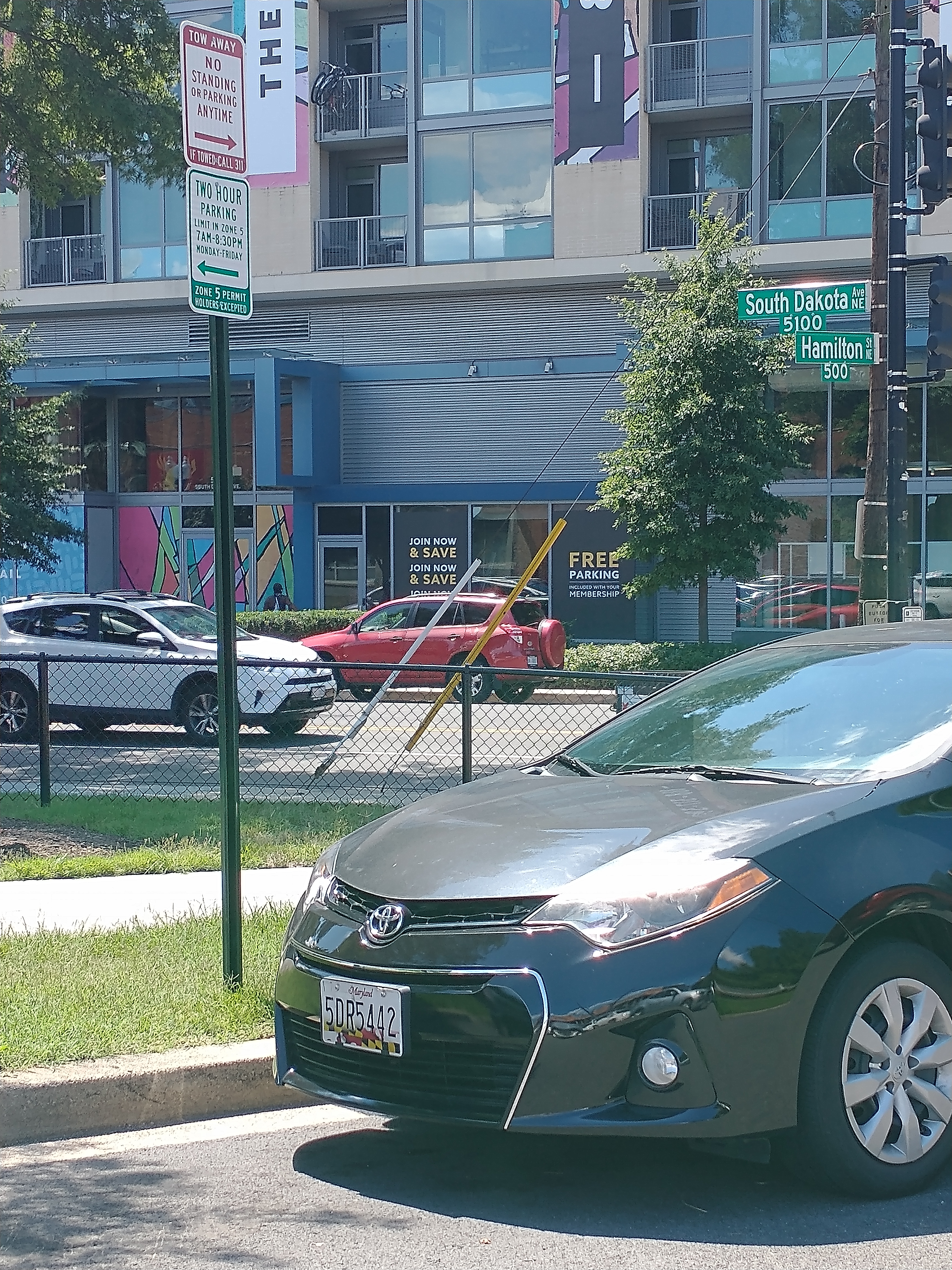
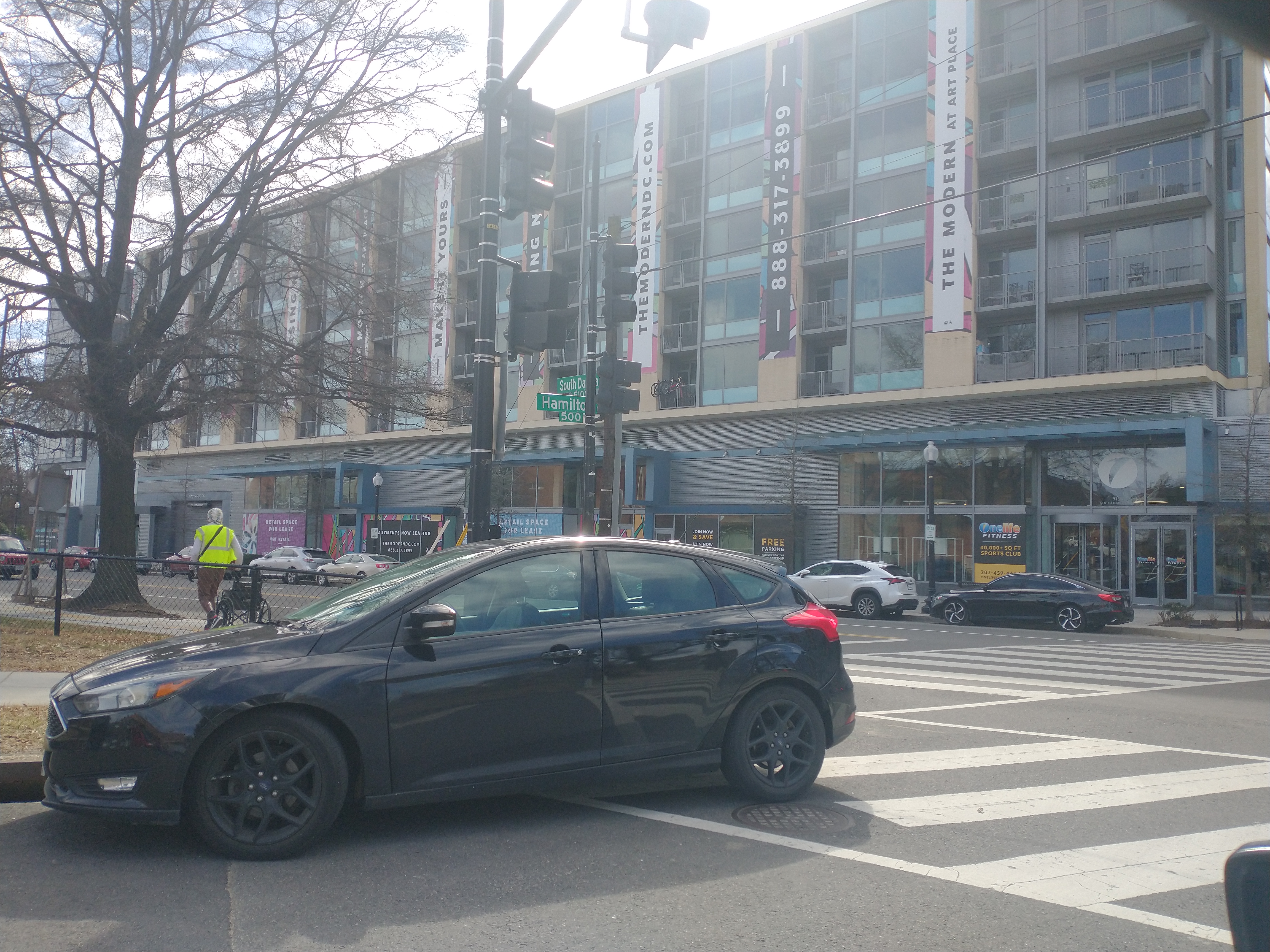
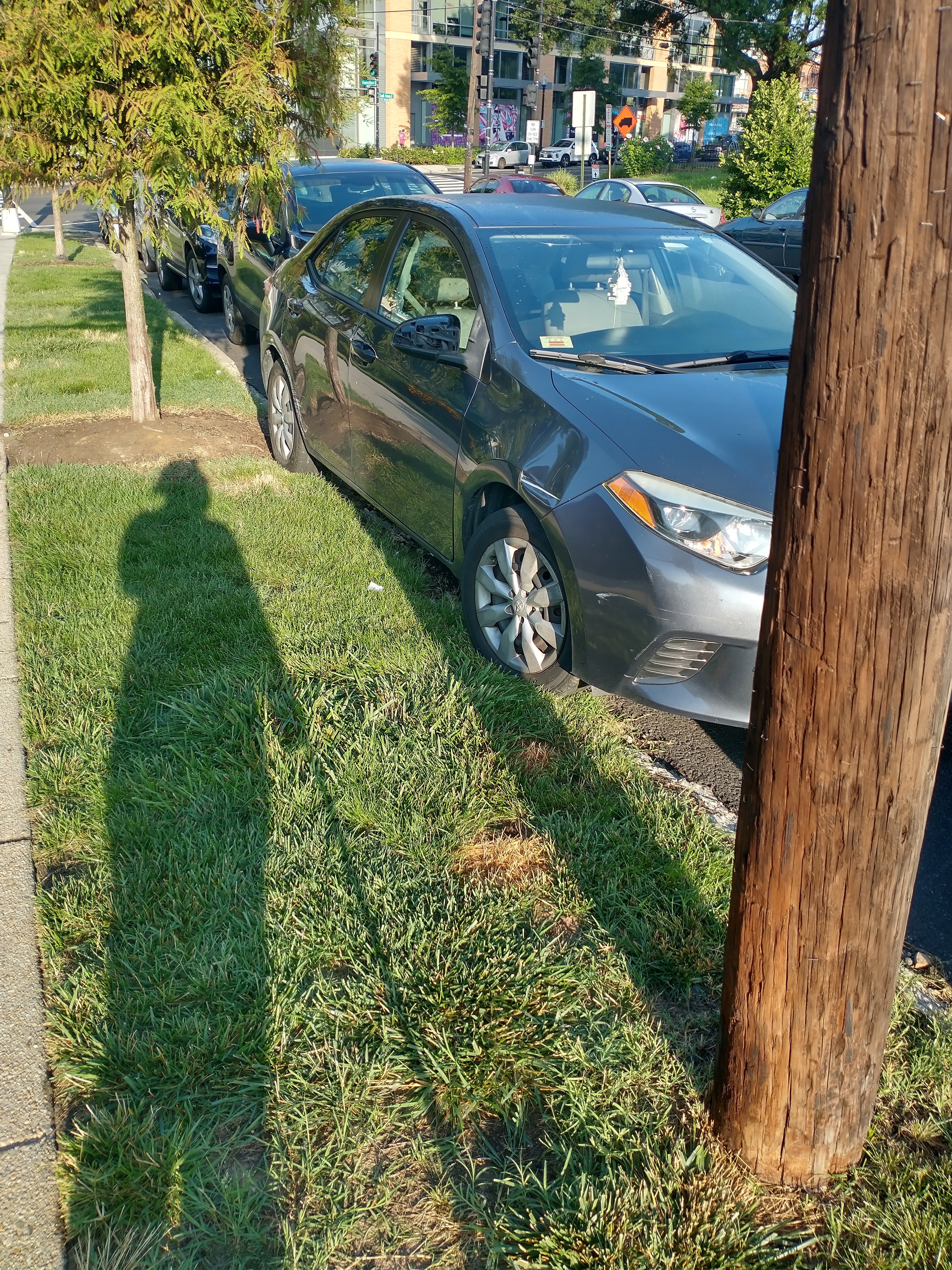
UDC is proposing to add bumpouts at the intersections of South Dakota/Galloway and South Dakota/Hamilton in the second phase of the plan. I think if UDC wants to send trucks up Hamilton, they need to work with DDOT to address the fact that people going to the campus and the gym across the street from the campus continue to park all the way up to the crosswalk in the 500 block of at Hamilton and sometimes even partially in the crosswalk itself. I have alerted DDOT, the MOCR, the council office, and the transportation committee about this on several occasions. It took DDOT years to put in a “no parking/no standing” sign on the south side of the street and while appreciated, as we already knew would happen, people just ignore the sign and park wherever they want even though there is free validated parking for gym patrons in the garage across the street. DPW does spotty parking enforcement. Trucks are not going to be able to make that turn onto Hamilton if nothing is done about people parking their cars right up to the intersection.
UDC said they cannot install bumpouts in the first phase because of work DDOT is planning for South Dakota Avenue. But DDOT has not communicated what it is planning to do on South Dakota Avenue or a timeline for that work so it seems strange for UDC to say that a bumpout can be installed in Phase 2 but not Phase 1. UDC needs to work with DDOT to keep people from parking too close to the intersection at South Dakota/Hamilton sooner rather than later. And while they are at it, they should fix the crumbling curb outside the campus before a car ends up on the sidewalk.
We have also asked about installation of a bikeshare station on or near the campus grounds on the east side of South Dakota Avenue. DDOT has said for a couple of years now that a bikeshare station will be installed on the west side of South Dakota Avenue near The Modern but my understanding is that that plan has been held up. Seems like a bikeshare station could go on the east side of the street.
Sustainability
I think UDC should have recycling cans outside its campus near Hamilton & near Galloway. There are two 7-Eleven stores in the vicinity. People going to the campus and to the gym or just generally walking by sometimes just drop bottles, cans, and trash along the street. I know UDC has recycling receptacles inside the building. I think they should put a couple outside the building. UDC said this request is out of scope of the plan. That is really an odd thing to say when there is are two public trash cans outside on the campus grounds and UDC could simply make accommodation for a recycling can next to them. The same way public parks and schools in the city have outdoor public trash and recycling cans, I do not see why UDC thinks it is too much to ask for there to be an outdoor public recycling can on the campus.
UDC also talks a lot about the activities of the food hub on the campus but I would not exactly describe what is written in the plan as accurate. I will just say that I think the food hub is a great civic asset to the neighborhood and I think the university needs to do a much better job of managing the food hub at this particular location.
Also, I think the university can be a good neighbor by picking up trash daily along Hamilton, South Dakota, and Galloway, and also picking up trash along the parkland in the 500 block of Galloway. UDC is planning a new wing that will embrace views of the parkland so might as well help to keep the parkland clean.
Community Relations
I think UDC needs an actual outreach and communications plan. It is weird to me that UDC did not have an open house about the campus plan at the campus at all. Nor did UDC put any information about the plan at the campus itself. It is clear from this process that UDC does not have an actual plan about how it will conduct outreach and it is honestly baffling. The most obvious places to start are the ANC, civic association, and Main Street. Information could be placed at the campus itself and at the Lamond-Riggs Library. Once they have a plan, again someone really needs to take ownership of that piece so that it is done effectively.
Campus Character
UDC has big plans for the campus development. I think the university should think about ways to connect the university with the surrounding neighborhood. That can be done through signage, programming open to the public, internship opportunities at this particular campus, highlighting educational opportunities at the campus, and connecting the dots between the community college and pathways to careers that offer family-sustaining wages.
Other thoughts
Building upon these suggestions, other recommendations that residents made were for UDC to have a transportation demand management plan, provide information about bicycle access, seek ways to improve pedestrian connectivity to the campus and nearby destinations, and outline steps to reduce waste.
If you would like to let the Zoning Commission know your thoughts, instructions are in the hearing notice.
[Ed. Note: The volunteer coordinator for UDC CAUSES passed along the following note regarding volunteer opportunities at the university’s food hub located on the Lamond-Riggs campus at South Dakota Avenue and Galloway Street NE]
From UDC CAUSES
My name is Michele Bassler and I am the Volunteer Coordinator at the University of DC’s College of Agriculture, Urban Sustainability and Environmental Sciences (CAUSES). I would love to help connect you in a meaningful way with the Lamond-Riggs Urban Food Hub (formerly Bertie Backus) at 5171 South Dakota Avenue.
There are regular volunteer opportunities at Lamond-Riggs where you can support urban and sustainable agriculture projects that address food insecurity, healthy nutrition and quality of life in DC. Please click here to learn more and sign up in our volunteer platform, Golden Volunteer.
Also, I want to announce that next week we are holding a Volunteer Program Information Session for any community members who are new to volunteering with CAUSES or are interested in learning more. There are two options to attend:
Tuesday, September 26th, 5:00pm-6:00pm (in person at UDC Van Ness Campus)
Thursday, September 28th, 6:30pm-7:30pm (via Zoom)
The agenda includes an overview of all of our volunteer opportunities in areas such as food security, healthy nutrition, youth mentoring and urban agriculture that actively contribute to the DC community. You’ll learn how to search and sign-up for opportunities, as well as next steps and the support that you can expect from us. Snacks and giveaways will be provided at the in-person event. Feel free to forward this announcement.
Pre-registration is required. Please RSVP by Friday, September 22nd by clicking here.
If you have any questions or concerns about our volunteer platform, the Volunteer Program Information Session, or the CAUSES Volunteer Program in general, feel free to reach out to me. I am here to help and am happy to chat by phone or via Zoom. I also love visitors to my office on the Van Ness Campus of UDC. I hope to connect with you soon!
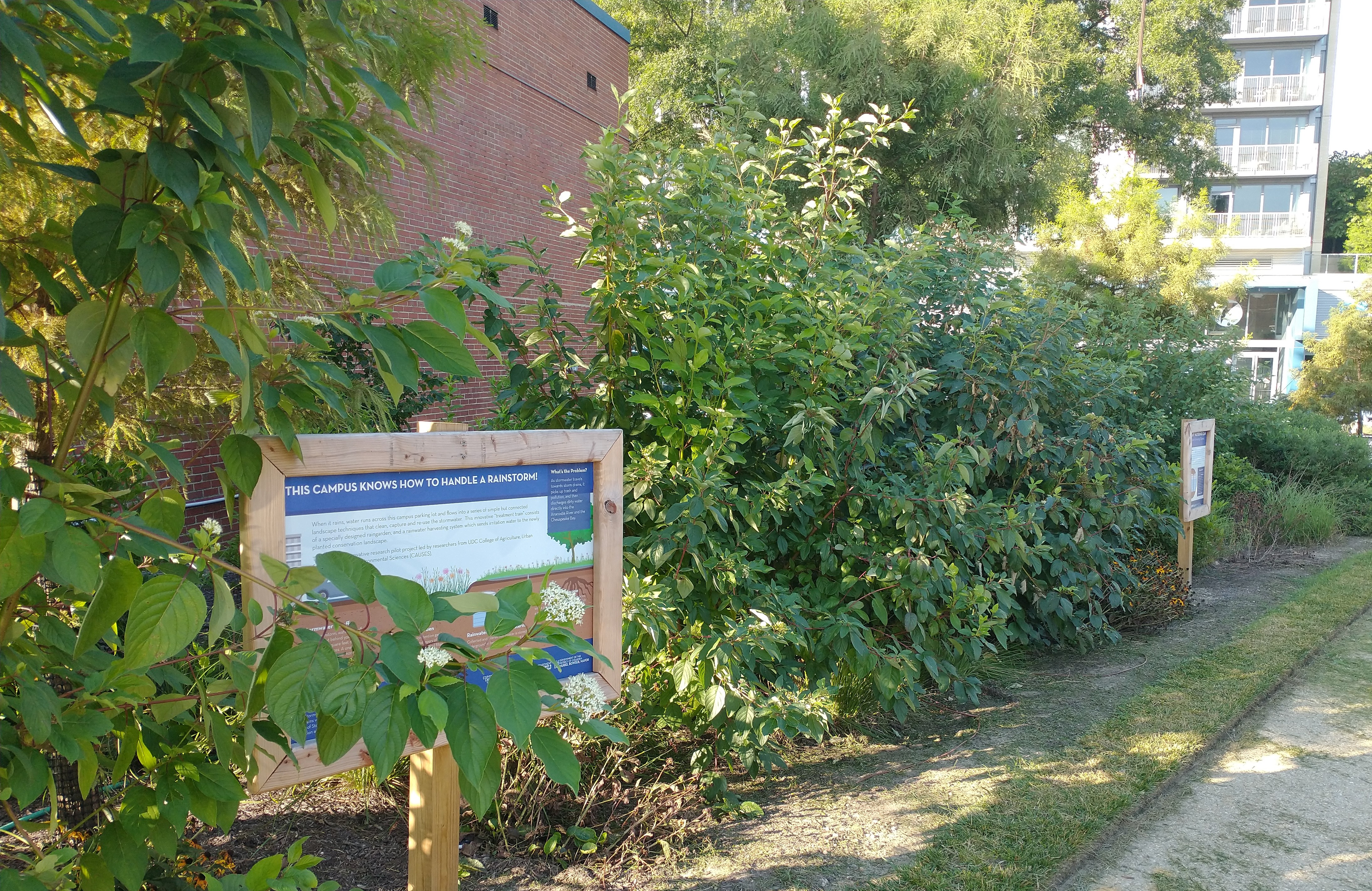
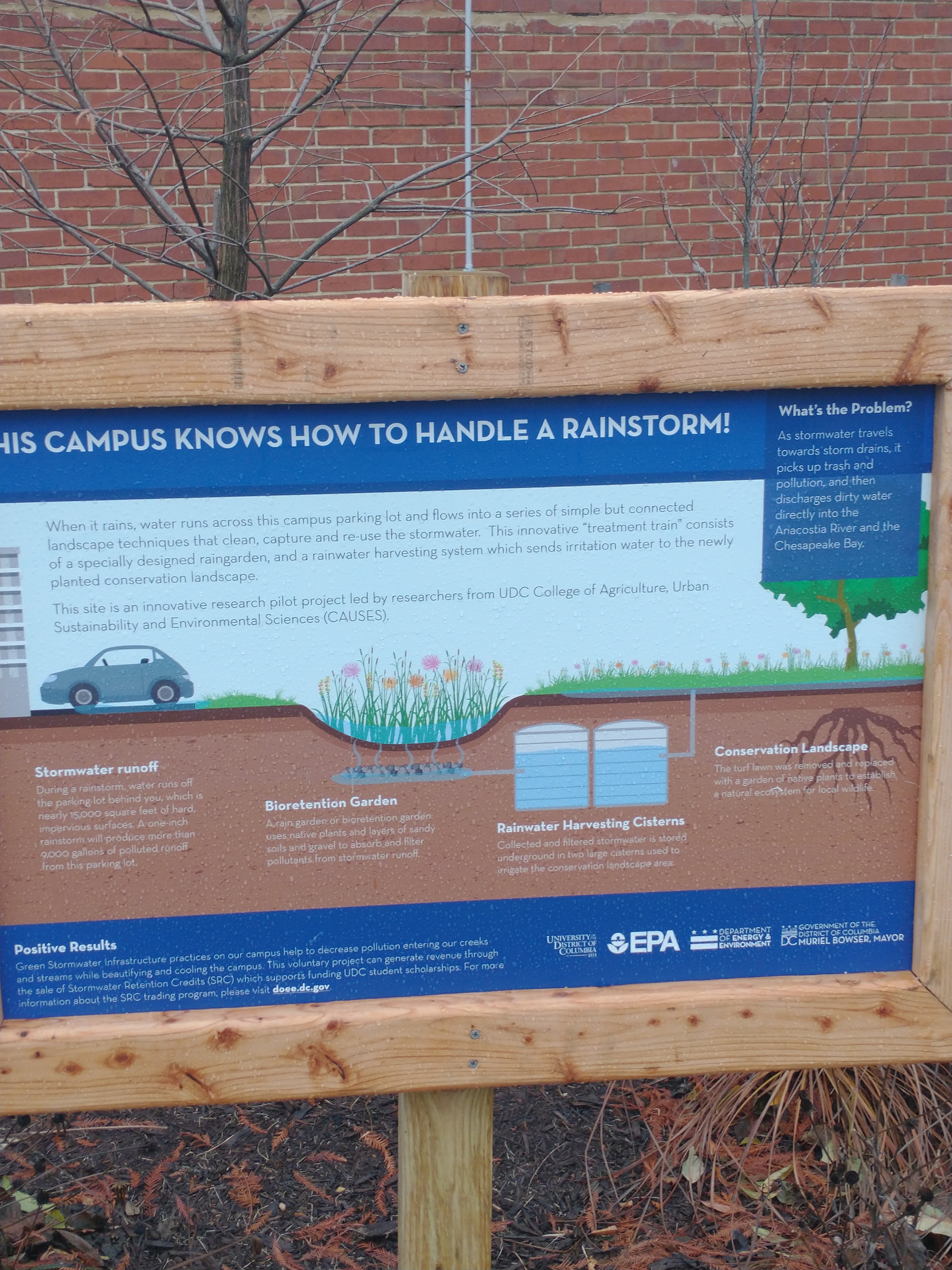
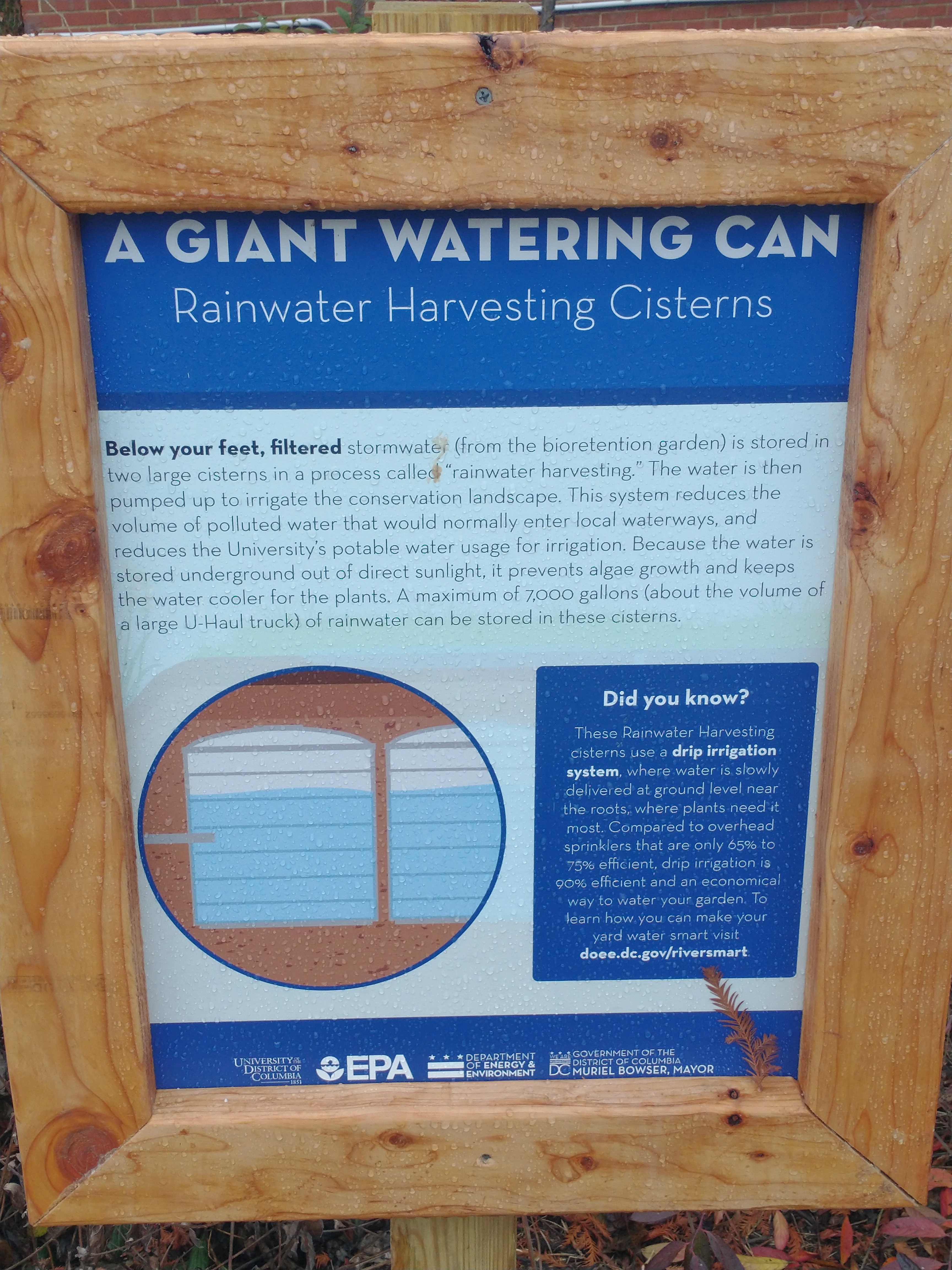
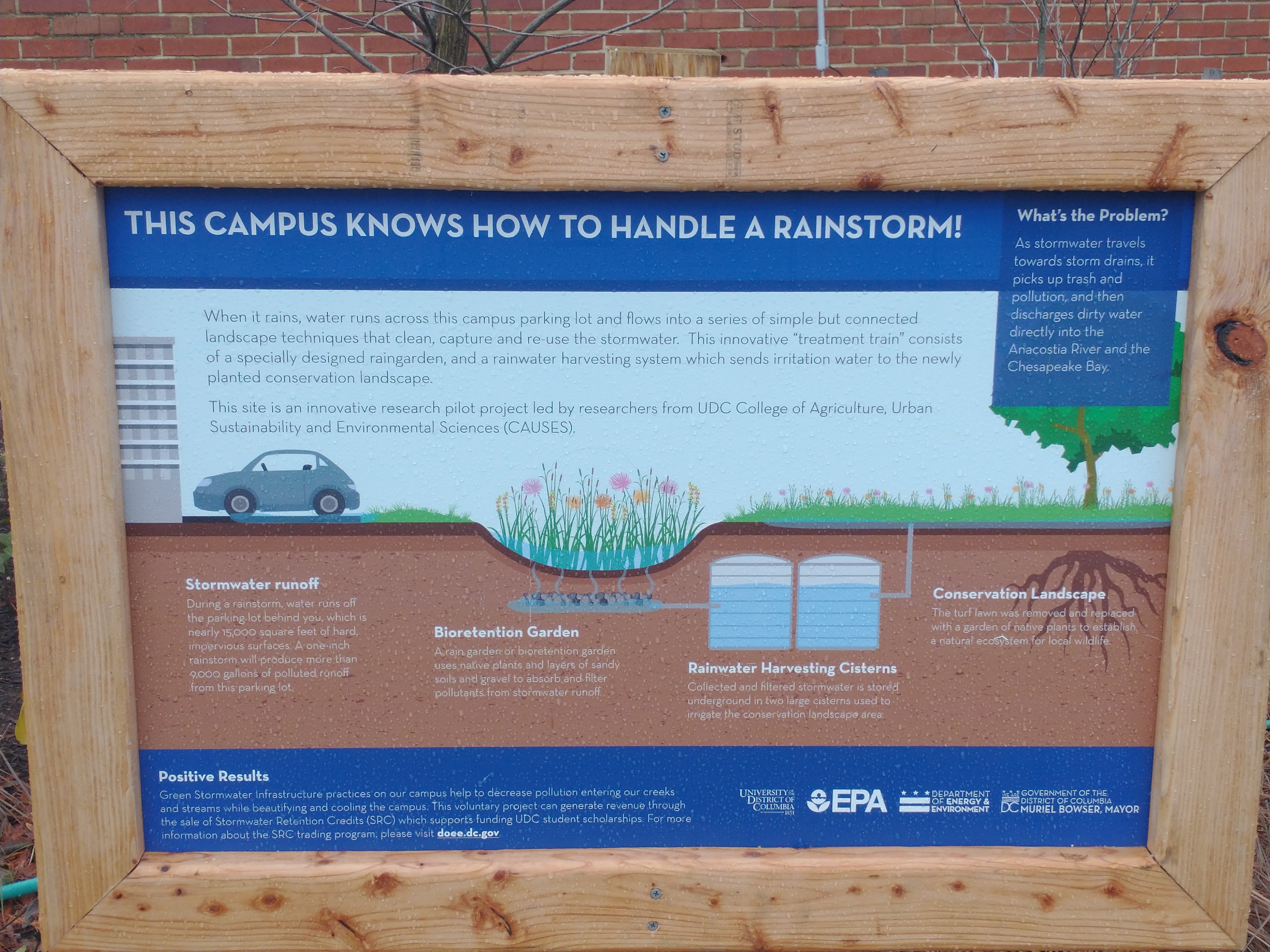
UDC’s College of Agriculture, Urban Sustainability, and Environmental Sciences (CAUSES) recently won an award for a green infrastructure project at the university’s Lamond-Riggs campus (formerly known as the Bertie Backus campus). The university is located at 5171 South Dakota Avenue NE. The award-winning green infrastructure replaces a patch of grass and a small part of the parking lot on the Hamilton Street side of the campus.
According to UDC CAUSES summer 2023 newsletter, the Bertie Backus Campus Infrastructure Treatment Train Project team won first place in the Best Ultra Urban Best Management Practice (BMP) category for the 2023 Best Urban BMP in the Bay Award (BUBBAs) contest on April 6, 2023. The project team consisted of a partnership of UDC CAUSES graduate students, NC State graduate students, and UDC’s National Green Infrastructure Certificate Program (NGCIP) participants.
From the newsletter:
The contest recognizes the best urban stormwater practices and programs in the Chesapeake Bay watershed. The goal of the BUBBAs is to:
1. Recognize innovators in the field who are using new and innovative techniques for facing the challenges of stormwater management;
2. Provide an avenue for disseminating these techniques to other communities who could benefit from the lessons learned and innovative approaches;
3. Engage the Chesapeake Stormwater Network’s 11,000-member network of stormwater professionals throughout the Bay watershed to choose our grand prize winner and promote interactivity among members
The Best Ultra-Urban Project BMP category recognizes the best application of green infrastructure (GI) practices that are built in highly urban areas to reduce flooding and pollutant delivery (more than 75% site impervious cover).
UDC will hold a virtual community meeting on the proposed Lamond-Riggs Campus Plan tonight, September 7, 2023, at 7:00 pm. Please join this meeting to share your thoughts.
The university is proposing a two-phase approach for development of the campus located at 5171 South Dakota Avenue NE. Phase 1 will involve renovation of the existing buildings on the campus. Phase 2 will involve construction of a new wing on the campus. View this post for information about the proposed plan and links to diagrams: UDC Proposed Lamond-Riggs Campus Plan Filed with Zoning Commission.
You can also dial 173.243.2.68 and enter your meeting number.
For more information or questions, contact Juanita Gray at juanita.gray@udc.edu or (202) 536-9605.
Zoning Commission Hearing
The Zoning Commission issued a corrected public hearing notice for the proposed campus plan (ZC case no. 23-16). The hearing will be at 4:00 pm on October 30, 2023. Instructions for testifying orally or submitting written testimony are in the hearing notice.
UDC will hold a virtual community meeting on the proposed Lamond-Riggs Campus Plan on September 7, 2023 at 7:00 pm. Please join this meeting to share your thoughts.
You can also dial 173.243.2.68 and enter your meeting number.
For more information or questions, contact Juanita Gray at juanita.gray@udc.edu or (202) 536-9605.
Zoning Commission Hearing
The Zoning Commission issued a corrected public hearing notice for the proposed campus plan (ZC case no. 23-16). The hearing will be at 4:00 pm on October 30, 2023. Instructions for testifying orally or submitting written testimony are in the hearing notice.
The hearing for UDC’s proposed Lamond-Riggs campus plan is scheduled for October 16, 2023. See Zoning Commission hearing notice, case no. 23-16. This gives ANC 5A and residents plenty of time to organize thoughts on how to respond to the proposed plan. Instructions on how to give live testimony or submit written testimony are in the hearing notice.
On June 21, 2023, UDC submitted a campus plan application to the DC Zoning Commission for the Lamond-Riggs campus (ZC case no. 23-16). The Lamond-Riggs campus (formerly known as the Bertie Backus campus) houses the university’s community college programs. DC zoning regulations require universities to update campus plans every 10 years. This proposed 2023-2033 campus plan is the first for the Lamond-Riggs campus. UDC plans to attend ANC 5A’s September 2023 meeting to seek a resolution in support of the plan ahead of an anticipated October 2023 zoning hearing.
According to UDC, the goals of the regulations are to ensure that university campuses “(1) are well-planned and designed; (2) have long-term facilities plans; (3) minimize any negative impacts the university may have on the surrounding residential neighborhood; and (4) are consistent and transparent with their planning processes.”
The proposed plan features 5 primary changes to the campus:
Modernize and upgrade the existing academic building and facilities
Strengthen enrollment opportunities and welcome a modest increase in students, faculty, and staff
Promote the University’s distinct identity and wayfinding for public use of the campus
Implement on-site urban design improvements along the campus frontages on South Dakota Avenue NE, Hamilton Street NE, and Galloway Street NE
Construct a new wing to increase programs and provide an open space courtyard for improved green landscaping and sustainable features
The proposed plan has 5 sections:
Campus Development Element
Transportation Element
Sustainability Element
Community Relations Element
Campus Character Element
The plan proposes a two-phase approach to the development of the campus. Phase 1 includes renovation of the existing campus buildings. Phase II includes construction of a new wing and other improvemetns on the campus.
As previously noted, UDC renamed the Bertie Backus Campus the Lamond-Riggs Campus. The campus, located at 5171 South Dakota Avenue NE, houses the university’s community college program. UDC is undergoing a campus plan process for this campus. The most recent campus plan presentation given at the joint ANC 5A01/5A09 meeting on May 22 reflects the updated name. UDC also passed along a fact sheet. I think having a sense of where they are going for our neighborhood campus is useful for organizing thoughts and thinking about any gaps that need to be filled.
The draft campus plan has several overall objectives.
Establish the Lamond-Riggs Campus as a landmark community college hub emerging as an important economic engine for the District of Columbia and the region;
Create opportunities to enhance the student experience by creating a courtyard environment that will engage the students from both classroom wings and provide an outdoor place for activities;
Establish efficient space layouts within the campus to provide better access and circulation for students and improve operational effectiveness;
Accommodate future growth and implementation of new technologies while maintaining a commitment to the environment;
Reduce parking, recognizing that the University is in an urban setting with direct access to mass transit and may be accessed by multiple modes of transportation;
Design new lab space for flexible use to accommodate the interdisciplinary nature of education;
Improve the urban campus to effectively maximize the utilization of open areas with the aim to provide much needed green space and better pedestrian circulation through the new courtyard design; and
Strengthen the campus’ image and character by promoting the University’s distinct identity through wayfinding and placemaking.
The draft plan has five elements.
1. Campus Development Element
Outlines the renovation and modernization strategy for the existing academic building and describes a new built addition to provide more office space, academic space, and new student-oriented amenities such as a coffee station, student center, and media center.
The new addition would create a new student entrance and connect to Wing A to accommodate the anticipated increase in students based on an enrollment goal of 3,000 community college students by 2030.
2. Transportation Element
Seeks to enhance pedestrian safety, leverage the campus’ adjacency to the Fort Totten Metrorail Station, reduce automobile dependency, and improve circulation and connectivity in and around campus.
Proposes a Transportation Demand Management (“TDM”) plan for the campus intended to decrease reliance vehicular use and encourage multimodal transportation.
3. Sustainability Element
Strategizes ways for the University to provide additional green roof space and develop more sustainable stormwater management practices, install additional solar panels, and build upon existing sustainability initiatives such as the community garden and the AGPods.
4. Community Relations Element
Establishes a communications plan with the neighboring community and District at large to more effectively address any campus growth-related concerns.
Describes opportunities for the University to partner with local programs and organizations.
5. Campus Character Element
Describes strategies to improve the campus appearance and identity through distinct campus signage, streetscape improvements to activate South Dakota Avenue NW, and architectural features across campus that will express the flagship identity of the University as a Historically Black College or University.
Campus Development Plan
The campus development plan in the May presentation is similar to that provided to the full ANC in April. I covered the phased development plan in this post titled UDC Bertie Backus Campus Development Plan presentation – April 2023. To recap, UDC will undertake a phased modernization of the campus. Phase I will update the existing buidlings on campus. Phase II will include a new wing and courtyard. Currently, there is no funding for the second phase.
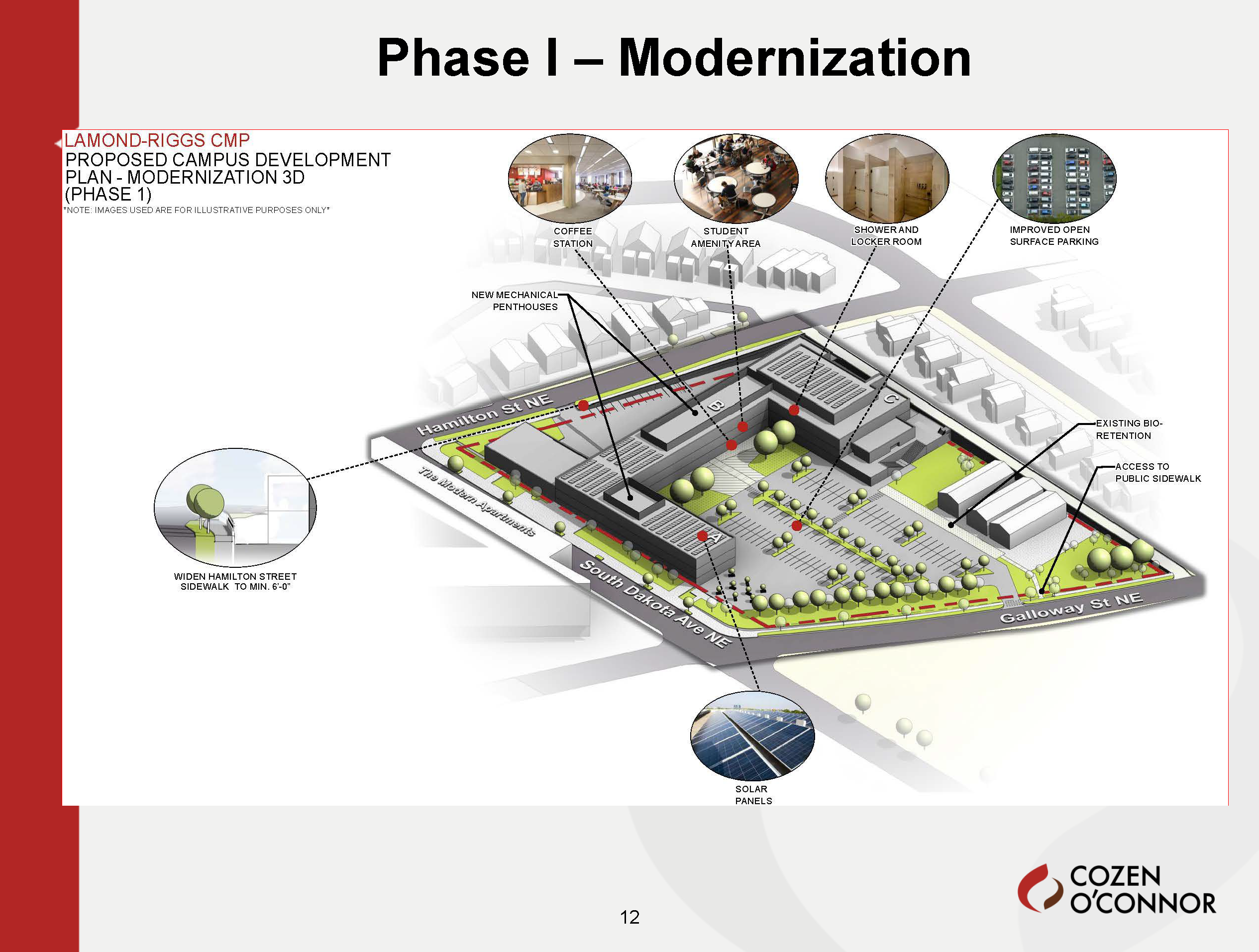
Phase One
Renovate and modernize the existing academic building (Wings A, B, and C) and facilities – no new exterior construction will occur in this Phase.
Upgrade mechanical spaces and HVAC facilities for more efficient heating, cooling, and overall energy use.
Upgrade the building’s structural elements to have the rooftop become solar-ready for the future installation of solar panels.
Improve and repair the building façade.
Improve the public realm along South Dakota Avenue NE to provide public seating, planters, and public art.
Develop a new green space between the three wings next to the Galloway Street NE parking area
Provide student-oriented amenities such as a coffee and food service station
Fully renovate the interior and unused space in Wing C to provide additional lab space and other academic capabilities
Renovate the parking areas to provide efficient stormwater management facilities such as bioretention areas and vegetation
Update parking facilities – the Hamilton Street NE parking area will provide 18 parking spaces, and the Galloway Street NE parking area will provide approximately 160 parking spaces.
Phase I renderingPhase I rendering
Phase Two
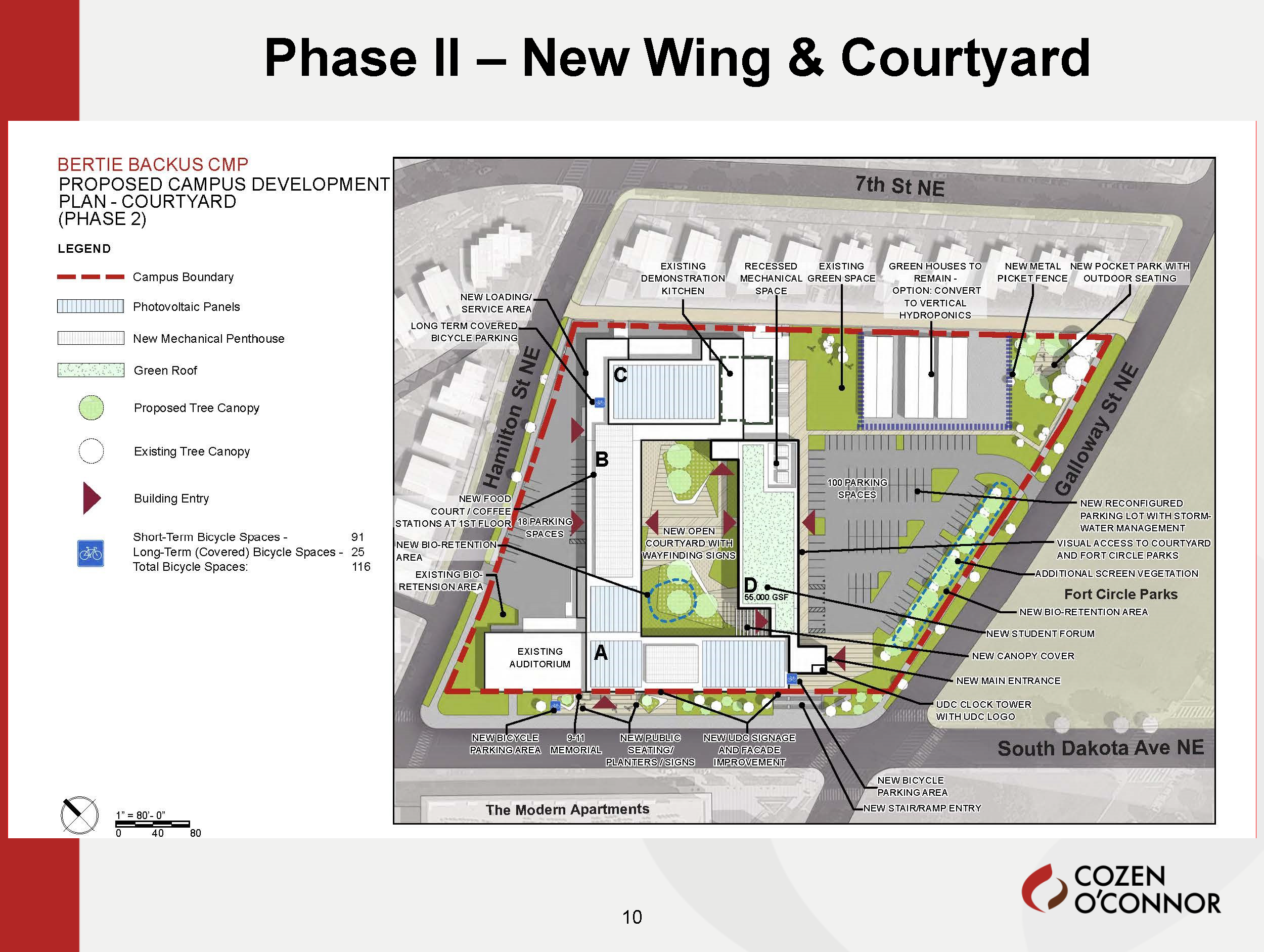
Construct the new Wing D, which will facilitate an open courtyard condition by encircling and expanding the new green space provided in Phase I.
Provide additional academic and administrative space in the new Wing D, as well as modern mechanical, electrical, and plumbing equipment intended to support the University’s sustainability goals.
Provide additional amenity space, including a new student forum.
Provide pedestrian-oriented landscaping, seating areas, stormwater management facilities, and open grass areas for rest and relaxation in the expanded courtyard.
Construct a green roof on the new Wing D to support the University and the District’s sustainability goals.
Update parking facilities – the Hamilton Street NE parking area will maintain the 18 parking spaces, and the Galloway Street NE parking area will be modified to provide approximately 100 parking spaces.
Phase II renderingPhase II rendering
UDC officials had time to answer a few specific questions about the proposal.
There is reference to a “new loading/service area” close to Hamilton Street. UDC said this not an entirely new loading area, but they acknowledged it might get more use and therefore they will have a loading management plan.
There are roughly 180 parking spaces on the Galloway side of the campus. The first phase will see a slight reduction to roughtly 160 spaces. In phase two, there will be a further reduction to 100 spaces.
The DOES American Job Center will be vacating the grounds at some point and UDC will use that space for the community college.
The existing buildings cannot support a green roof. That is why the development plan proposes a green roof only for the new wing that will be built in the second phase.
UDC clarified that they intend to replace the chain link fence with a more architectural fence similar to what was placed on the Hamilton Street side of the campus.
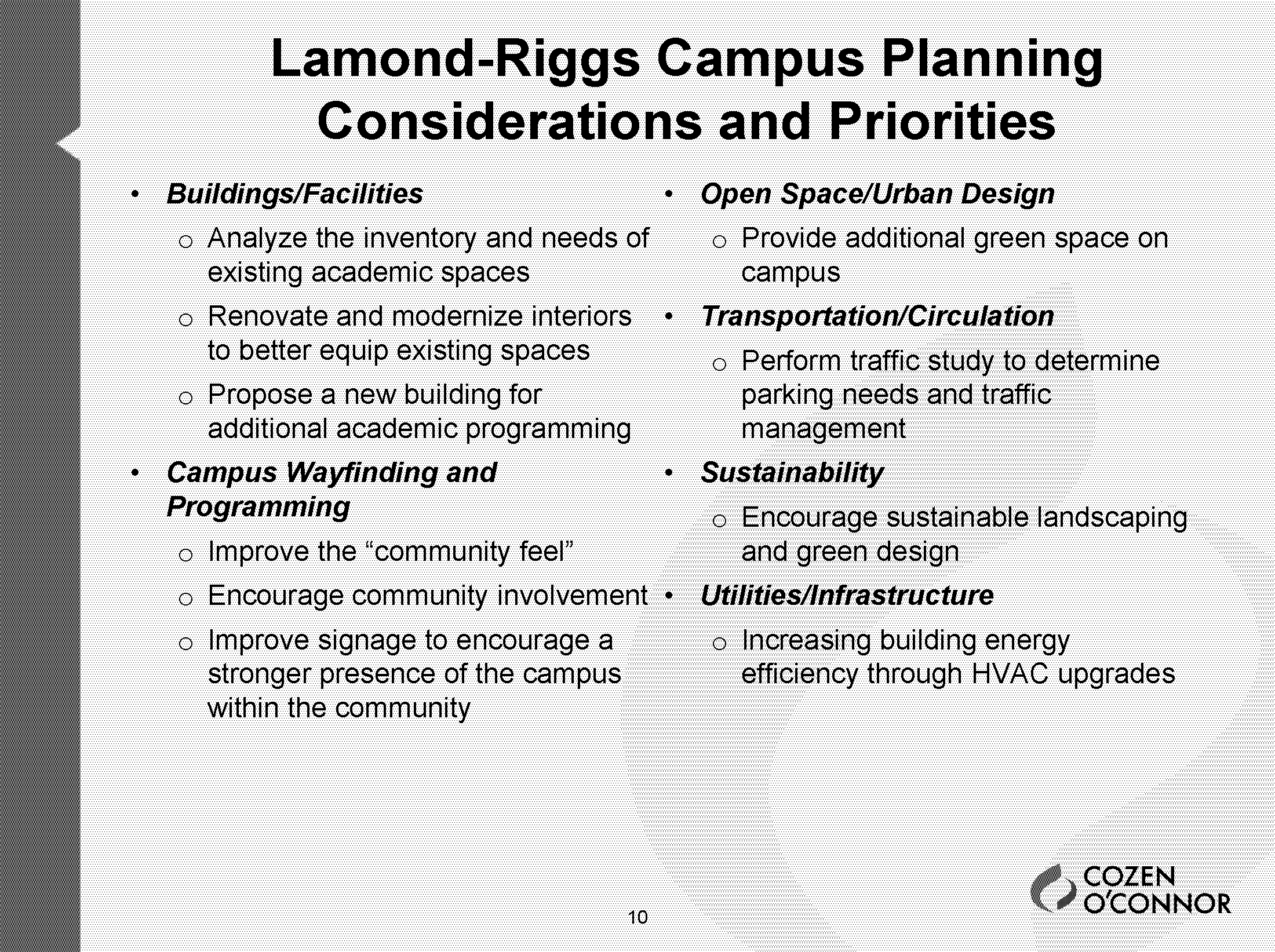
The May presentation details a bit more the priorities and considerations for the Lamond-Riggs campus related to buildings/facilities, campus wayfinding and programming, open space/urban design, transportation/circulation, sustainability, and utilities/infrastructure.
The May presentation also provides an updated timeline for this process.
Next Steps/Milestones
May 22: Present to OP
May 22: Present to SMD5A01
Present to ANC5A at their May 24 or June 28 meeting.
Summer 2023: Lamond-Riggs Campus Plan application intended be filed with the District’s Zoning Commission.
Fall 2023: Zoning Commission approval of Campus Plan anticipated
Given the timeline, I think it would be useful for neighbors to look at the fact sheets, especially the one for the overall campus plan to think about if there are important things that we want UDC to consider including before they actually file an application. I do not know the ANC’s plan for moving forward, but it looks like UDC plans to present one more time at the ANC’s June meeting. Probably a good idea to be prepared to give feedback there.
Send questions or comments to Juanita Gray at juanita.gray@udc.edu.
At last night’s ANC 5A01 & 5A09 meeting, UDC mentioned that the Backus campus has been renamed the Lamond-Riggs campus. Formal announcement from UDC below:
The University of the District of Columbia renames the Bertie Backus Campus to the Lamond-Riggs Campus
The University of the District of Columbia (UDC) Bertie Backus Campus has been renamed the University of the District of Columbia Lamond-Riggs Campus. The University Board of Trustees approved the change on April 25, 2023, to recognize the historic neighborhood while aligning the UDC Campus’s name with the site.
Located at 5171 South Dakota Avenue, NE, in the Riggs Park neighborhood, the Lamond-Riggs Campus is home to the UDC Community College (UDC-CC), with over 1,450 registered students as of spring 2023. The building located on the Campus will retain the Bertie Backus name to maintain the historical significance of the building to the community.
“Renaming the Bertie Backus Campus as the University of the District of Columbia Lamond-Riggs Campus perfectly aligns with our goals of being a part of and honoring this historical community,” said UDC President Ronald Mason Jr. “Although the name has changed, our goal of providing an accessible community hub for quality education remains the same.”
UDC-CC serves students pursuing associate degrees or certificates, which include law enforcement, information technology, engineering sciences and accredited programs, such as nursing, mortuary science, respiratory therapy, and aviation maintenance technology. Students who apply to the Community College are admitted on an open admissions basis. The UDC-CC at the Lamond-Riggs Campus is open Monday through Thursday from 8:30 a.m. to 8:30 p.m., Friday from 8:30 a.m. to 5:00 p.m., Saturday from 8:30 a.m. to 5:30 p.m., and closed on Sunday.
“The renaming can create a stronger sense of connection between the College and its community and continue to build trust and goodwill,” said Dean of the UDC-CC Marilyn Hamilton. “We are increasing the visibility and accessibility of the College to the residents of the neighborhood and those surrounding it. Moreover, this helps reinforce the College’s role as a vital institution that is part of the larger system of public higher education that makes up the University of the District of Columbia.”
Over the next few weeks, modifications will be made to signage and promotional materials to reflect the name change of the Campus.
UDC officials presented on the Bertie Backus Campus Plan at ANC 5A’s meeting on April 26, 2023. UDC officials said they plan to submit the campus plan application to the DC Zoning Commission this month. For information about the campus plan process, visit https://www.udc.edu/campus-master-plan.
(This post described initial meetings about this process).
DC zoning regulations require universities to update campus plans every 10 years. According to UDC, the goal of the regulations are to ensure that university campuses “(1) are well-planned and designed; (2) have long-term facilities plans; (3) minimize any negative impacts the university may have on the surrounding residential neighborhood; and (4) are consistent and transparent with their planning processes.” The Bertie Backus plan under development is the first one for the campus.
The April presentation provides a few more details on the phased development plan for the campus. I have asked for a fact sheet about the Backus campus plan. I will update the post when I receive that information.
The existing campus, located at 5171 South Dakota Avenue NE, sits on a large city block along South Dakota Avenue between Galloway and Hamilton streets. The campus houses UDC’s community college programs (which were relocated from the university’s North Capitol Street campus) and UDC’s Bertie Backus food hub. There is also a DOES American Job Center located on the grounds with an entrance on Hamilton Street NE. The campus sits in ANC 5A01.
(Separately from the campus plan process, the university is currently completing a few beautification projects on the campus.)
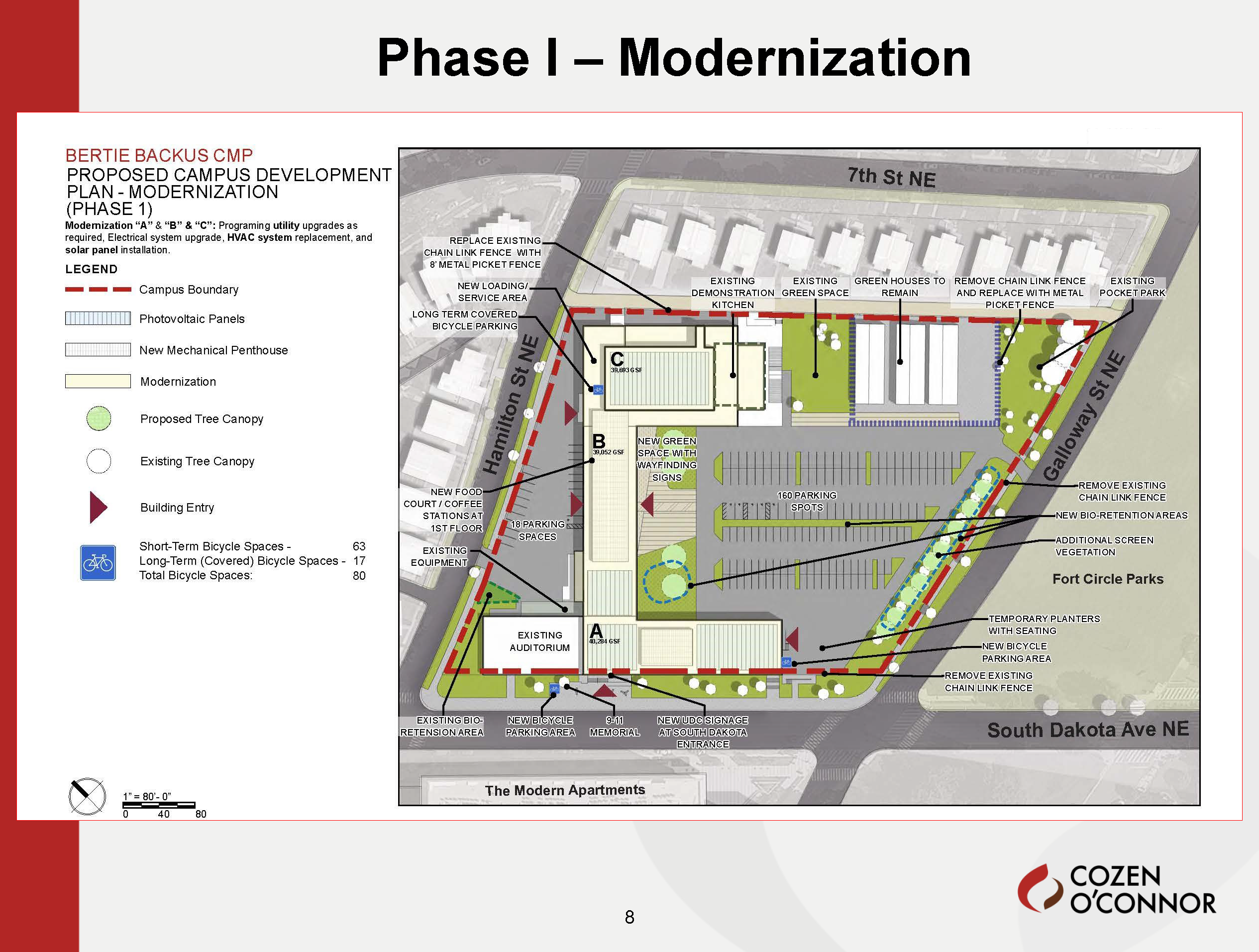
Phase One
The first phase would consist of modernizing the existing buildings on campus.
Upgrade utilities
New HVAC
Solar panel installation
Addition of a few long-term bicycle parking spaces
New green/bioretention spaces, new trees, new wayfinding signs in a reconfigured parking lot (160 parking spaces)
New food court/coffee station on first floor
New loading area close to Hamilton Street
Phase Two
The second phase would consist of an expansion. UDC officials said there is no funding for this phase.
New 55,000 square foot wing and courtyard on part of the existing parking lot.
New main entrance
Reconfigured parking lot with 100 spaces
Green roof on the new wing
Removal of chain link fence
New bike parking along South Dakota Avenue
New UDC clock tower with UDC logo
Improved signage/facade improvements along South Dakota Avenue
New green spaces
Food Hub components and 9/11 memorial will remain
Campus Plan Timeline
May 2023: UDC submits Bertie Backus campus plan application to DC Zoning Commission
UDC is creating the first ever campus plan for the Bertie Backus campus, which is the university’s community college campus located at 5171 South Dakota Avenue NE. One goal is to make sure the plan created for the Backus campus is consistent with the campus plan for the main university campus, which is the Van Ness campus. At the request of residents, UDC has now drafted a fact sheet regarding UDC’s Van Ness Campus Plan.
You can view the full Van Ness Campus Plan at https://www.udc.edu/campus-master-plan. That site also has links to presentations on the Backus Campus Plan process and a Backus Campus Plan survey. The survey is still live, so please share your thoughts about the Backus campus withe UDC.
The University of the District of Columbia (UDC) is planning the renovation and expansion of the Bertie Backus campus, located at 5171 South Dakota Avenue NE. The University is required to submit a Campus Master Plan to the DC Zoning Commission.
Please complete UDC’s survey here by December 9, 2022, to share your ideas about the Backus campus and its development over the next 10 years. December 9 is the deadline UDC shared with me, but it is not listed on the survey so I do not know if that is a hard deadline. Take a few minutes to share your thoughts about the physical campus and campus programming.
The University of the District of Columbia (UDC) is planning the renovation and expansion of the Bertie Backus campus, located at 5171 South Dakota Avenue NE. The University is required to submit a Campus Master Plan to the DC Zoning Commission.
Please complete UDC’s survey here by December 9, 2022, to share your ideas about the Backus campus and its development over the next 10 years.
Officials from UDC held a community meeting on October 19, 2022 to explain the upcoming Campus Plan process for UDC’s Bertie Backus Campus, which is located in Riggs Park at 5171 South Dakota Avenue NE (between Galloway Street and Hamilton Street NE). UDC presented again at the ANC 5A meeting on November 16, 2022. ANC 5A did not notify residents that UDC would be presenting.
The Backus campus is UDC’s community college campus. It is also home to the university’s Bertie Backus Food Hub. University officials anticipate expanding the Backus campus in the future.
DC zoning regulations require universities to update campus plans every 10 years. According to UDC, the goal of the regulations are to ensure that university campuses “(1) are well-planned and designed; (2)have long-term facilities plans; (3) minimize any negative impacts the university may have on the surrounding residential neighborhood; and (4) are consistent and transparent with their planning processes.”
The two meeting presentations are largely the same. They outline the role of community stakeholders; UDC’s long-term vision for the Backus campus; planning considerations and priorities; and the campus plan process.
The ANC presentation contains a slide regarding discussion points UDC took away from the October meeting: facility improvements, more green space, traffic, parking lot abundance, infrastructure upgrades. A resident asked about installing solar panels. In my view, the October meeting was pretty unfocused because UDC did not communicate meeting objectives or provide any context about the planning process to residents ahead of time. I for one did not offer specifics. I moreso had questions about the process and suggestions about how UDC could get more meaningful input from residents. I imagine residents will have more to say after taking some time to think about things. To that end, anyone who cares about what happens to this campus should spend a little time thinking about what UDC identified as the role of community stakeholders as well as UDC’s long-term vision for the campus.
UDC’s Vision of the Role of Community Stakeholders
Provide insight based on experience and familiarity with the Backus campus and surrounding neighborhood
Help the consulting team think about current and future needs
Identify ways to improve the Backus campus to better serve the community, the overall mission of the university, and better utilize the campus open sapce and other nearby resources such as Fort Circle Park.
UDC’s Long-term Vision for the Backus Campus
Expand on the vision of the Van Ness plan to holistically address the needs and goals of the university across its various campaus
Connect the campus to the neighborhood for a stronger institutional presence (e.g., community-based programming)
Make the campus more accessible through better wayfinding, circulation, and landscape design and
Explore how the campus might be redesigned to have more of a presence on South Dakota Avenue that improves its appearance, the pedestrian experience, and how it can better interact with and respond to the Art Place at Fort Totten development across the street from the campus.
UDC’s Planning Priorities & Considerations
Buildings/Facilities
Consideration of classroom space; improving the “community feel”
Transportation/Circulation
Open Space/Urban Design
Campus Programming and Use of Space
Sustainability
Utilities/Infrastructure
UDC’s Next Steps & Milestones:
Continue community outreach throughout fall/winter
January/February 2023: Submit Notice of Intent to file application
March 2023: File Backus Campus Plan with Zoning Commission
Summer 2023: Zoning Commission hearing
Residents have asked UDC to set up a webpage with information about the Backus campus plan process. UDC officials stated that should be ready next month in December. UDC also intends to distribute a survey, so keep an eye out for that.
At both the October and November meetings, residents asked UDC how they plan to reach residents who are not connected virtually. Unclear at this point.
Connection with Van Ness (Main Campus) Plan
Until UDC gets a webpage up and running for the Backus Campus Plan, take a look at the page for UDC’s Van Ness Campus Plan, which is the plan for their main campus. The Van Ness plan was approved in 2021. UDC emphasized in both the October and November meetings that one of their goals is to make sure the Backus Campus Plan aligns with the main campus plan.
At the October meeting, I asked for a fact sheet or highlights/summaries of the Van Ness plan that residents can review as we think about the Backus campus. I have not received that yet, but I will keep asking. In the meantime, if you want some reading to do over the Thanksgiving holiday, you can read the entire Van Ness plan or take a look at the Zoning Commission record for that plan process.
UDC Contact
If you have any questions or would like to share any thoughts about the Backus campus, contact Juanita Gray, UDC’s director of community engagement, at juanita.gray@udc.edu.
You can also sign up to receive university updates, including updates about the Backus campus plan, at the link.
Join the University of the District of Columbia (UDC) to share your thoughts and ideas for the forthcoming campus plan for UDC’s Bertie Backus Campus (5171 South Dakota Avenue NE).
This meeting will be held virtually. Click here to join.
More ways to join the meeting below:
Join by video: 26321193183@universityofdc.webex.com Meeting number/Access code: 2632 119 3183 Join by phone: +1-415-655-0003
For more information or questions please contact: Juanita Gray Email: Juanita.gray@udc.edu Phone: (202) 536-9605















 Next Stop...Riggs Park