ANC 5A is soliciting feedback on DC Office of Planning’s draft Future Land Use Map (FLUM).
From ANC 5A’s May 28th email:
We heard you loud and clear at last night’s ANC meeting—we are going back to the drawing board on ANC 5A’s comment on the FLUM and DC Comp Plan. The Comp plan and the FLUM will guide the future of our community for the next couple of decades—and we want to hear from every single voice in 5A. To that end:
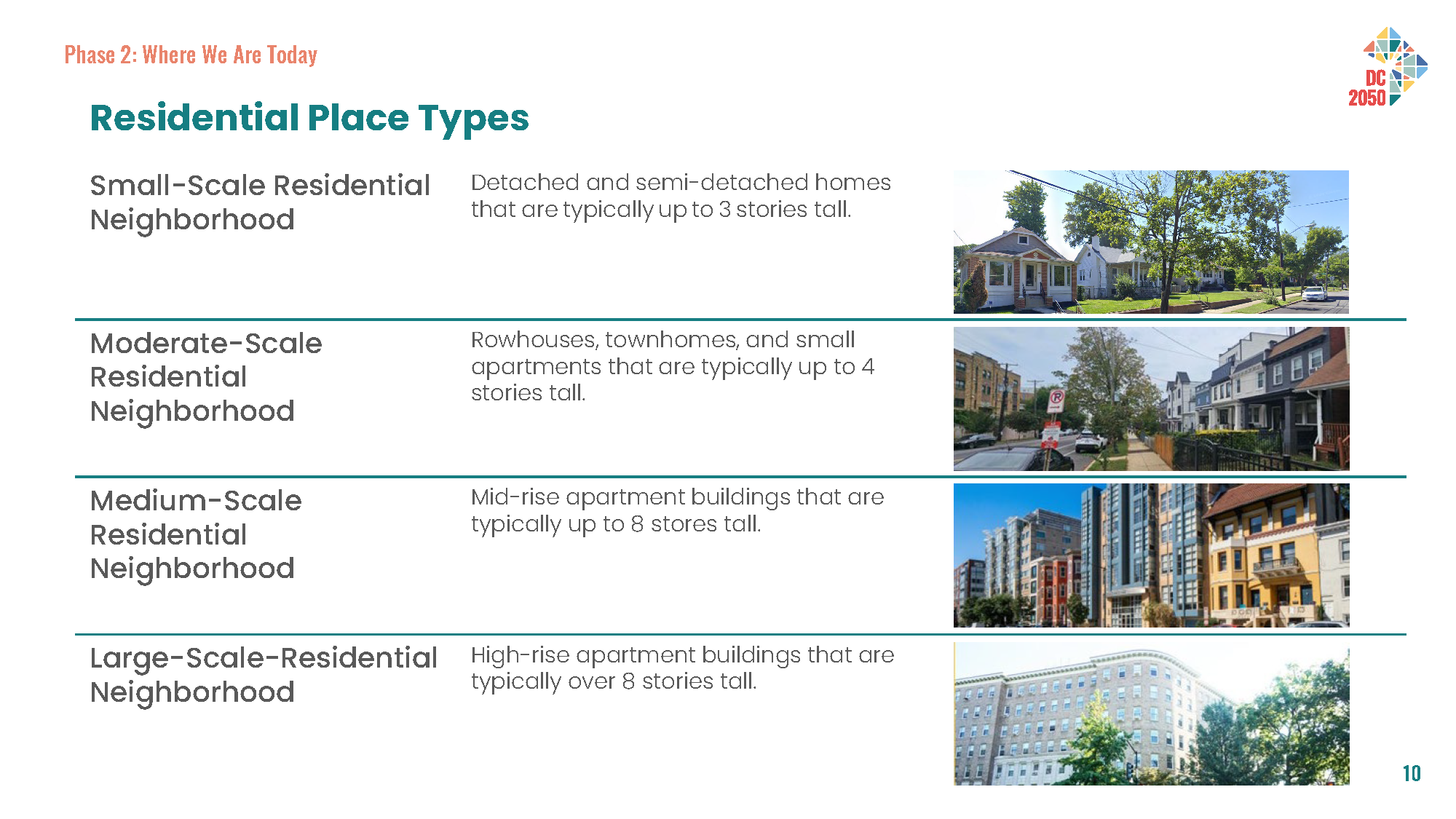
Explore the Future Land Use Map (FLUM) Draftand the Place Types resource shared by Office of Planning. The Place Types document provides you a key to understanding the FLUM fully
Please join us in-person on Wednesday, June 3rd, 7pm at the Faith United Church of Christ to share your concerns (this is during the North Michigan Park Civic Association meeting)
Email our DC 2050 Commissioner Keith Sellars [ 5a01@anc.dc.gov ] and/or our Chair Valeria Sosa Garnica [ 5a07@anc.dc.gov ] with your comments and feedback
Update 5/16/2026: OP extended the deadline again to June 7, 2026. See this post for OP’s presentation to North Michigan Park. Change areas for Riggs Park & nearby.
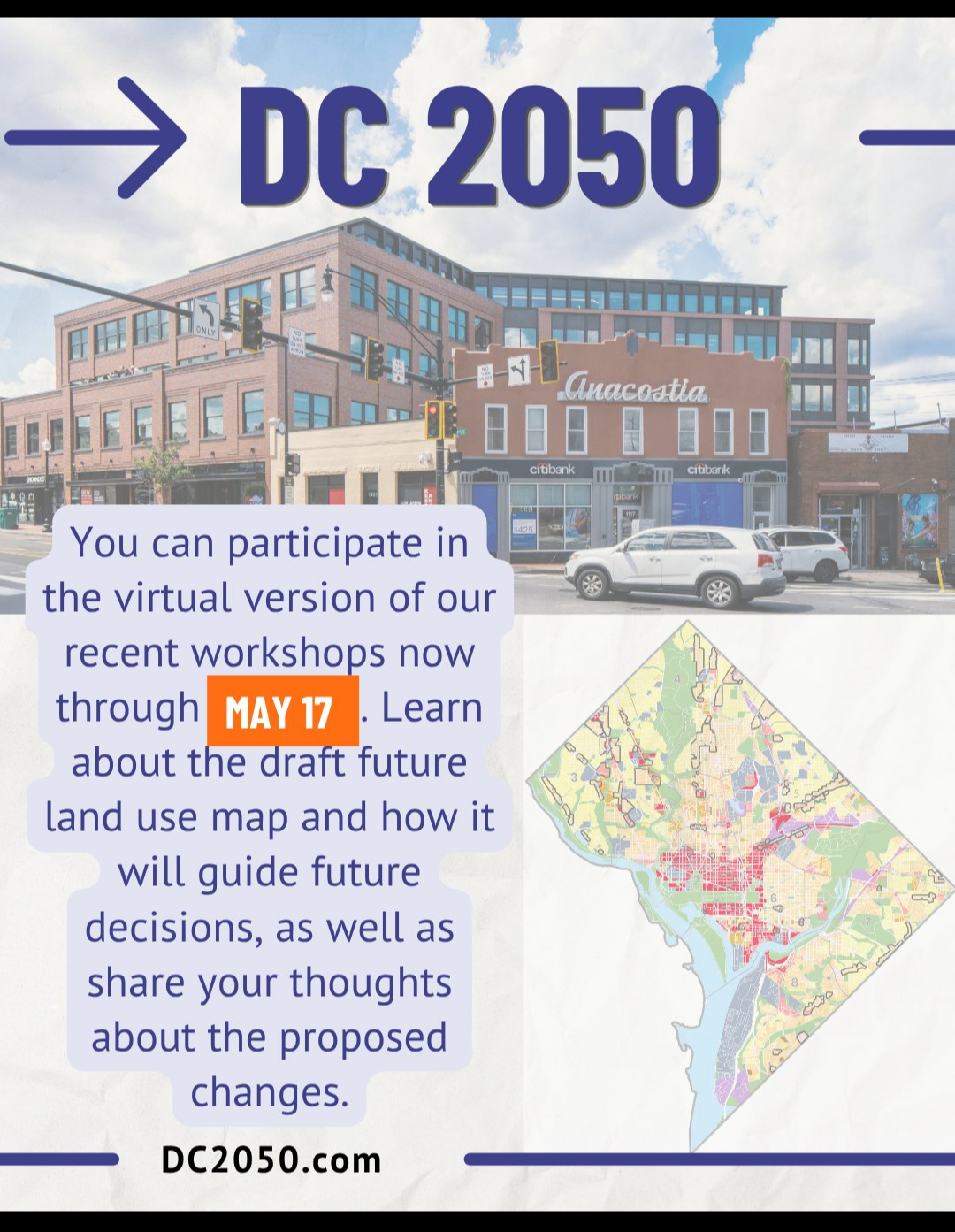
Update 4/15/2026: Comment deadline extended to May 17, 2026. View the virtual workshop.
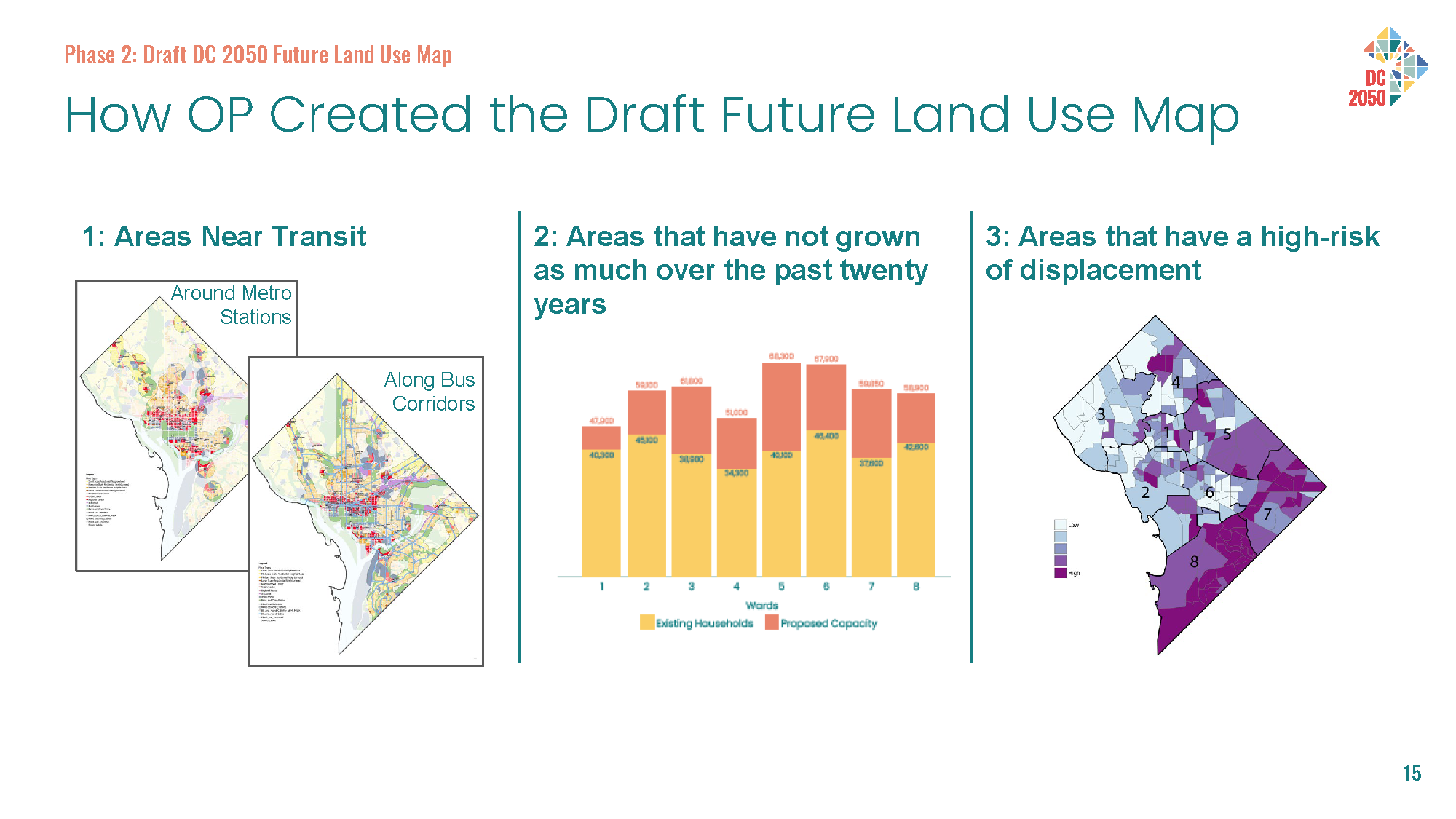
OP estimated the number of additional new homes necessary to keep housing cost increases below the inflation rate. With the Draft FLUM, OP seeks to quantify the number of housing units that would be created by each of the changes.
Draft Ward 4 Neighborhood Proposal
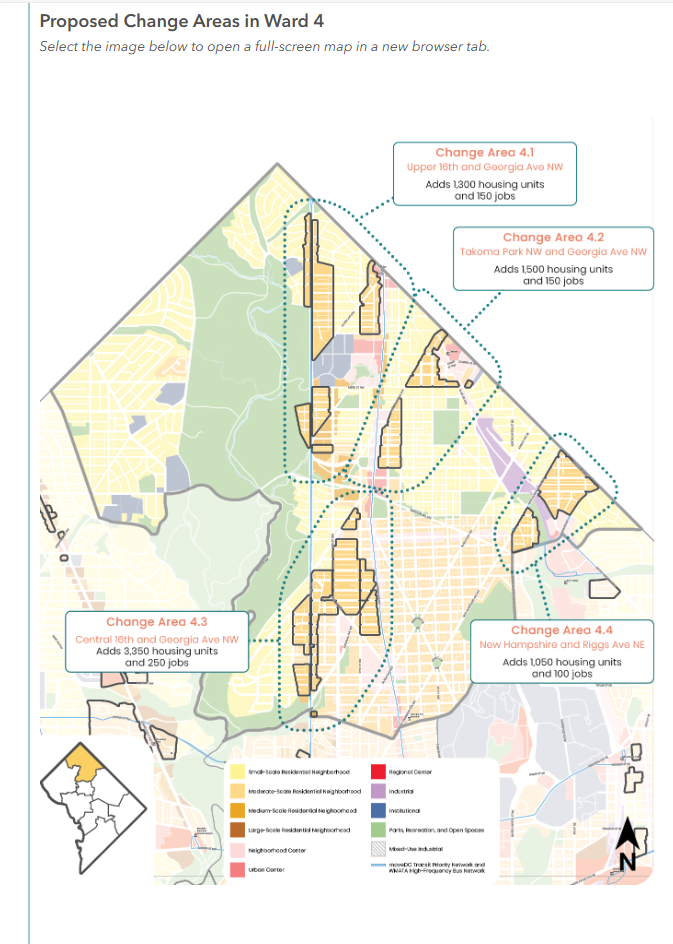
CHANGE AREA 4.4
Location: New Hampshire NW and Riggs Ave NE
Changes in this area include:
· Small-scale residential neighborhoods to moderate-scale residential neighborhoods
These changes are estimated to add 1,050 housing units and 100 jobs.
Draft Ward 5 Neighborhood Proposal
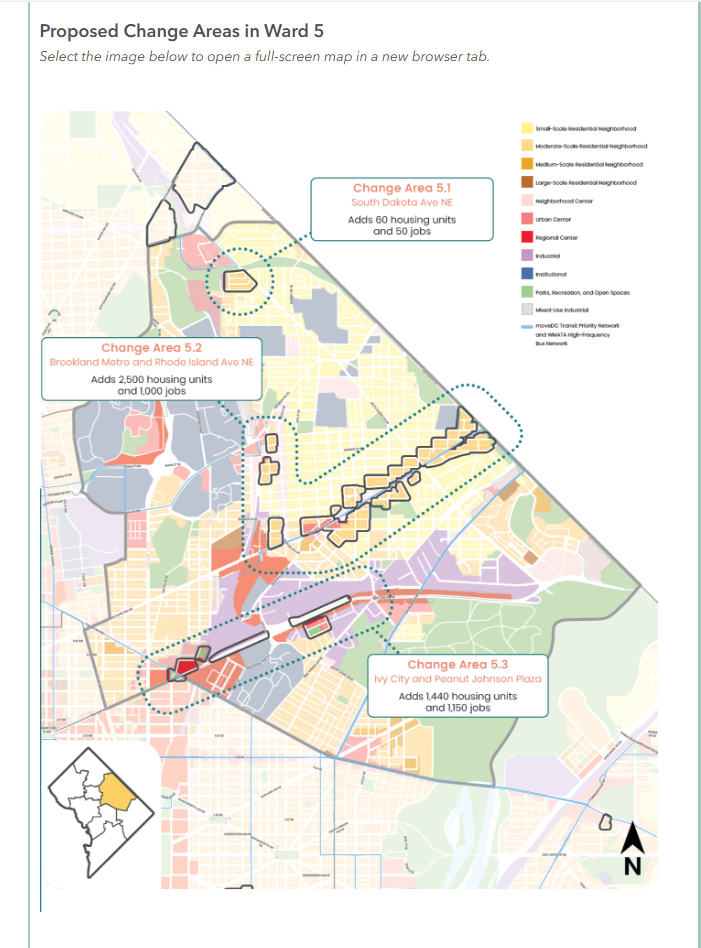
CHANGE AREA 5.1:
Location: South Dakota Ave NE
Changes in this area include:
· Small-scale residential neighborhoods to moderate-scale residential neighborhoods
These changes are estimated to add 60 housing units and 50 jobs.
—
I attended the spring workshop and I find OP’s draft changes for Riggs Parks (Change Areas 4.4 and 5.1) to be a bit random. If the goal is to say that we need additional housing units, I think we can look to where we know large institutional properties are going to be developed into new housing, such as the Boys Town and Providence campuses, rather than looking at random parcels of existing semi-detached homes, which is what the Draft FLUM is proposing.
OP Director Anita Cozart explained that they are targeting areas near Metrorail and high-frequency bus routes (I get that). She said the idea is to make way for gentle density like small apartments. When I pointed out that Faith United Church has been trying to build on its property for decades but no change is being proposed for that property, she said OP also wants to keep the areas with proposed changes contiguous and not do one-off changes to individual lots. I get that as well, though I suspect that is exactly what will end up happening for reasons.
I still think that if there are institutional properties that will likely be redeveloped into new housing in the future, then to me it makes sense for that to be reflected in the Draft FLUM. I guess the only reason they are not doing that is that theoretically the institutional use reflected in the FLUM would not preclude developing housing.
For example, Boys Town is shown as institutional on the existing FLUM but it is zoned R-2 which will allow development of semi-detached housing by right. Developer Urban Atlantic is planning to build 166 semi-detached homes there. And 166 homes is already more than the 60 that OP is showing for the random draft change in Change 5.1. Realistically Change 5.1 is not going to result in an additional 60 housing units and that is probably fine. We already have 166 semi-detached homes going in at Boys Town and hundreds more housing units going in at Providence eventually. Furthermore, we know that the 8,000 square foot Main Building on the Boys Town campus will likely need a zoning change or exception in the future for anything to be done with it. It is not going to be torn down. So I think there are missed opportunities here.
It is worth looking at the draft changes elsewhere in the city. I participated in one of the breakout meetings. One of the questions was where to build affordable housing (I assume they were referring to income-restricted affordable housing). Mysteriously one of the assumptions they made when asking the question was that if they continue to build affordable housing in areas well below the median family income, then somehow amenities would follow by adding more low-income households to the mix. I think if the goal is to provide access to amenities, then it makes sense to build/maintain affordable housing in amenity-rich neighborhoods like neighborhoods west of Rock Creek Park and to be very intentional about providing amenities in areas lacking them. Assuming that amenities will somehow simply follow with no thoughtful intentional action does not make a lot of sense to me.
Anyways, be sure to take the opportunity to review the draft map and submit your feedback to OP by April 30.
North Michigan Park neighbor Robert Oliver passed along the presentation that Office of Planning Associate Director Ryan Hand gave to North Michigan Park Civic Association (NMPCA) about draft changes to the Future Land Use Map (FLUM). These draft changes are just one step in OP’s Comprehensive Plan rewrite, which OP is calling DC2050.
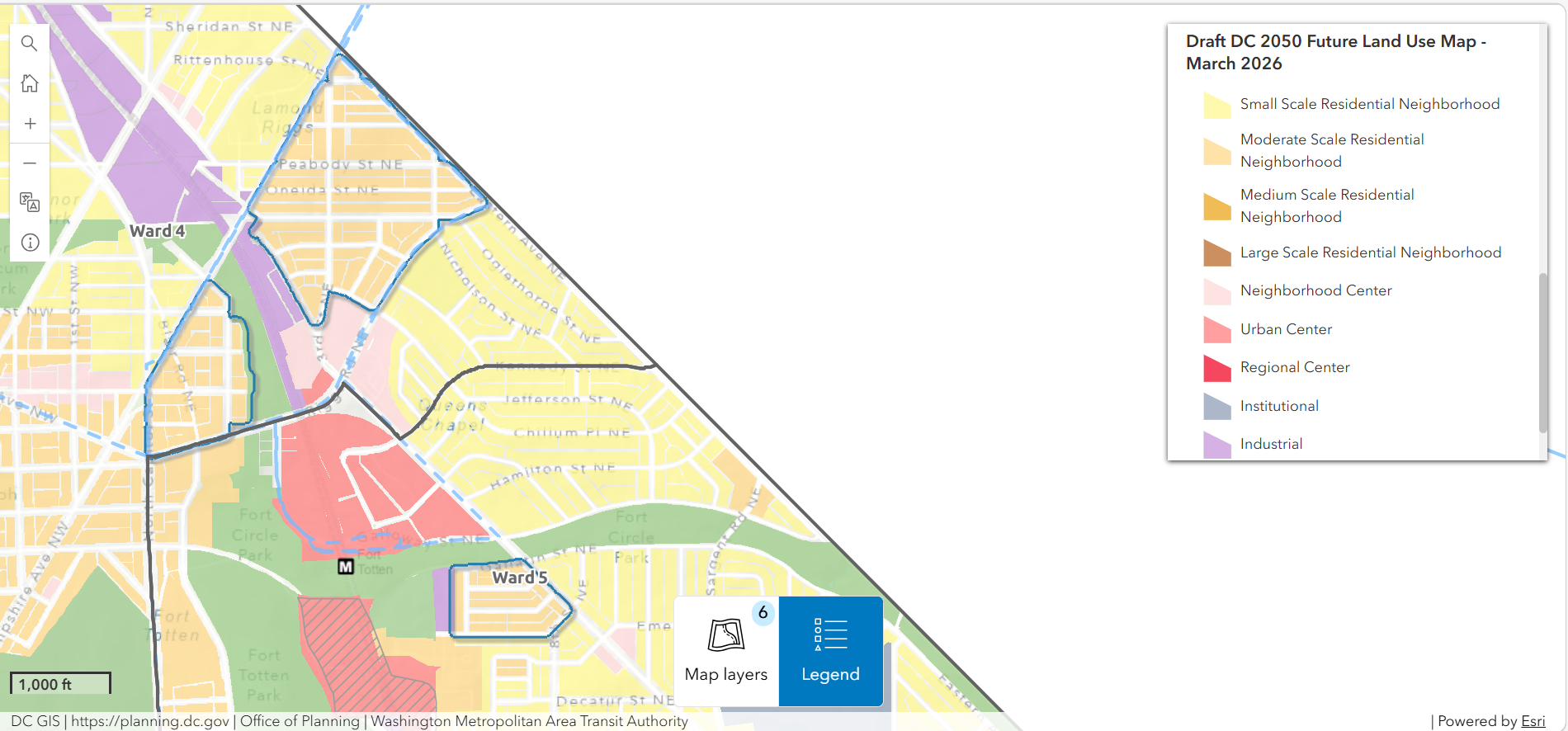
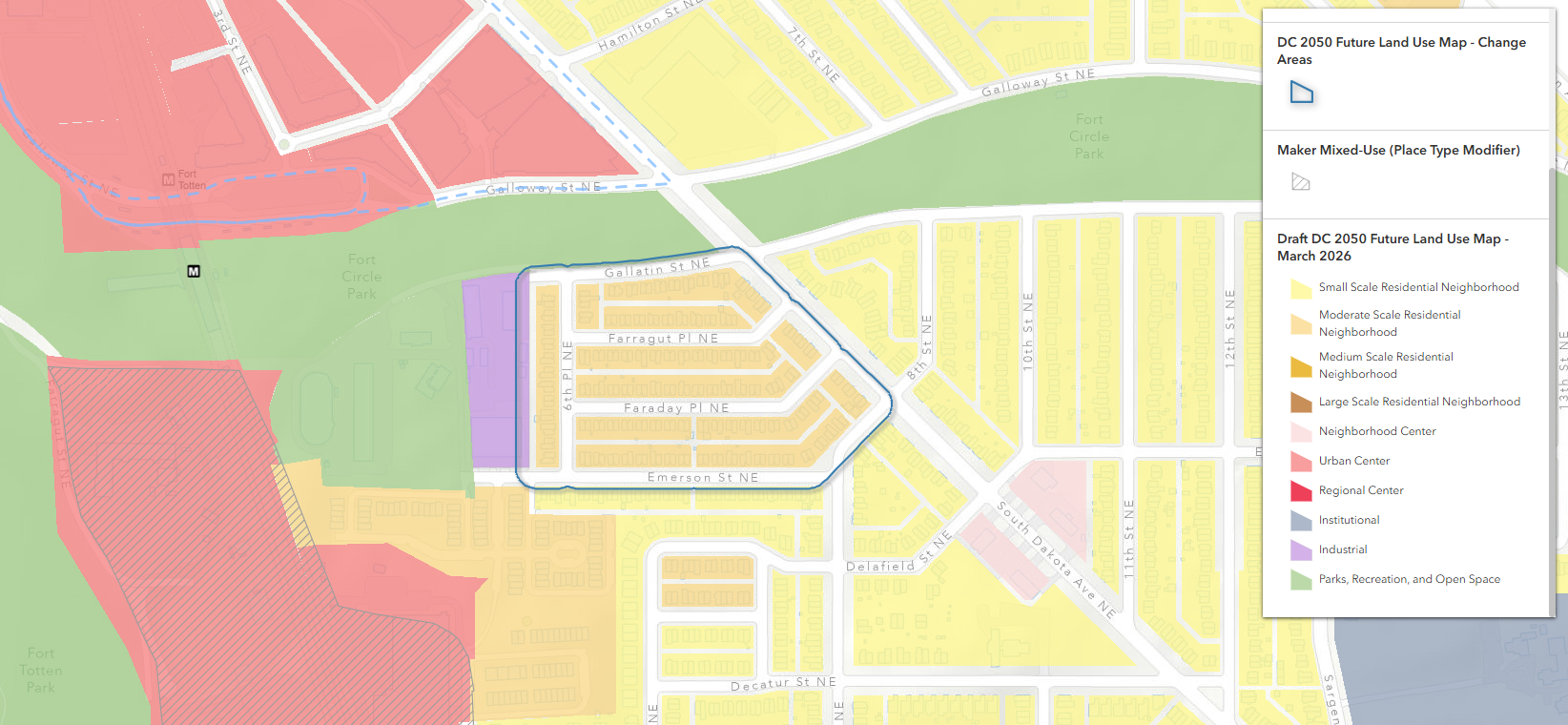
There is a tiny section of North Michigan Park just south of Fort Totten Park that OP wants to change from “small-scale residential” to “moderate-scale residential.” Residents at the NMPCA meeting on May 6 were not on board this proposal.
I noted in this post that OP Director Anita Cozart stated that the intent of the change is to possibly make way for small apartments or accessory dwelling units (ADUs) (though ADUs are already permissible). Mr. Hand echoed that rationale stating that OP sought to “up-FLUM” areas near Metrorail and high frequency bus corridors and also areas that have not grown as much over the past 20 years. At the same time, Mr. Hand noted that OP also wants to be cautious about making changes to areas too quickly that are at high risk of displacement.
Mr. Hand acknowledged concerns from residents that this change could incentivize developers to try to buy out homeowners to tear down the existing semi-detached homes and build multifamily buildings in their place. In response to a resident who brought up the explosive growth in Columbia Heights, Mr. Hand stated that the development that took place in Columbia Heights was a different situation at a unique moment in the city’s history. So OP does not seem too concerned about something similar happening in North Michigan Park (or nearby).
I noted in a previous post that I do not quite understand why OP is drawing the map the way they are. This meeting with Mr. Hand did provide confirmation that it really is kind of random. OP is targeting areas near Metrorail, hence the change to this small section of North Michigan Park. On the Ward 4 side, OP selected areas along Riggs Road to up-FLUM because they are along a high-frequency bus corridor. It is still puzzling to me that OP chose not to account for for-sale and rental housing that can be built in areas identified as institutional areas on the FLUM.
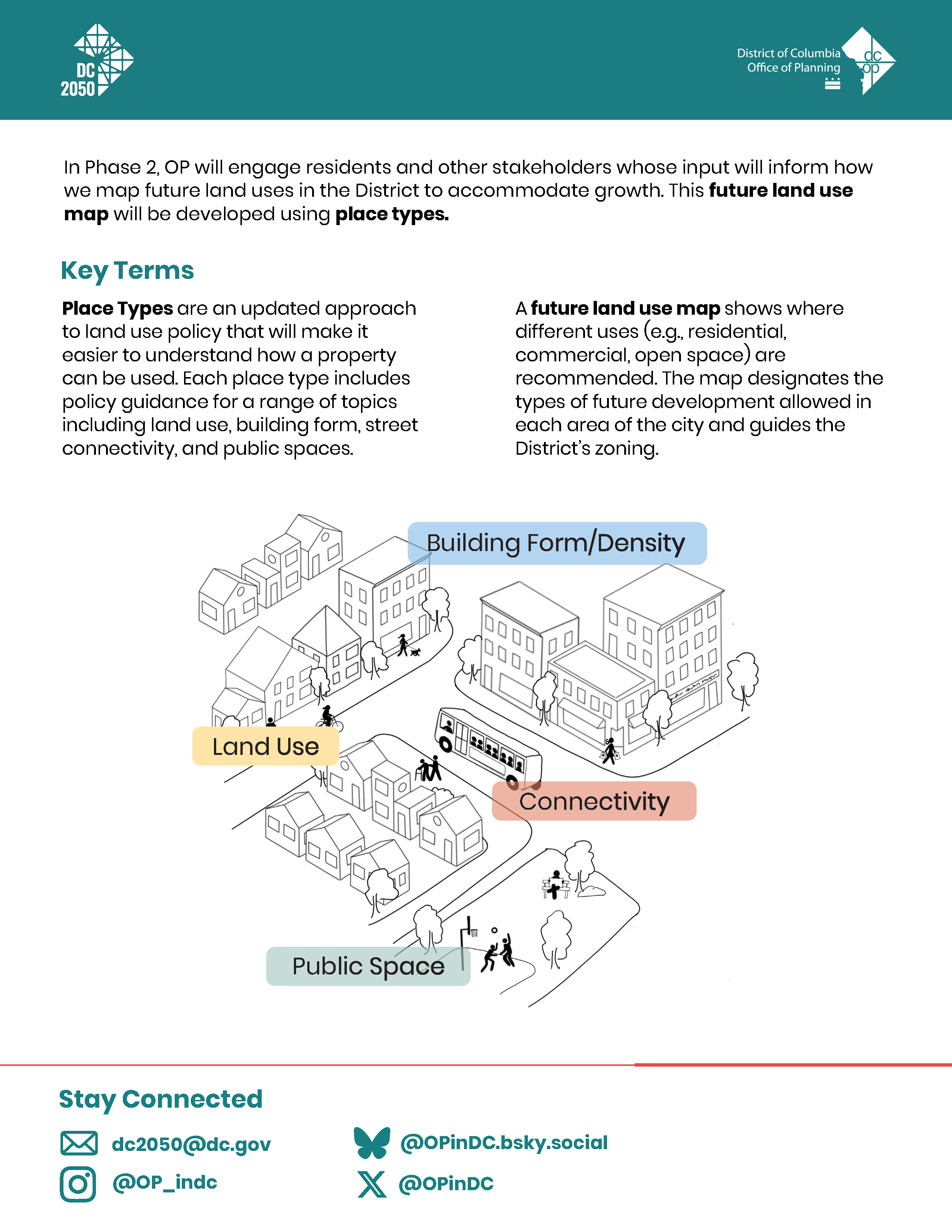
As it stands the amount of housing that OP is saying can be built in areas with existing, occupied semi-detached homes is a bit of fiction whereas there can be real numbers attached to institutional areas with vacant land on the map. Also, while I get the move to the new “place types” concept, I do think there is a bit of worthwhile distinction lost when one lumps semi-detached and rowhomes with apartment buildings in one category.
ANC Commissioner Bocoum (5A09) is having a virtual single member district (SMD) meeting tonight about the changes in this small section of North Michigan Park. I anticipate that ANC 5A will want to vote on the issue at their meeting on May 27. Mr. Hand told the commissioners at the North Michigan Park meeting that the ANC can submit their resolution to OP after this meeting. Mr. Hand noted that the Council changed the law so that OP has to give “great weight” to ANC resolutions at this draft phase (and not just at the final phase).
I do not know if OP plans to formally extend the deadline for everyone, so if you plan to submit individual comments, be sure to submit your comments by May 17.
OP estimated the number of additional new homes necessary to keep housing cost increases below the inflation rate. With the Draft FLUM, OP seeks to quantify the number of housing units that would be created by each of the changes.
Draft Ward 4 Neighborhood Proposal
CHANGE AREA 4.4
Location: New Hampshire NW and Riggs Ave NE
Changes in this area include:
· Small-scale residential neighborhoods to moderate-scale residential neighborhoods
These changes are estimated to add 1,050 housing units and 100 jobs.
Draft Ward 5 Neighborhood Proposal
CHANGE AREA 5.1:
Location: South Dakota Ave NE
Changes in this area include:
· Small-scale residential neighborhoods to moderate-scale residential neighborhoods
These changes are estimated to add 60 housing units and 50 jobs.
—
I attended the spring workshop and I find OP’s draft changes for Riggs Parks (Change Areas 4.4 and 5.1) to be a bit random. If the goal is to say that we need additional housing units, I think we can look to where we know large institutional properties are going to be developed into new housing, such as the Boys Town and Providence campuses, rather than looking at random parcels of existing semi-detached homes, which is what the Draft FLUM is proposing.
OP Director Anita Cozart explained that they are targeting areas near Metrorail and high-frequency bus routes (I get that). She said the idea is to make way for gentle density like small apartments. When I pointed out that Faith United Church has been trying to build on its property for decades but no change is being proposed for that property, she said OP also wants to keep the areas with proposed changes contiguous and not do one-off changes to individual lots. I get that as well, though I suspect that is exactly what will end up happening for reasons.
I still think that if there are institutional properties that will likely be redeveloped into new housing in the future, then to me it makes sense for that to be reflected in the Draft FLUM. I guess the only reason they are not doing that is that theoretically the institutional use reflected in the FLUM would not preclude developing housing.
For example, Boys Town is shown as institutional on the existing FLUM but it is zoned R-2 which will allow development of semi-detached housing by right. Developer Urban Atlantic is planning to build 166 semi-detached homes there. And 166 homes is already more than the 60 that OP is showing for the random draft change in Change 5.1. Realistically Change 5.1 is not going to result in an additional 60 housing units and that is probably fine. We already have 166 semi-detached homes going in at Boys Town and hundreds more housing units going in at Providence eventually. Furthermore, we know that the 8,000 square foot Main Building on the Boys Town campus will likely need a zoning change or exception in the future for anything to be done with it. It is not going to be torn down. So I think there are missed opportunities here.
It is worth looking at the draft changes elsewhere in the city. I participated in one of the breakout meetings. One of the questions was where to build affordable housing (I assume they were referring to income-restricted affordable housing). Mysteriously one of the assumptions they made when asking the question was that if they continue to build affordable housing in areas well below the median family income, then somehow amenities would follow by adding more low-income households to the mix. I think if the goal is to provide access to amenities, then it makes sense to build/maintain affordable housing in amenity-rich neighborhoods like neighborhoods west of Rock Creek Park and to be very intentional about providing amenities in areas lacking them. Assuming that amenities will somehow simply follow with no thoughtful intentional action does not make a lot of sense to me.
Anyways, be sure to take the opportunity to review the draft map and submit your feedback to OP by April 30.
OP estimated the number of additional new homes necessary to keep housing cost increases below the inflation rate. With the Draft FLUM, OP seeks to quantify the number of housing units that would be created by each of the changes.
Draft Ward 4 Neighborhood Proposal
CHANGE AREA 4.4
Location: New Hampshire NW and Riggs Ave NE
Changes in this area include:
· Small-scale residential neighborhoods to moderate-scale residential neighborhoods
These changes are estimated to add 1,050 housing units and 100 jobs.
Draft Ward 5 Neighborhood Proposal
CHANGE AREA 5.1:
Location: South Dakota Ave NE
Changes in this area include:
· Small-scale residential neighborhoods to moderate-scale residential neighborhoods
These changes are estimated to add 60 housing units and 50 jobs.
—
I attended the spring workshop and I find OP’s draft changes for Riggs Parks (Change Areas 4.4 and 5.1) to be a bit random. If the goal is to say that we need additional housing units, I think we can look to where we know large institutional properties are going to be developed into new housing, such as the Boys Town and Providence campuses, rather than looking at random parcels of existing semi-detached homes, which is what the Draft FLUM is proposing.
OP Director Anita Cozart explained that they are targeting areas near Metrorail and high-frequency bus routes (I get that). She said the idea is to make way for gentle density like small apartments. When I pointed out that Faith United Church has been trying to build on its property for decades but no change is being proposed for that property, she said OP also wants to keep the areas with proposed changes contiguous and not do one-off changes to individual lots. I get that as well, though I suspect that is exactly what will end up happening for reasons.
I still think that if there are institutional properties that will likely be redeveloped into new housing in the future, then to me it makes sense for that to be reflected in the Draft FLUM. I guess the only reason they are not doing that is that theoretically the institutional use reflected in the FLUM would not preclude developing housing.
For example, Boys Town is shown as institutional on the existing FLUM but it is zoned R-2 which will allow development of semi-detached housing by right. Developer Urban Atlantic is planning to build 166 semi-detached homes there. And 166 homes is already more than the 60 that OP is showing for the random draft change in Change 5.1. Realistically Change 5.1 is not going to result in an additional 60 housing units and that is probably fine. We already have 166 semi-detached homes going in at Boys Town and hundreds more housing units going in at Providence eventually. Furthermore, we know that the 8,000 square foot Main Building on the Boys Town campus will likely need a zoning change or exception in the future for anything to be done with it. It is not going to be torn down. So I think there are missed opportunities here.
It is worth looking at the draft changes elsewhere in the city. I participated in one of the breakout meetings. One of the questions was where to build affordable housing (I assume they were referring to income-restricted affordable housing). Mysteriously one of the assumptions they made when asking the question was that if they continue to build affordable housing in areas well below the median family income, then somehow amenities would follow by adding more low-income households to the mix. I think if the goal is to provide access to amenities, then it makes sense to build/maintain affordable housing in amenity-rich neighborhoods like neighborhoods west of Rock Creek Park and to be very intentional about providing amenities in areas lacking them. Assuming that amenities will somehow simply follow with no thoughtful intentional action does not make a lot of sense to me.
Anyways, be sure to take the opportunity to review the draft map and submit your feedback to OP by April 30.
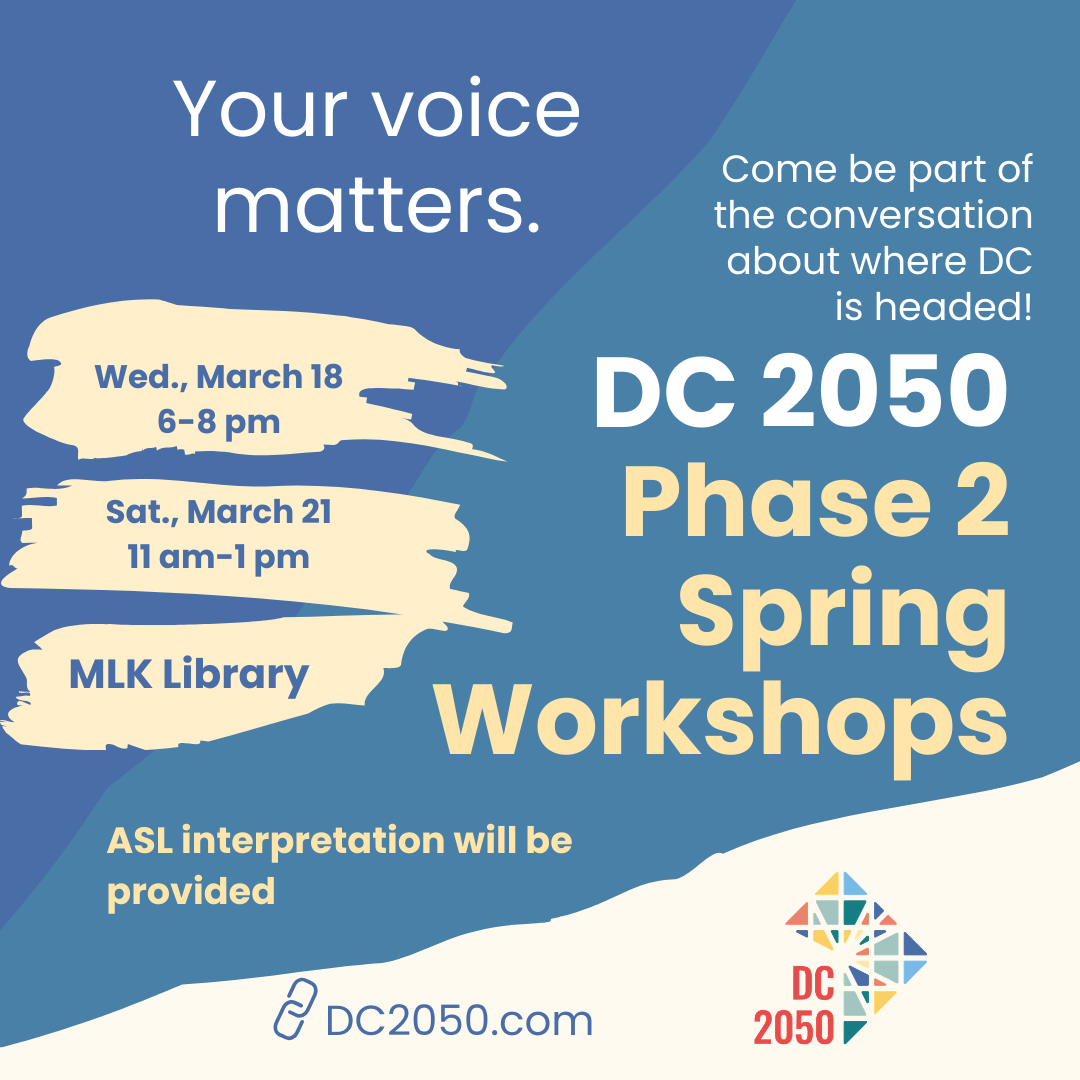
The DC Office of Planning has developed proposals for how the District uses its land over the next several decades and is seeking your feedback to ensure the plan will address what you care about. In an open house and small-group discussions led by OP staff, OP will share proposals for the District’s future land use, explain how they were developed, and ask for your feedback. Register now for either event: https://survey123.arcgis.com/share/9d2c386a3b414ce38c8ff6014c17bee6
3/18, from 6-8pm at MLK Library (901 G St. NW)
Small group discussions at 6:30 and 7:15pm
3/21, from 11am-1pm at MLK Library (901 G St. NW)
Small group discussions at 11:30am and 12:15pm
Note: OP will also be publishing a survey, which is an option for people unable to attend.
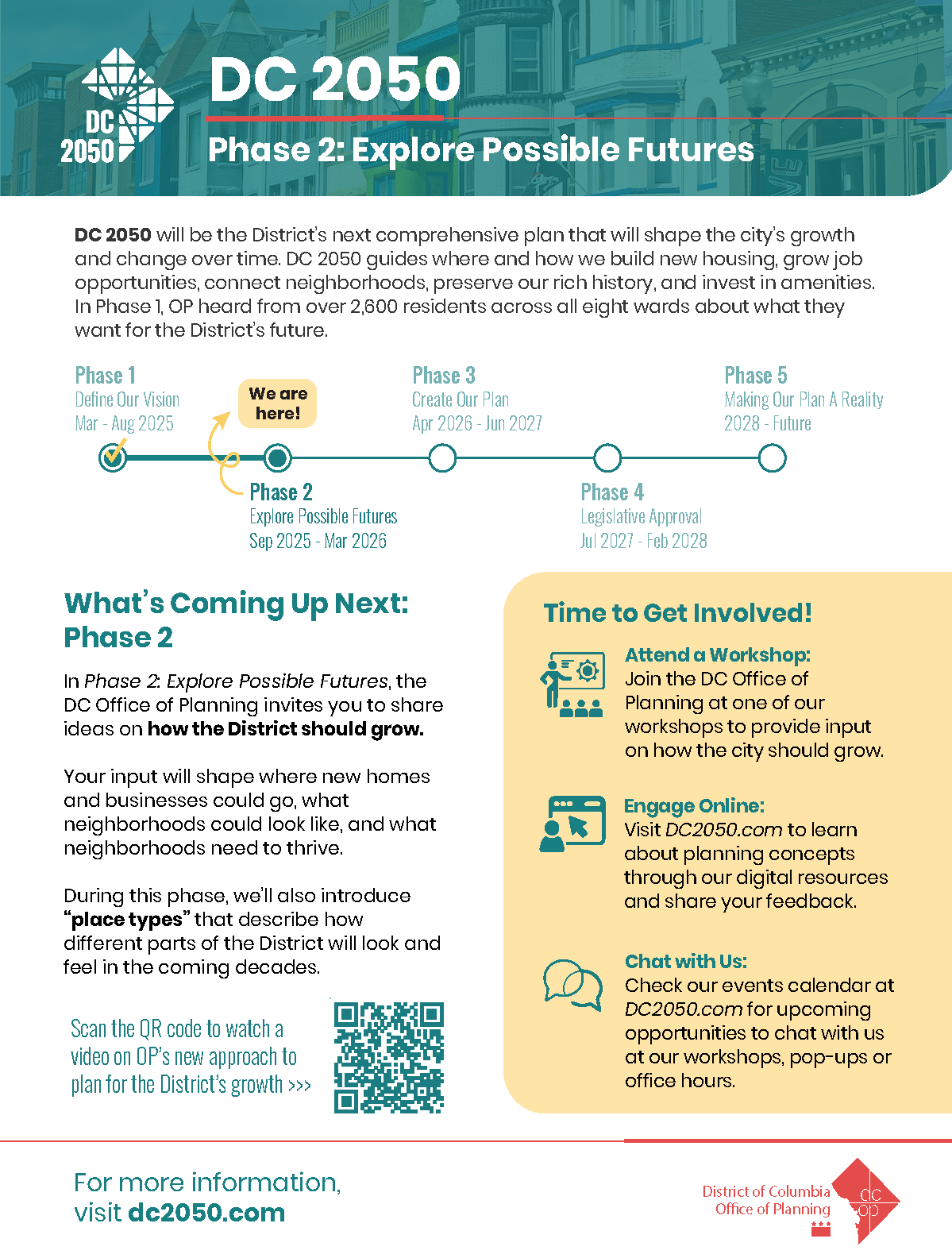
DC 2050 will guide where and how we build new housing, grow job opportunities, connect neighborhoods, preserve our history, and invest in services.
The DC Office of Planning (OP) is working on DC 2050, the rewrite of DC’s Comprehensive Plan, that will guide how the city grows and develops. With DC 2050, OP aims to “align land use policies and investments to make the District more equitable, affordable, and resilient.”
OP is currently in Phase 2 of the process. The agency is giving residents an opportunity to explore the city’s land use policy and let District officials know how and where you think the city should grow.
It is worth taking a few minutes to look at OP’s initial thinking about how to accommodate growth in the city (e.g., downtown, near Metrorail stations, and/or along bus priority corridors).
In addition, residents are invited to join musicians for a songwriting program, “Imagine Our City’s Next 250 Years,” at Woodridge Library on January 31 at 12pm. The DC 2050 team will be on hand to chat about the Comp Plan process.
The DC Office of Planning (OP) is working on DC 2050, the update to DC’s Comprehensive Plan, that will guide how the city will grow. So far, OP has hosted several in-person public workshops. Now there is an online self-guided version of the public workshops that gives residents an opportunity to explore the city’s land use policy and let District officials know how and where you think the city should grow.
OP is hosting an online workshop next Tuesday December 16, 2025, entitled “Designing Queer Futures Workshop.” The DC Office of Planning invites LGBTQIA+ community members, elders, advocates, and allies to share with OP what matters to them.
The DC Office of Planning is holding two community workshops to discuss the next update to the District’s Comprehensive Plan called DC 2050. The Comp Plan guides how the city will grow and identifies needs and priorities for neighborhoods and also citywide. These community workshops are an opportunity to learn more about the process and give input early in the process. Visit DC2050.com for more information.
The DC Office of Planning (OP) has placed materials from the first public meeting on the DC 2050 Comp Plan Update on the website: Meeting Materials + Meeting Recording.
The next in-person workshops will take place on Saturday, May 31, from 11 am-1 pm and Wednesday, June 4, from 6-8 pm. Stay up to date on the Comp Plan Update at dc2050.com.
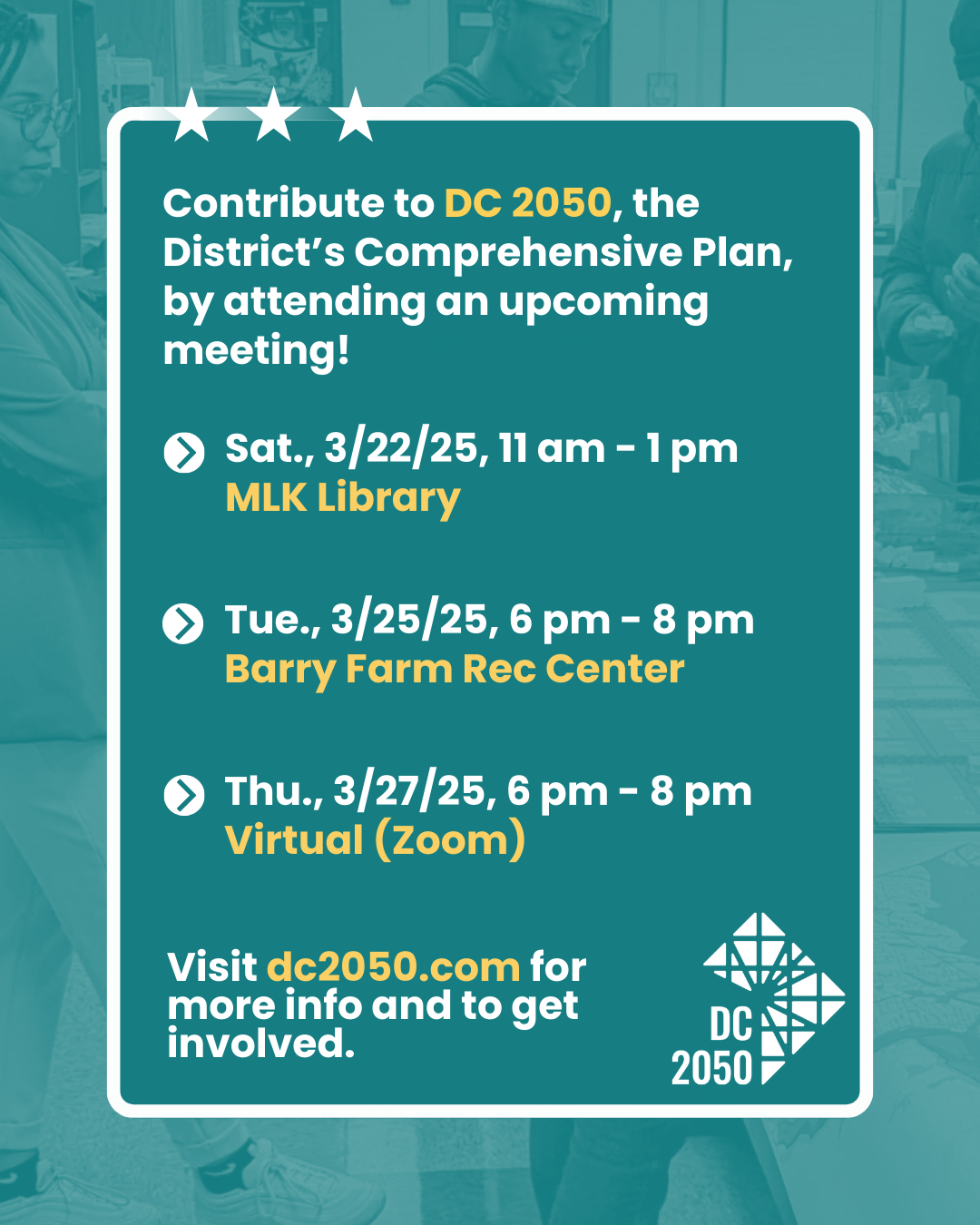
DC’s Office of Planning (OP) is holding three intro sessions for DC 2050, DC’s next comprehensive plan that will guide the city’s growth and development across all 8 wards.
Join in to share your ideas about where and how the city should add housing, jobs, services, and everything people need to thrive.
MLK Library – Saturday, March 22, 2025, from 11am-1pm
Barry Farm Rec Center – Tuesday, March 25, 2025, from 6-8pm
Online – Thursday, March 27, 2025, from 6-8pm
All three sessions will cover the same content.
Services provided include:
Children’s activities
Language interpretation/ADA accommodations by request via the RSVP form


 Next Stop...Riggs Park