Tonight, Ward 5 Councilmember Zachary Parker will hold a virtual meeting about Metro’s development plans at Brookland station and Fort Totten station (register for link). The meeting will present a 30,000 foot view of the plans as Metro begins the development process at both stations.
Fort Totten station
Metro recently authorized moving forward with a solicitation for joint development of the large parking lot at Fort Totten station (see this post on the authorization). As outlined in the board document, Metro believes there is potential for 750 housing units with retail and expanded Metro Transit Police precinct facilities, along with a parking garage for no loss of long-term Metro parking spaces (408 spaces). Metro plans to keep the small parking lot in front of the 7-Eleven (approximately 58 spaces, which I believe is more than the lot holds today). (Update 8/23: During the meeting, Metro officials stated that they do not plan to change or increase the number of parking spaces in the short-term lot, which is currently around 32 spaces). In the board document, Metro states, “A Compact Public Hearing is not required because there are no changes to the capacity of or access to transit facilities.”
My understanding is that a project at Fort Totten station will require some local funding in order to be viable. So realistically a project is some ways off (and may not happen at all).
There are some questions worth raising. I sent a few questions to Councilmember Parker’s office about Metro’s plan to keep and perhaps even increase the number of parking spaces in the small parking lot, needed site circulation improvements, the decision to cut yellow line service to Fort Totten, Metro’s retail plan, and the need for environmental improvements on the large parking lot, particularly if a development project does not move forward. I believe a representative from Metro will attend CM Parker’s tonight, but I do not know if they will be prepared to answer questions.
Ward 5 Metro Station Development Community Meeting August 22, 2023 6:00 pm
Description from Office of CM Parker
Councilmember Zachary Parker seeks to update Ward 5 neighbors about development opportunities at the Brookland Metro and Fort Totten Metro stations. As a champion for expanding affordable housing, the Councilmember seeks to build support for increasing Ward 5’s (affordable) housing supply and delivering long-needed amenities for our community. Join for an opportunity to learn more about Councilmember’s Parker’s vision for the future of the Brookland Metro and Fort Totten Metro stations.
The hearing for UDC’s proposed Lamond-Riggs campus plan is scheduled for October 16, 2023. See Zoning Commission hearing notice, case no. 23-16. This gives ANC 5A and residents plenty of time to organize thoughts on how to respond to the proposed plan. Instructions on how to give live testimony or submit written testimony are in the hearing notice.
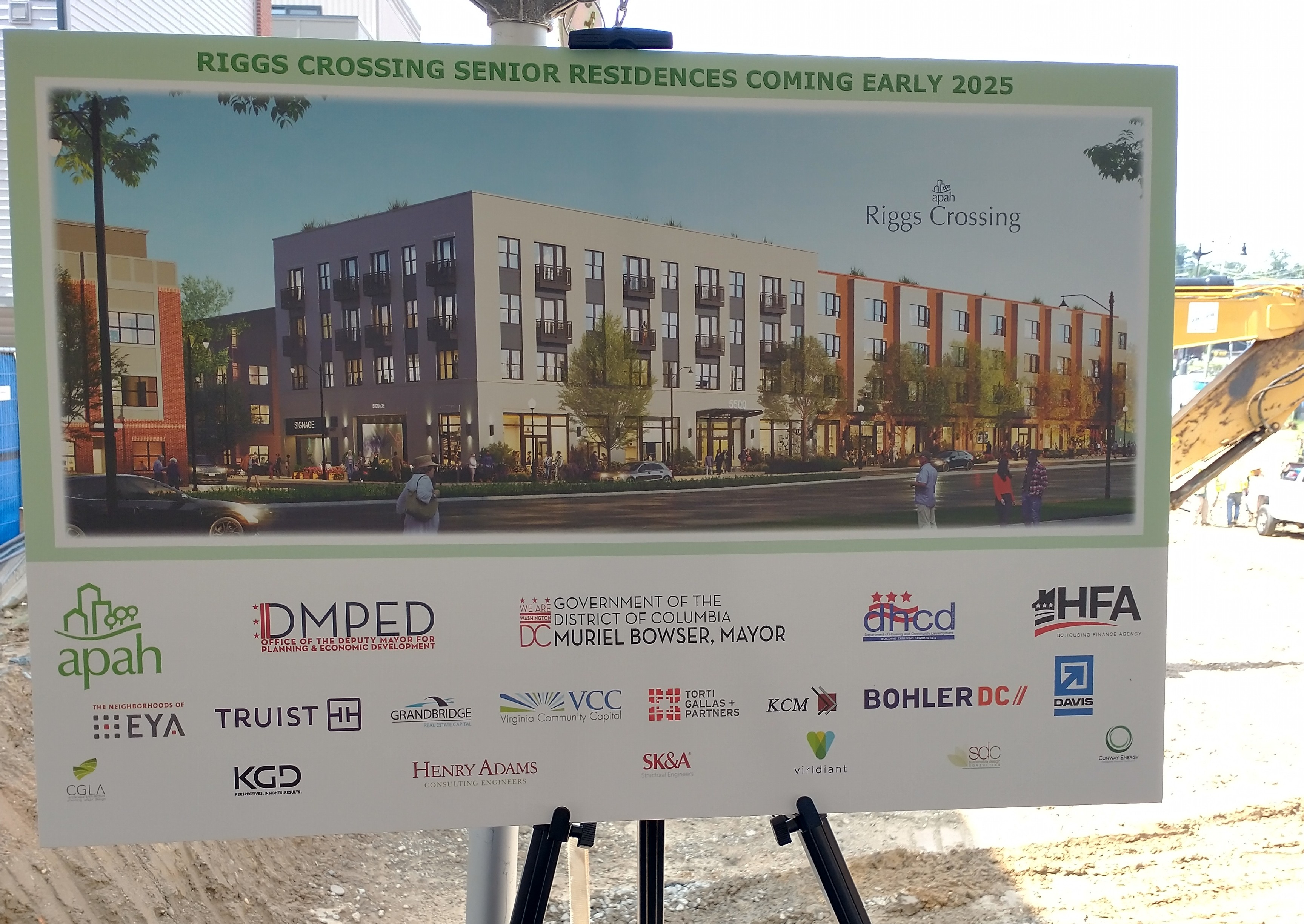
Mayor Muriel Bowser joined residents to break ground on construction of Riggs Crossing, a senior resident building that will be located on the southeast corner of South Dakota Avenue and Riggs Road NE. The lead developer is the Arlington Partnership for Affordable Housing (APAH) in partnership with EYA.
This building accompanies the recently constructed townhome community by EYA called Riggs Park Place. Mayor Bowser celebrated the ribbon cutting of Riggs Park Place last summer. Together, these projects complete the development that started with the construction of Fort Totten Square back in 2015.
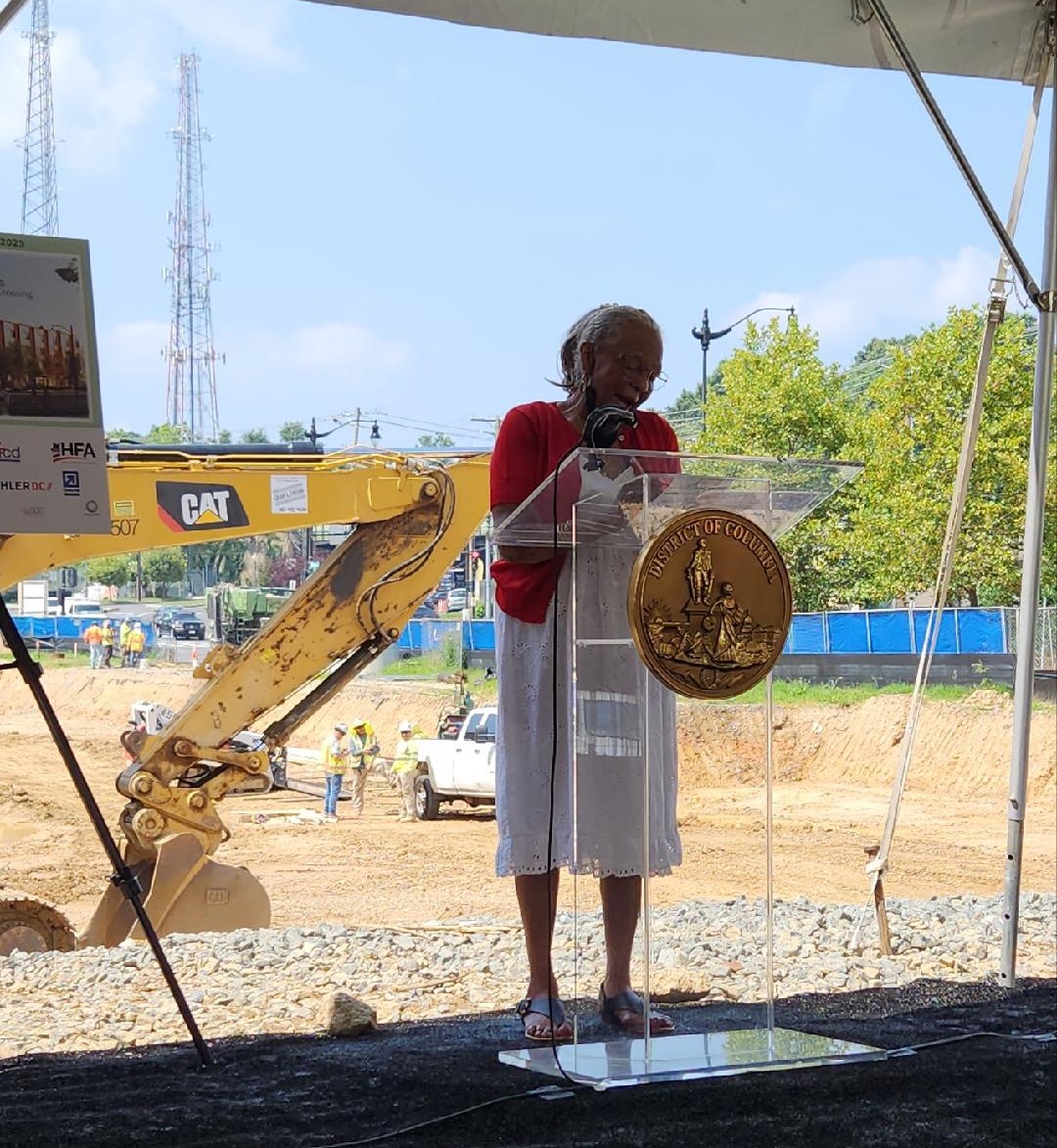
Aakash Thakkar, chief acquisitions officer at EYA, opened the event and as always recognized the community’s role in this project. Vandalia Joyner-Taylor, a resident of Riggs Park since 1959, introduced Mayor Bowser. Mayor Bowser laid the foundation for these projects, starting as an ANC commissioner before becoming Ward 4 councilmember and then mayor. Ward 4 Councilmember Janeese Lewis George followed the mayor, recognizing the importance of this affordable housing project in Ward 4. Christopher Donald, executive director & CEO of the DC Housing Finance Agency, and Drew Hubbard, deputy director of the DC Department of Housing & Community Development, both mentioned how this project will help meet the District’s goal of producing 12,000 affordable housing units by 2025. Carmen Romero, CEO of APAH, closed the program.
Overview
Riggs Crossing will consist of 93 income-restricted units for seniors 62 years old and older.
52 units at or below 30% median family income (MFI)
41 units between 30-50% MFI
10 permanent supportive housing units
APAH has a lot of experience building affordable housing primarily in Virginia with a couple of projects in Maryland. Riggs Crossing is APAH’s first project in DC. Jaydot will provide case management services for the 10 permanent supportive housing units.
Approximately 5,000 square feet of ground floor retail will be available for below market rate lease for a local/unique retailer.
Construction
Davis Construction is the construction team on this project. Monthly construction updates are available on the project website. On the website, you can also subscribe to receive updates about the project. The site work seen over the past few weeks was pre-construction site work. The team received permits yesterday to begin excavation. Expect about 5 weeks of pounding during excavation. The team has set up a vibration monitor and met with nearby property owners. For construction concerns, email Joanna Shin at jshin@apah.org.
Jobs & Apprenticeship Opportunity
On the website is a list of available construction jobs. In addition, as part of the team’s First Source commitment, they are offering paid apprenticeship opportunities for up to 20 DC residents. From the project website:
As part of our First Source Approved Alternative Plan as well as our Section 3 best faith efforts, DAVIS and APAH have committed to providing training for up to 20 District Residents. We plan to partner with the local Associated Builder’s and Contractor’s (ABC) chapter and enroll interested potential workers in the ABC CORE program for a 10 week training program. We will help graduates find job offers with our trade partners within the industry. Costs for candidates to enroll will be covered by DAVIS and APAH.
If interested in the apprenticeship opportunity, complete the contact form on the “Career” page on the project website or simply stop by the construction trailer (located in the green space in front of Food & Friends) to provide your contact information and let the team know of your interest in enrolling. Please let your neighbors know about this opportunity to take advantage sooner rather than later.
Retail
There will be about 9,500 square feet of ground floor retail space, of which 5,000 square feet will be offered below market rate lease for a local/unique retailer. Right now, the team states that there is not infrastructure capacity for a full-service restaurant, but they might be willing to revisit that decision. Interested parties may contact Joanna Shin at jshin@apah.org.
Pictures of groundbreaking below.
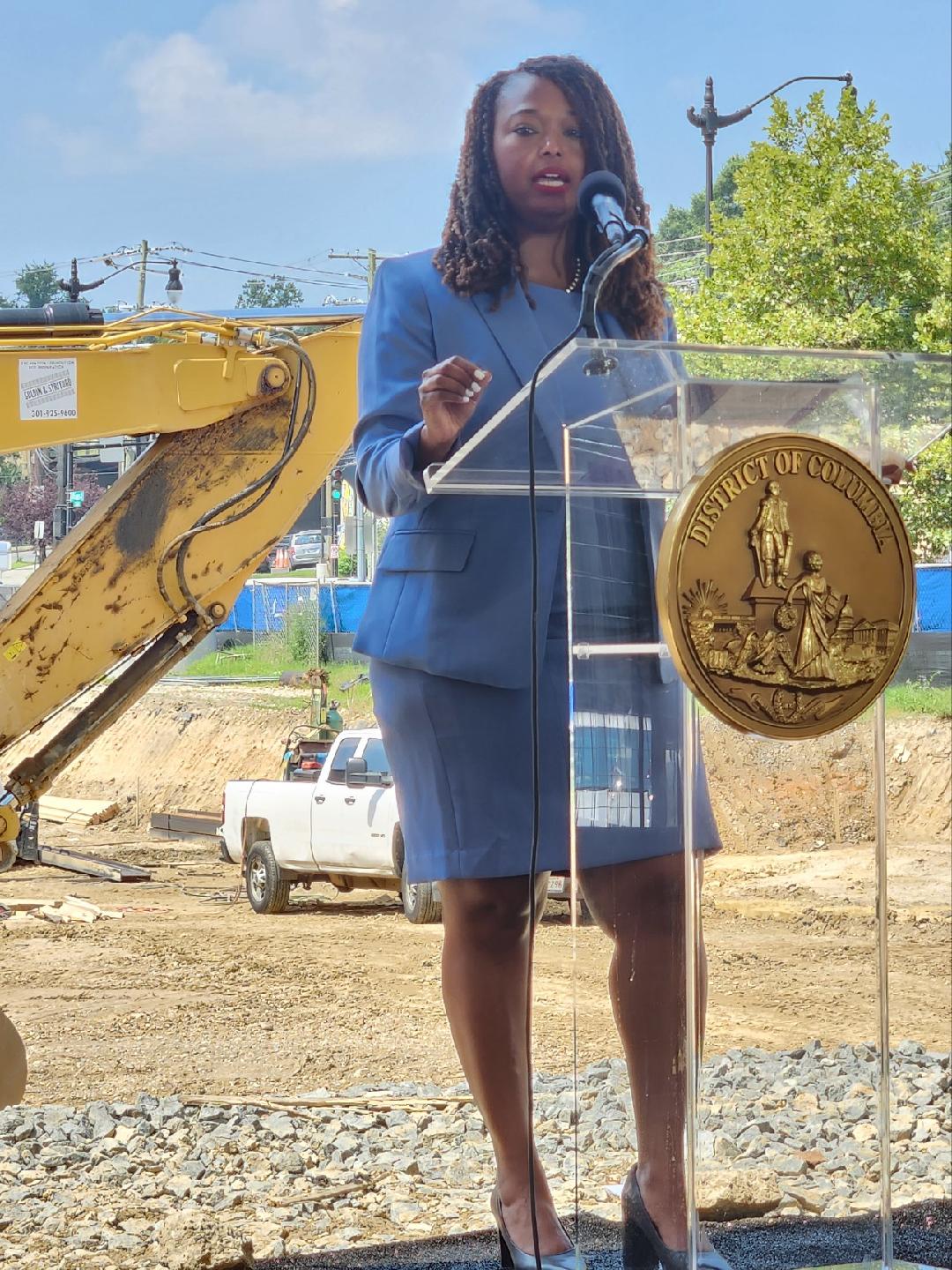
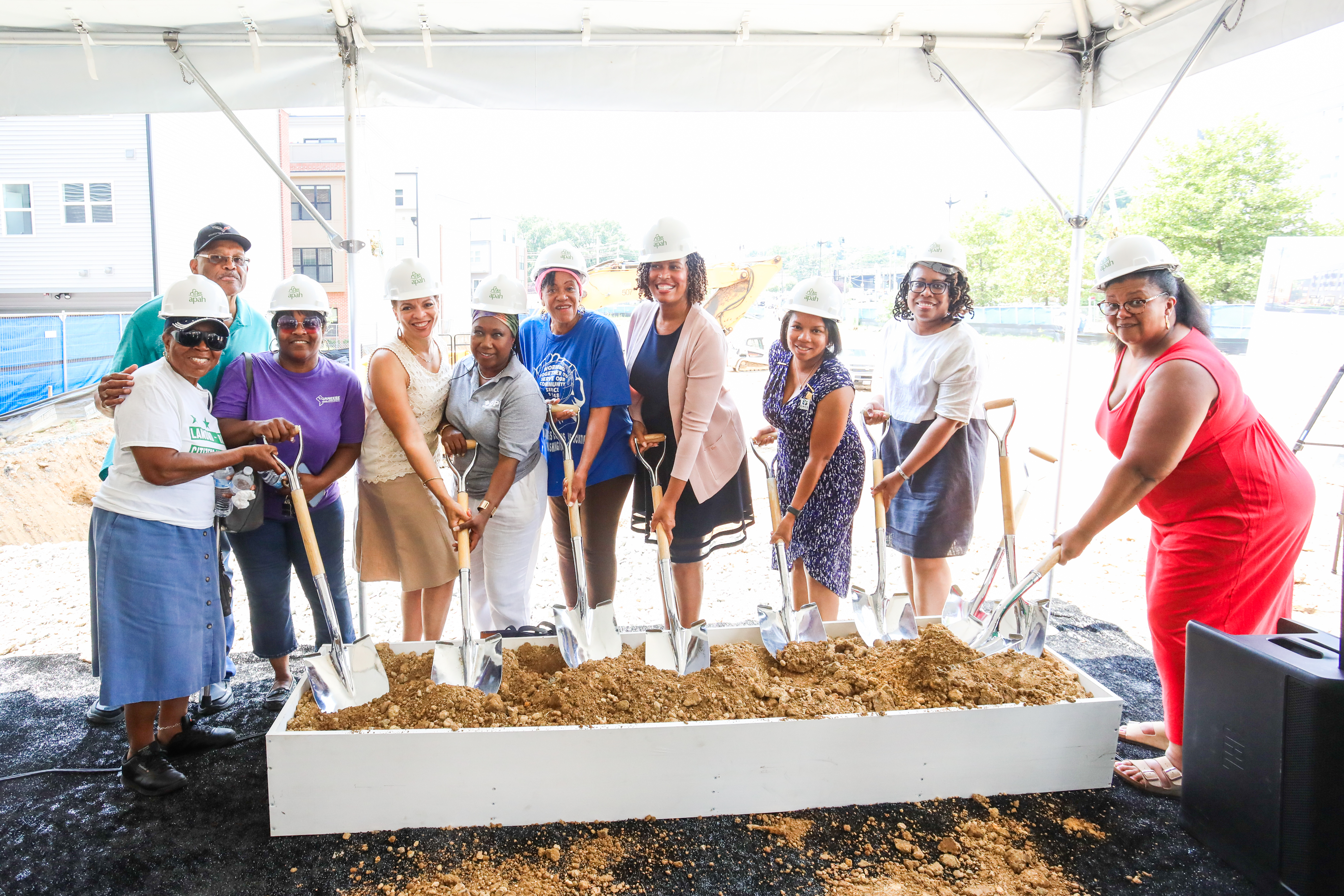
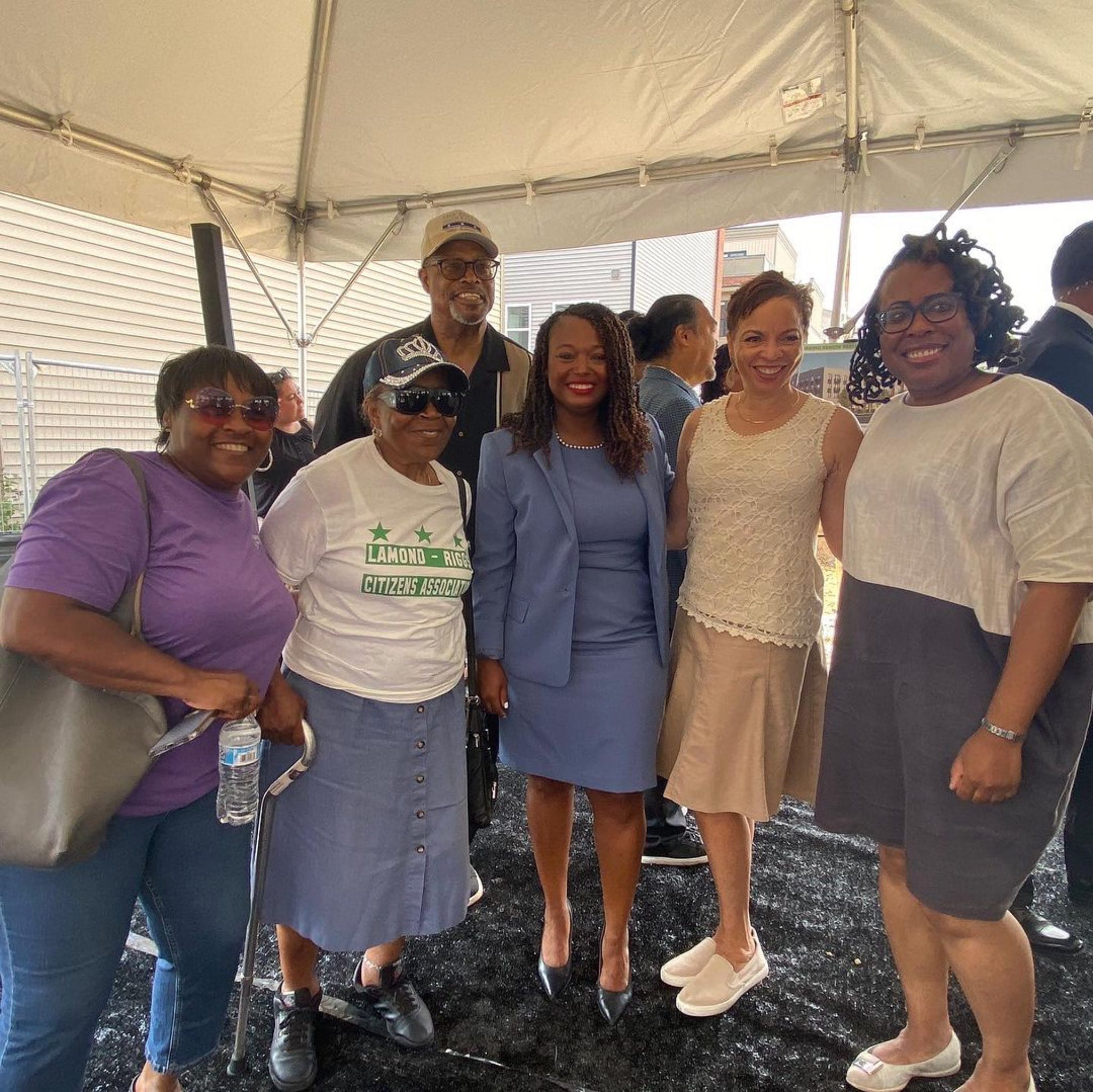
Vandalia Joyner Taylor, Riggs Park resident since 1959, introducing Mayor Muriel Bowser at groundbreaking. Photo credit Gwen Cofield.Ward 4 Councilmember Janeese Lewis George delivering remarks.Photo credit Gwen CofieldMayor Muriel Bowser delivering remarks. Photo credit Gwen CofieldMayor Bowser breaking ground with Riggs Park residents (left to right) Rev. Johnnie Mays, Edgar Sheppard, Barbara Rogers, Gwen Cofield, Shirleta Settles, Mary Wade, Mayor Bowser, Charon Hines, myself, and ANC 4B Chair Alison Brooks.Photo by http://www.jonflemingphotography.comWard 4 Councilmember Janeese Lewis George with residents. Barbara Rogers, Johnnie Mays, Edwin Washington (The Parks Main Street), CM Lewis George, Gwen Cofield, myself. Photo credit Office of CM Janeese Lewis George
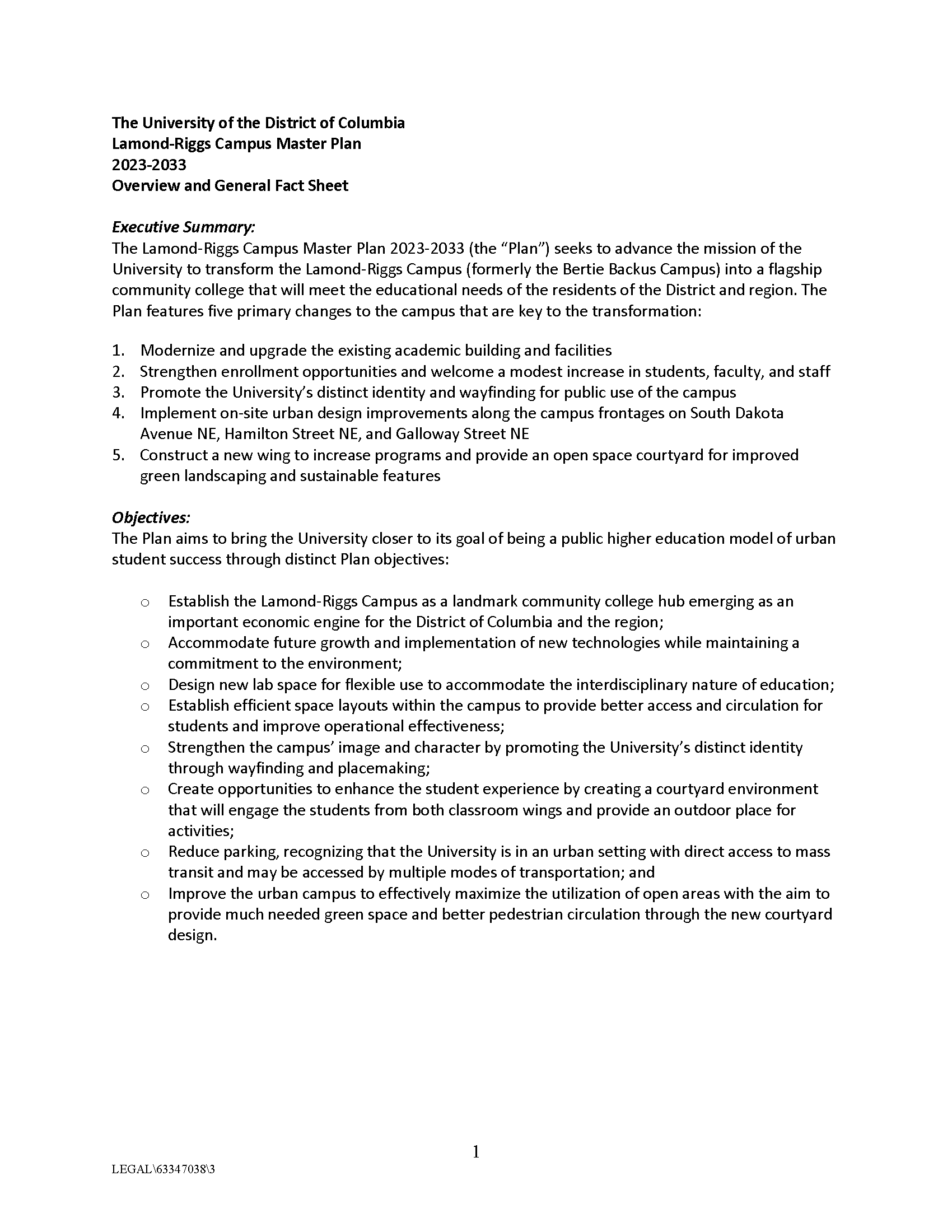
On June 21, 2023, UDC submitted a campus plan application to the DC Zoning Commission for the Lamond-Riggs campus (ZC case no. 23-16). The Lamond-Riggs campus (formerly known as the Bertie Backus campus) houses the university’s community college programs. DC zoning regulations require universities to update campus plans every 10 years. This proposed 2023-2033 campus plan is the first for the Lamond-Riggs campus. UDC plans to attend ANC 5A’s September 2023 meeting to seek a resolution in support of the plan ahead of an anticipated October 2023 zoning hearing.
According to UDC, the goals of the regulations are to ensure that university campuses “(1) are well-planned and designed; (2) have long-term facilities plans; (3) minimize any negative impacts the university may have on the surrounding residential neighborhood; and (4) are consistent and transparent with their planning processes.”
The proposed plan features 5 primary changes to the campus:
Modernize and upgrade the existing academic building and facilities
Strengthen enrollment opportunities and welcome a modest increase in students, faculty, and staff
Promote the University’s distinct identity and wayfinding for public use of the campus
Implement on-site urban design improvements along the campus frontages on South Dakota Avenue NE, Hamilton Street NE, and Galloway Street NE
Construct a new wing to increase programs and provide an open space courtyard for improved green landscaping and sustainable features
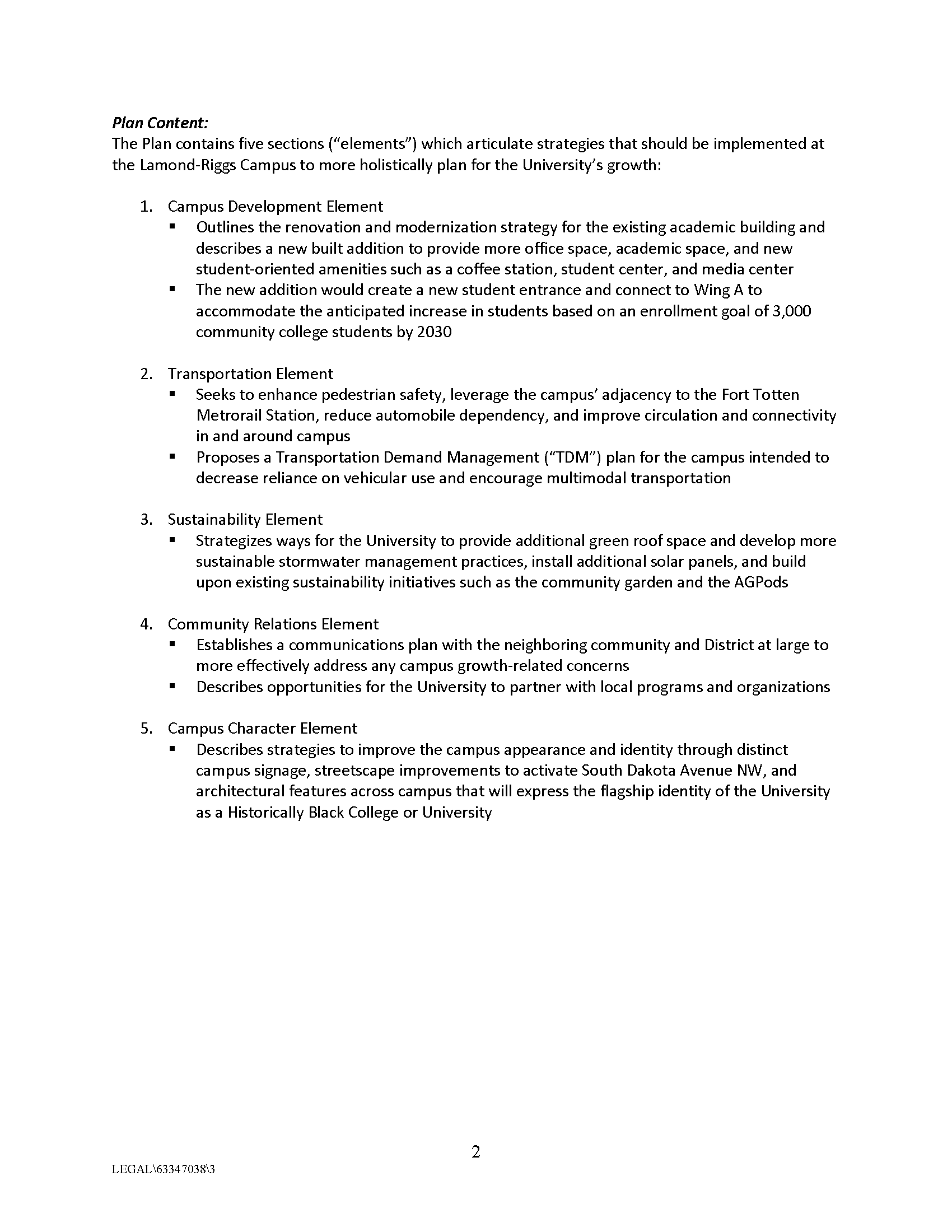
The proposed plan has 5 sections:
Campus Development Element
Transportation Element
Sustainability Element
Community Relations Element
Campus Character Element
The plan proposes a two-phase approach to the development of the campus. Phase 1 includes renovation of the existing campus buildings. Phase II includes construction of a new wing and other improvemetns on the campus.
Join DC Fray and the Cafritz Foundation for the Children’s Festival Event Series at the Modern at Art Place for some free, community-centered fun every fourth Saturday, 1pm-3pm, from June to September!
Share your nostalgic carnival favorites with the whole family this summer! Join DC Fray + The Cafritz Foundation to win fun prizes; play games like ring toss, cornhole, Plinko and pin the tail on the donkey; or get your face painted – all as part of our community-centered Children’s Festival Event Series.
August 26th – Back to School Bash
Ready to kick off this next school year? Join DC Fray + The Cafritz Foundation to collect free school supplies and warm up your brains with our immersive instructional experiences including fun math games + a visit from a reptile expert – all as part of our community-centered Children’s Festival Event Series.
September 23rd – Harry Potter: Movie at The Modern
Calling all young witches and wizards! Show off your house pride by dressing up in your best robes and enjoy themed snacks, trivia, face painting, themed prizes + more. Join DC Fray + The Cafritz Foundation for free, all as part of our community-centered Children’s Festival Event Series.
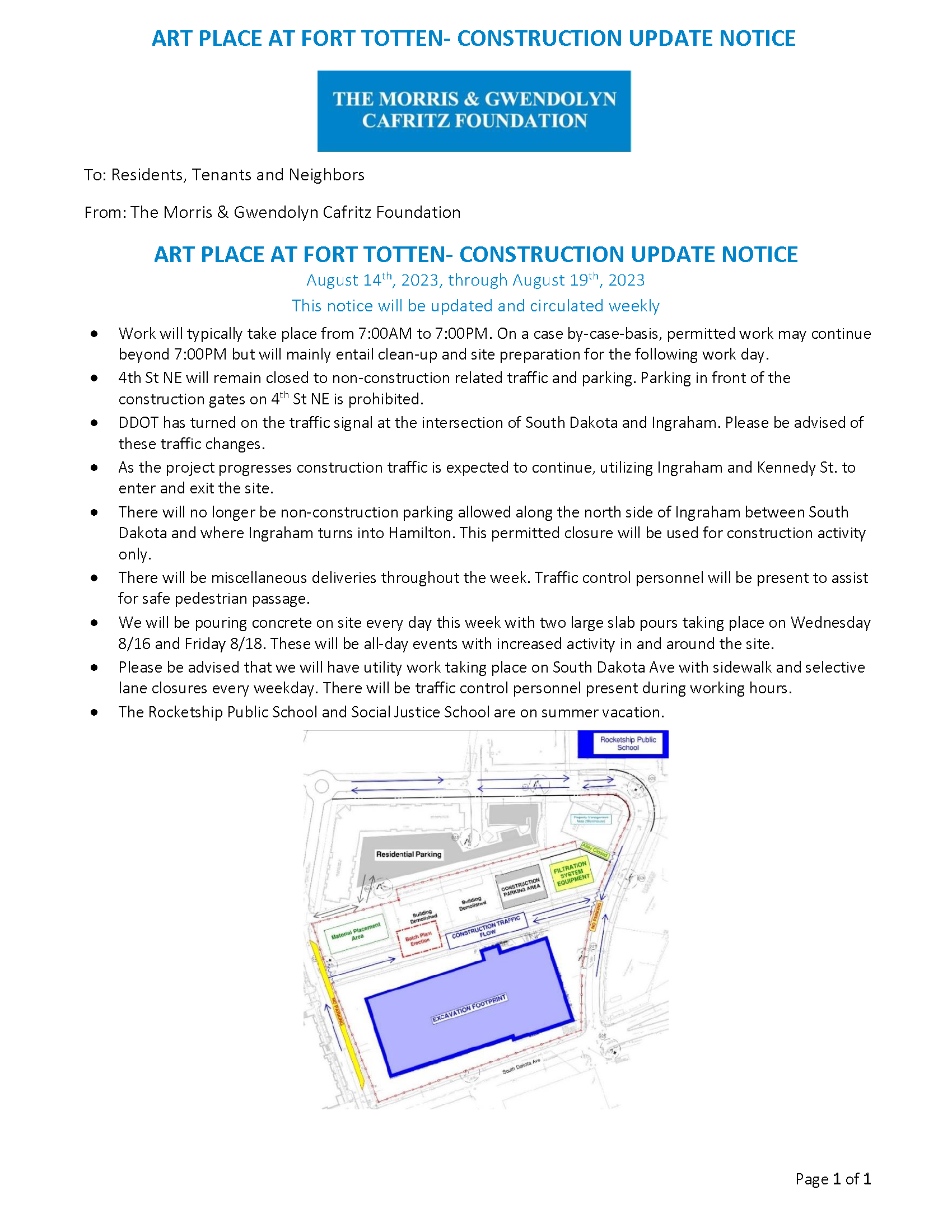
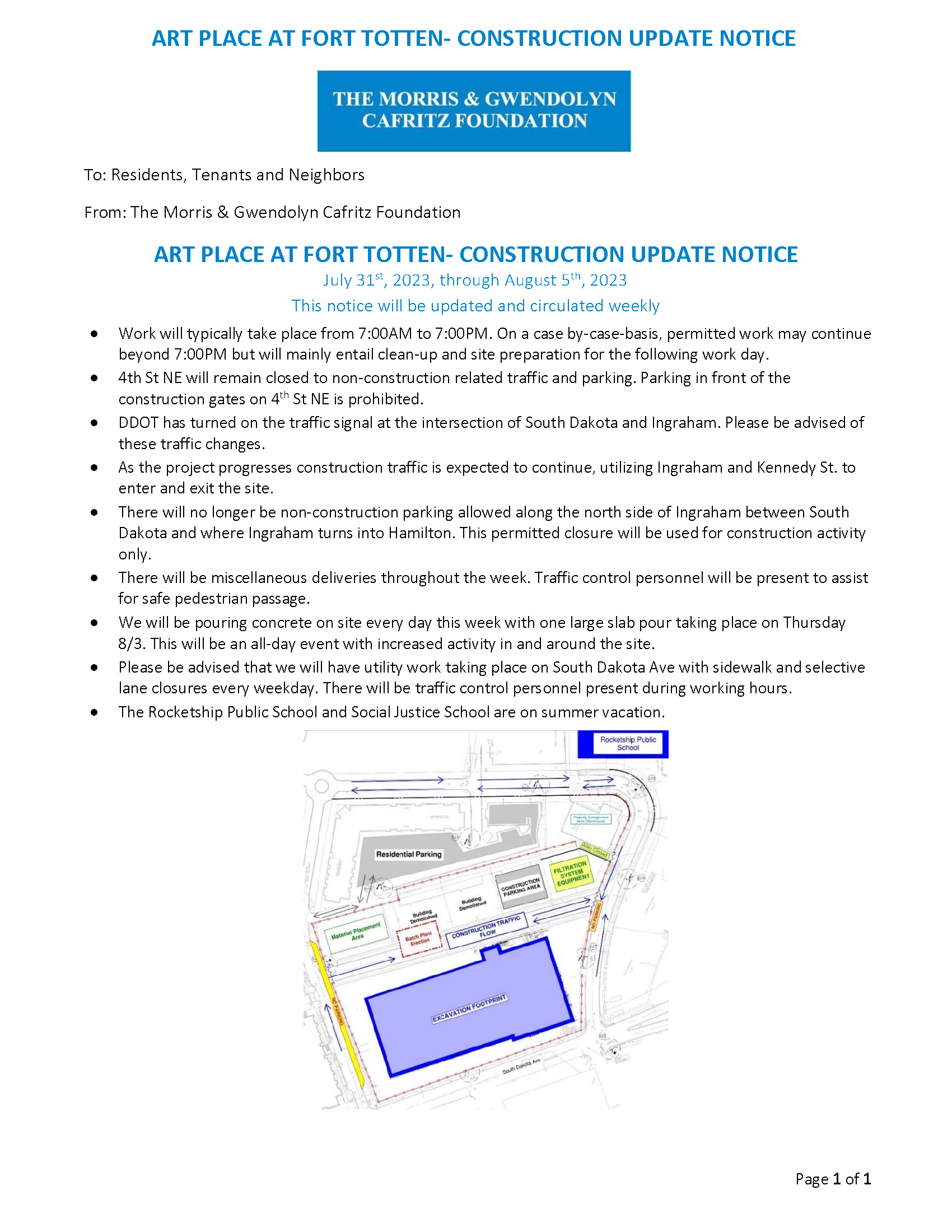
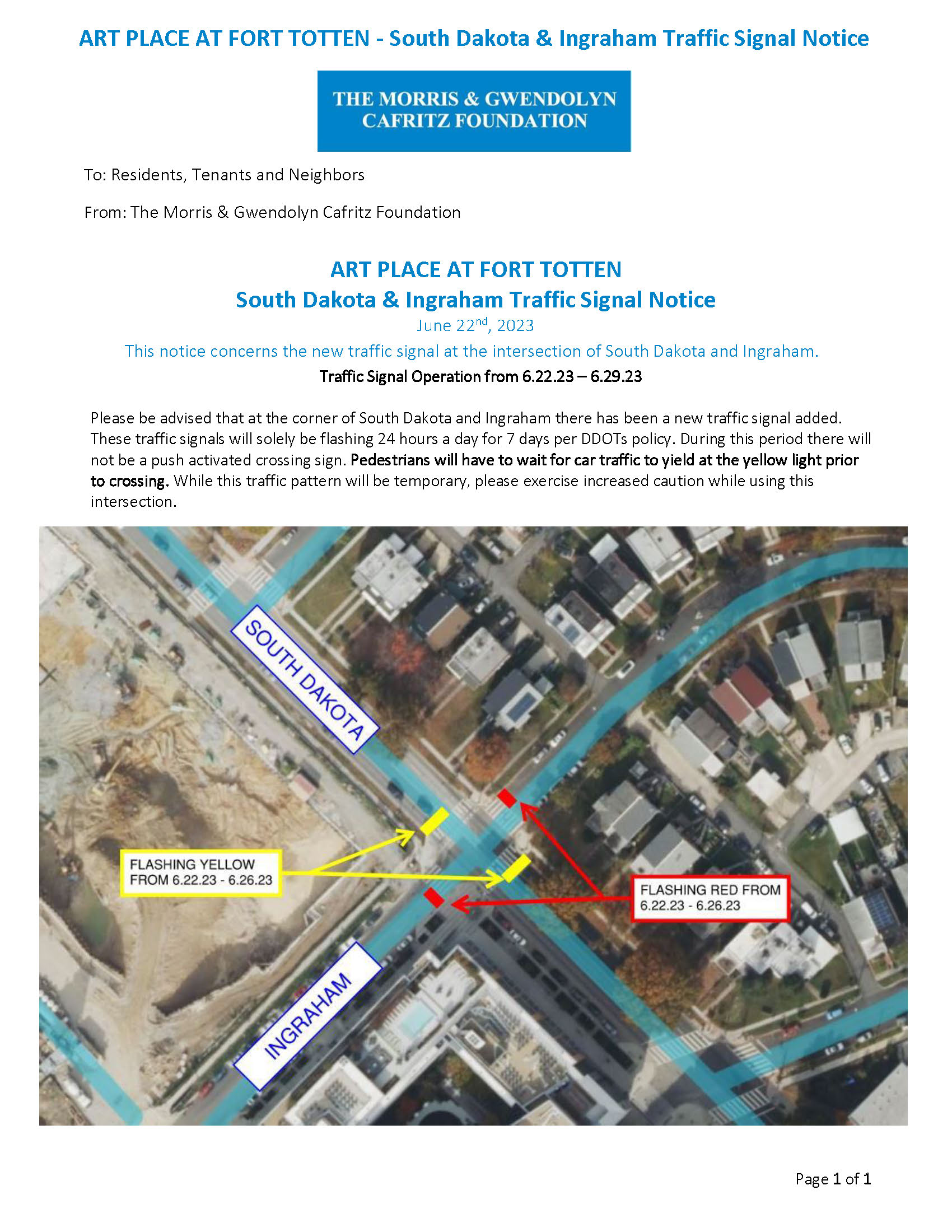
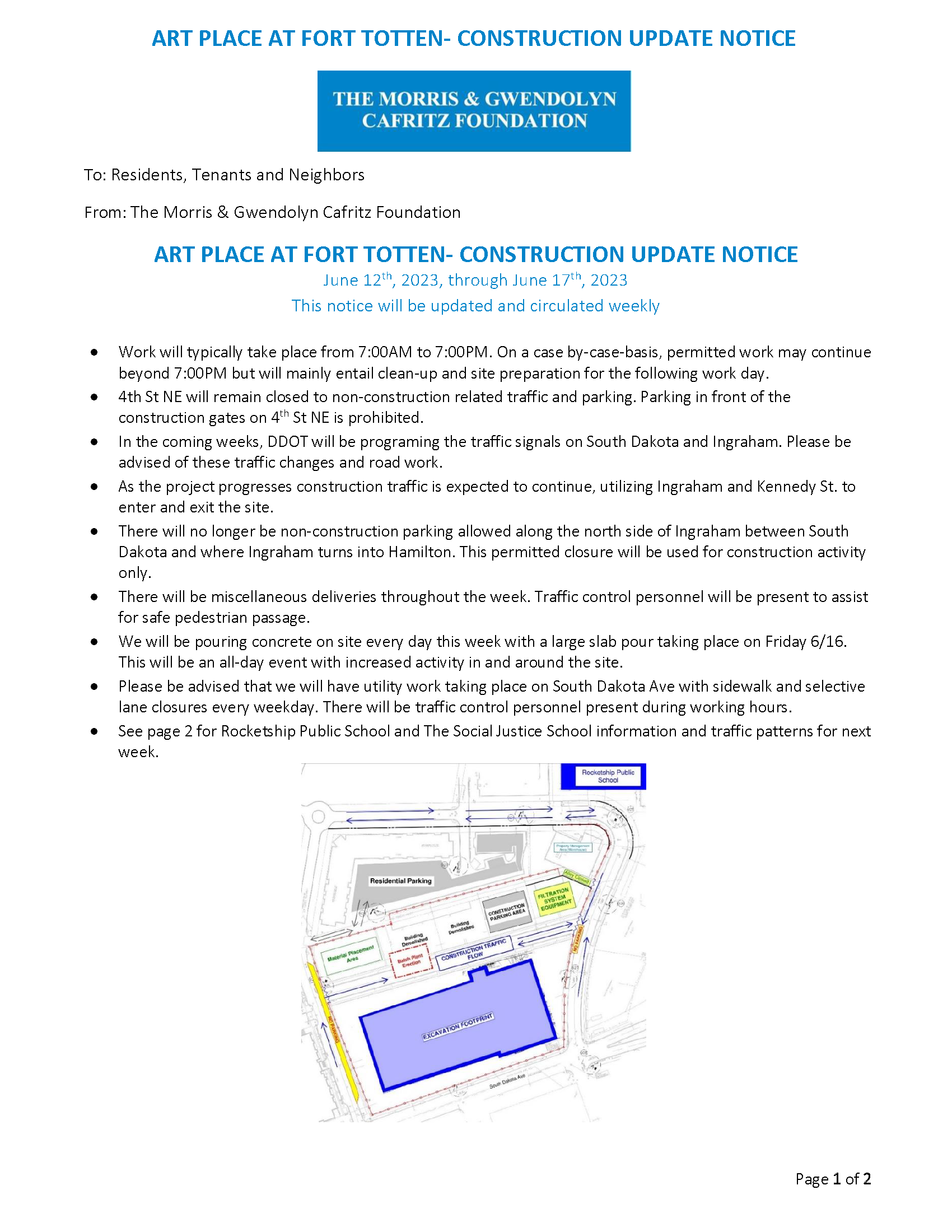
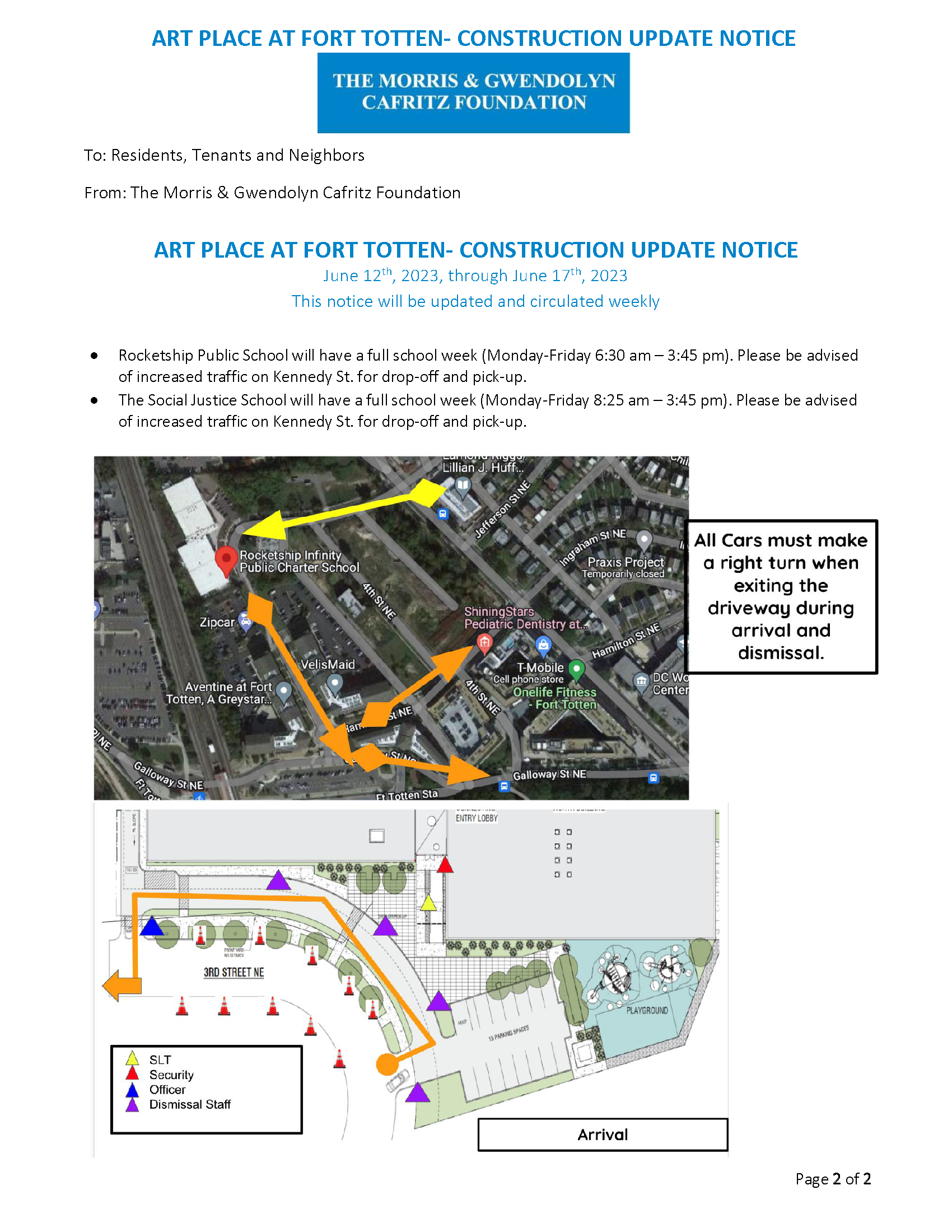
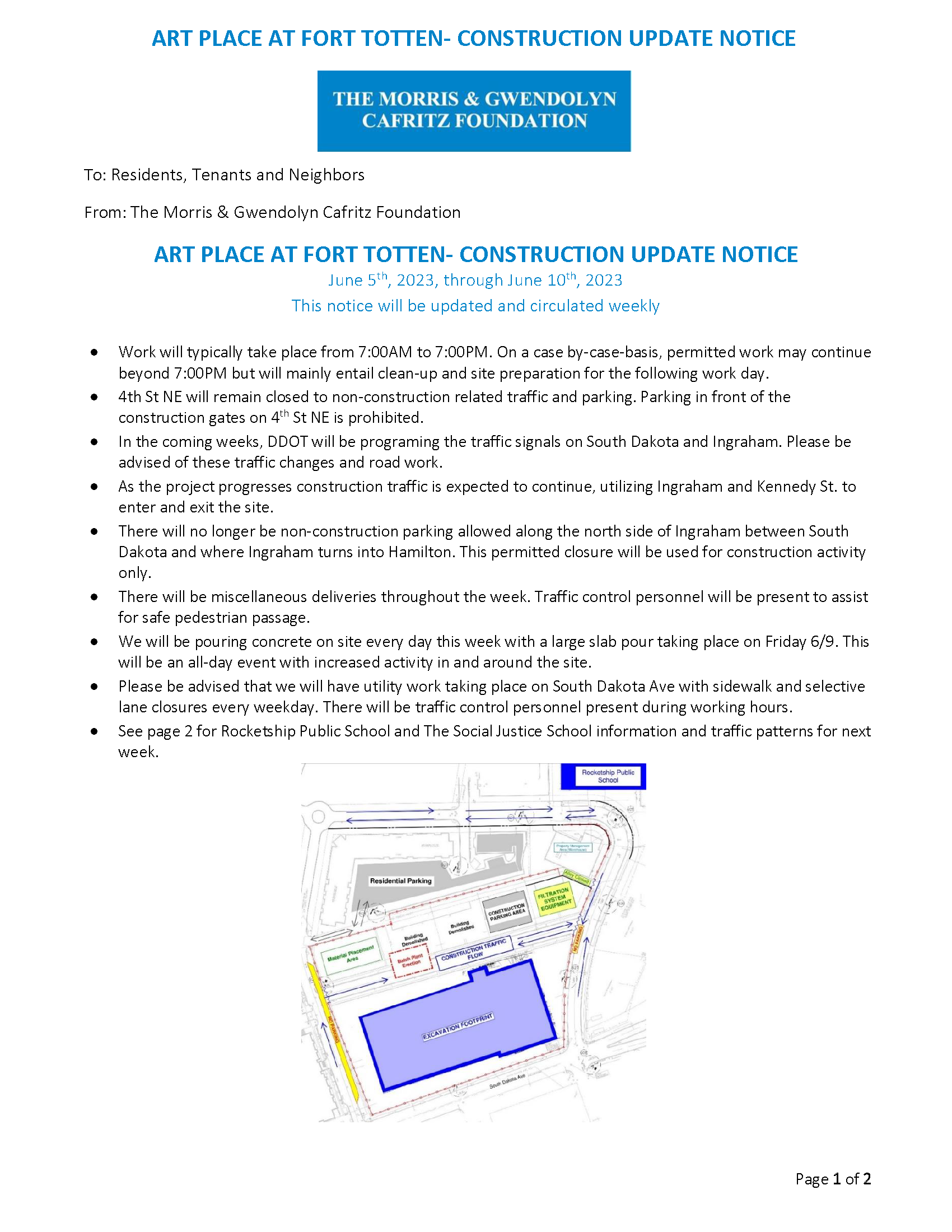
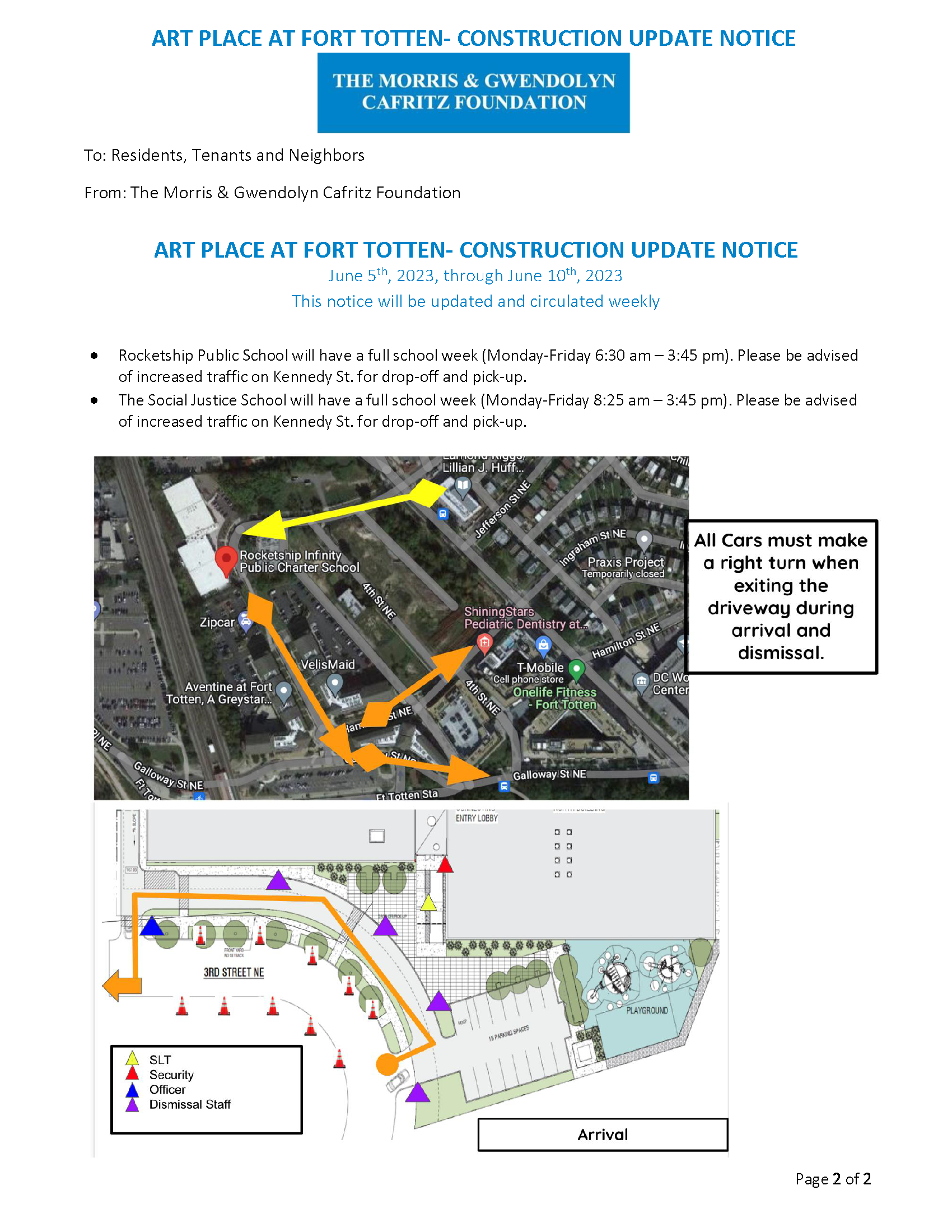
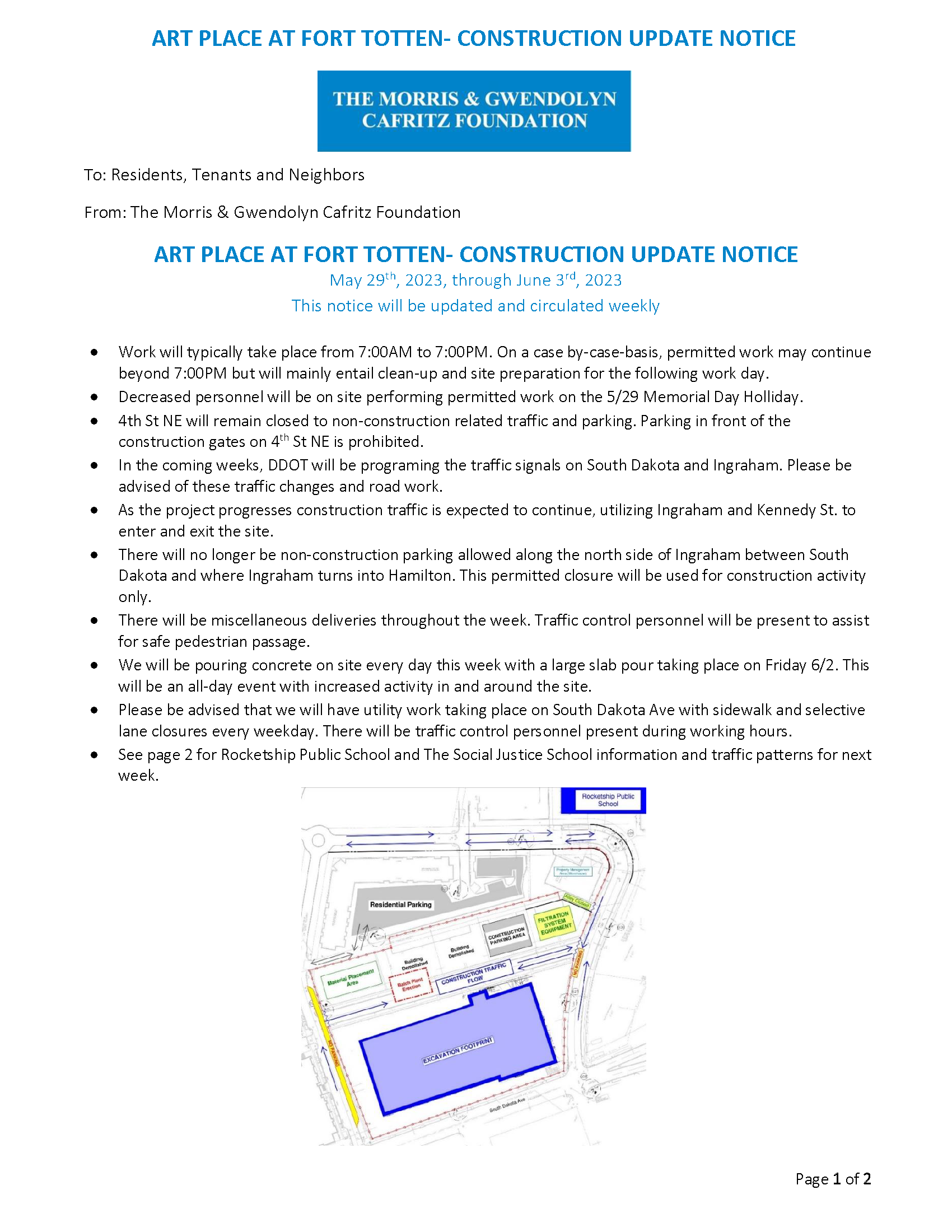
The developer for Art Place at Fort Totten just distributed this notice regarding the intersection at South Dakota Avenue & Ingraham Street NE.
A new traffic signal has been installed at South Dakota Avenue & Ingraham Street NE. In accordance with DDOT policy, the signal will have flashing lights 24 hours a day for 7 days starting June 22. During this period, there will not be a push activated crossing sign. Pedestrians will have to wait for car traffic to yield at the yellow light prior to crossing. While this traffic pattern is temporary, please exercise increased caution while using this intersection during this period.
Join DC Fray and the Cafritz Foundation for the Children’s Festival Event Series at the Modern at Art Place for some free, community-centered fun every fourth Saturday, 1pm-3pm, from June to September!
Enjoy some summer fun for the whole family! Join DC Fray + The Cafritz Foundation for lawn games, races, a mini golf course + prizes as part of our community-centered Children’s Festival Event Series.
July 22nd – Carnival
Share your nostalgic carnival favorites with the whole family this summer! Join DC Fray + The Cafritz Foundation to win fun prizes; play games like ring toss, cornhole, Plinko and pin the tail on the donkey; or get your face painted – all as part of our community-centered Children’s Festival Event Series.
August 26th – Back to School Bash
Ready to kick off this next school year? Join DC Fray + The Cafritz Foundation to collect free school supplies and warm up your brains with our immersive instructional experiences including fun math games + a visit from a reptile expert – all as part of our community-centered Children’s Festival Event Series.
September 23rd – Harry Potter: Movie at The Modern
Calling all young witches and wizards! Show off your house pride by dressing up in your best robes and enjoy themed snacks, trivia, face painting, themed prizes + more. Join DC Fray + The Cafritz Foundation for free, all as part of our community-centered Children’s Festival Event Series.
As previously noted, UDC renamed the Bertie Backus Campus the Lamond-Riggs Campus. The campus, located at 5171 South Dakota Avenue NE, houses the university’s community college program. UDC is undergoing a campus plan process for this campus. The most recent campus plan presentation given at the joint ANC 5A01/5A09 meeting on May 22 reflects the updated name. UDC also passed along a fact sheet. I think having a sense of where they are going for our neighborhood campus is useful for organizing thoughts and thinking about any gaps that need to be filled.
The draft campus plan has several overall objectives.
Establish the Lamond-Riggs Campus as a landmark community college hub emerging as an important economic engine for the District of Columbia and the region;
Create opportunities to enhance the student experience by creating a courtyard environment that will engage the students from both classroom wings and provide an outdoor place for activities;
Establish efficient space layouts within the campus to provide better access and circulation for students and improve operational effectiveness;
Accommodate future growth and implementation of new technologies while maintaining a commitment to the environment;
Reduce parking, recognizing that the University is in an urban setting with direct access to mass transit and may be accessed by multiple modes of transportation;
Design new lab space for flexible use to accommodate the interdisciplinary nature of education;
Improve the urban campus to effectively maximize the utilization of open areas with the aim to provide much needed green space and better pedestrian circulation through the new courtyard design; and
Strengthen the campus’ image and character by promoting the University’s distinct identity through wayfinding and placemaking.
The draft plan has five elements.
1. Campus Development Element
Outlines the renovation and modernization strategy for the existing academic building and describes a new built addition to provide more office space, academic space, and new student-oriented amenities such as a coffee station, student center, and media center.
The new addition would create a new student entrance and connect to Wing A to accommodate the anticipated increase in students based on an enrollment goal of 3,000 community college students by 2030.
2. Transportation Element
Seeks to enhance pedestrian safety, leverage the campus’ adjacency to the Fort Totten Metrorail Station, reduce automobile dependency, and improve circulation and connectivity in and around campus.
Proposes a Transportation Demand Management (“TDM”) plan for the campus intended to decrease reliance vehicular use and encourage multimodal transportation.
3. Sustainability Element
Strategizes ways for the University to provide additional green roof space and develop more sustainable stormwater management practices, install additional solar panels, and build upon existing sustainability initiatives such as the community garden and the AGPods.
4. Community Relations Element
Establishes a communications plan with the neighboring community and District at large to more effectively address any campus growth-related concerns.
Describes opportunities for the University to partner with local programs and organizations.
5. Campus Character Element
Describes strategies to improve the campus appearance and identity through distinct campus signage, streetscape improvements to activate South Dakota Avenue NW, and architectural features across campus that will express the flagship identity of the University as a Historically Black College or University.
Campus Development Plan
The campus development plan in the May presentation is similar to that provided to the full ANC in April. I covered the phased development plan in this post titled UDC Bertie Backus Campus Development Plan presentation – April 2023. To recap, UDC will undertake a phased modernization of the campus. Phase I will update the existing buidlings on campus. Phase II will include a new wing and courtyard. Currently, there is no funding for the second phase.
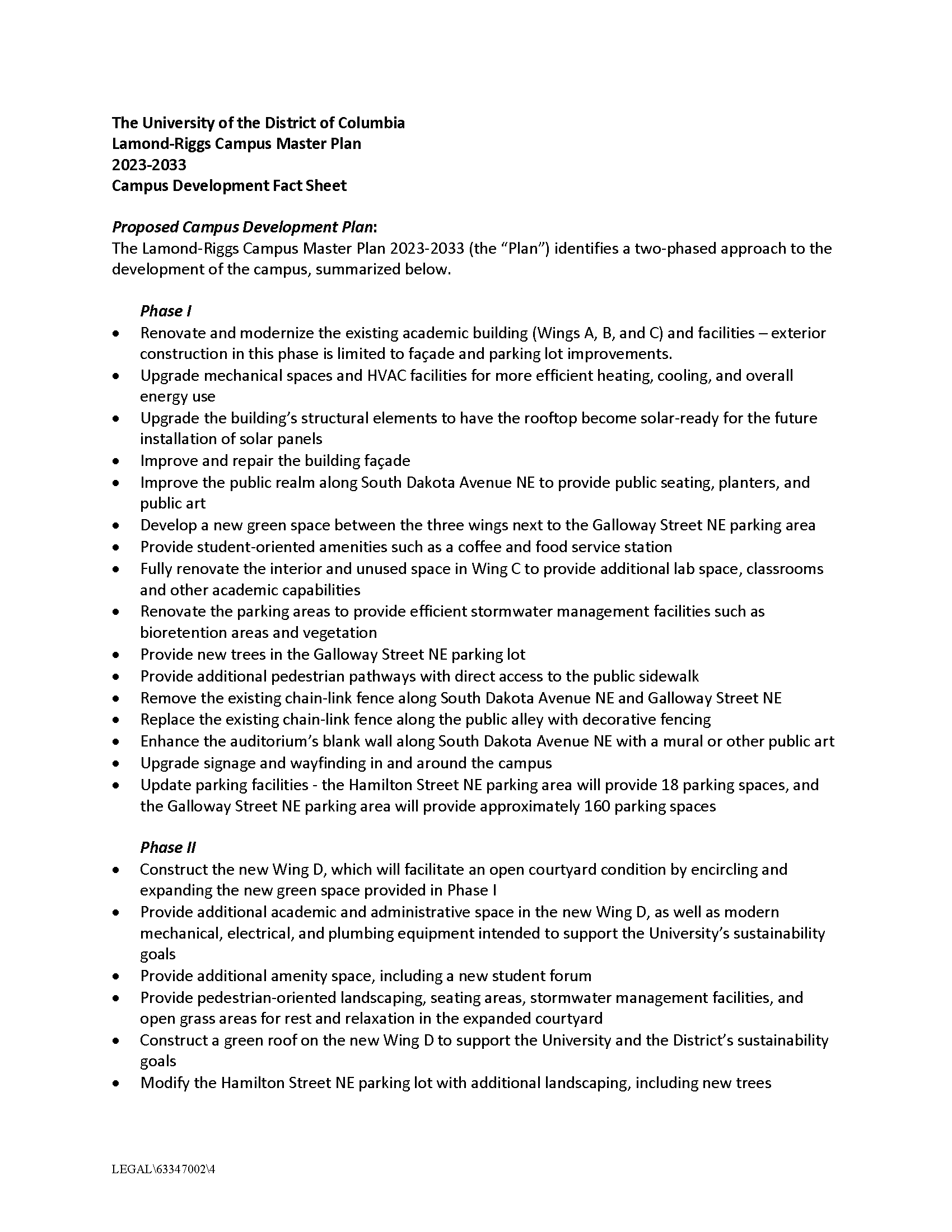
Phase One
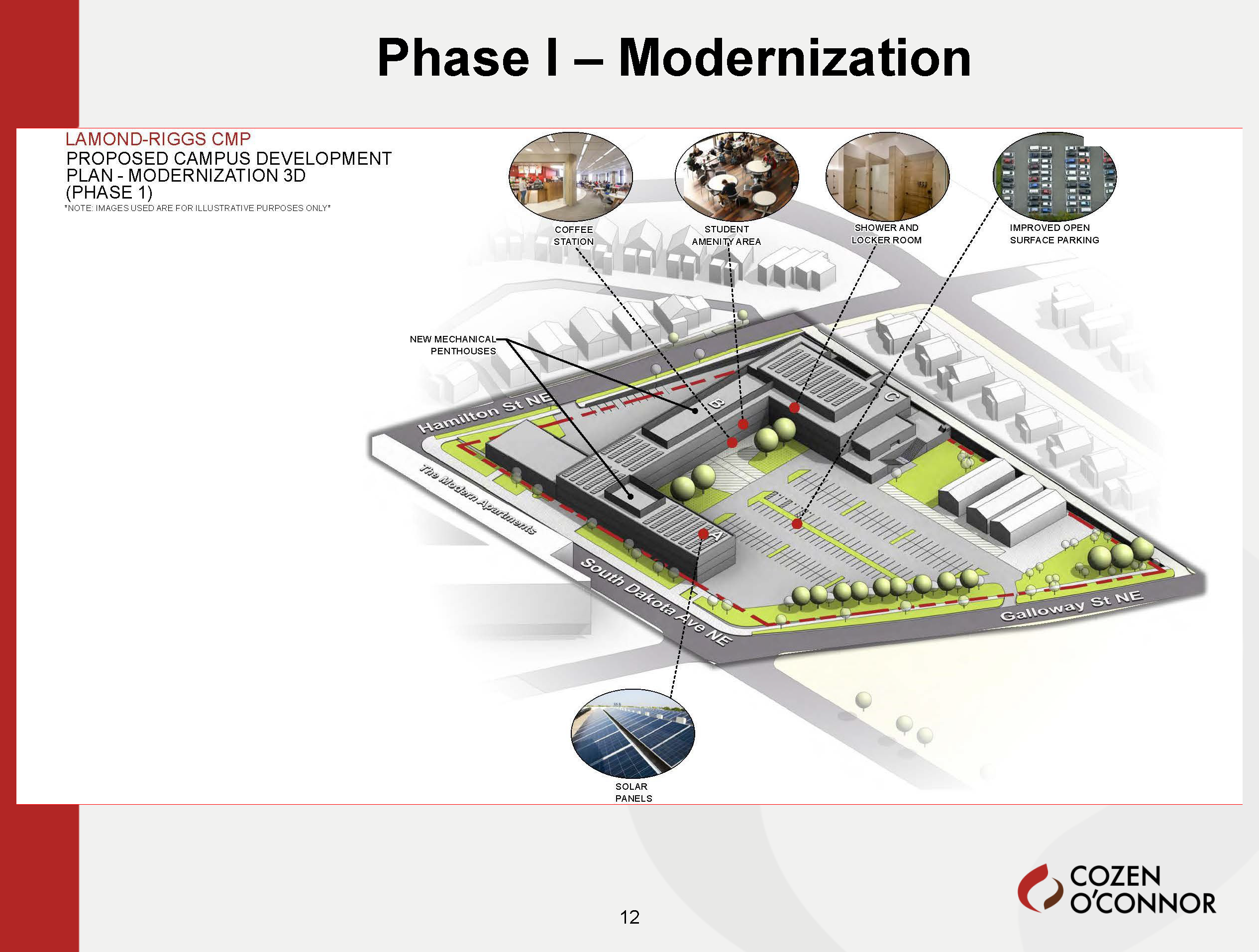
Renovate and modernize the existing academic building (Wings A, B, and C) and facilities – no new exterior construction will occur in this Phase.
Upgrade mechanical spaces and HVAC facilities for more efficient heating, cooling, and overall energy use.
Upgrade the building’s structural elements to have the rooftop become solar-ready for the future installation of solar panels.
Improve and repair the building façade.
Improve the public realm along South Dakota Avenue NE to provide public seating, planters, and public art.
Develop a new green space between the three wings next to the Galloway Street NE parking area
Provide student-oriented amenities such as a coffee and food service station
Fully renovate the interior and unused space in Wing C to provide additional lab space and other academic capabilities
Renovate the parking areas to provide efficient stormwater management facilities such as bioretention areas and vegetation
Update parking facilities – the Hamilton Street NE parking area will provide 18 parking spaces, and the Galloway Street NE parking area will provide approximately 160 parking spaces.
Phase I renderingPhase I rendering
Phase Two
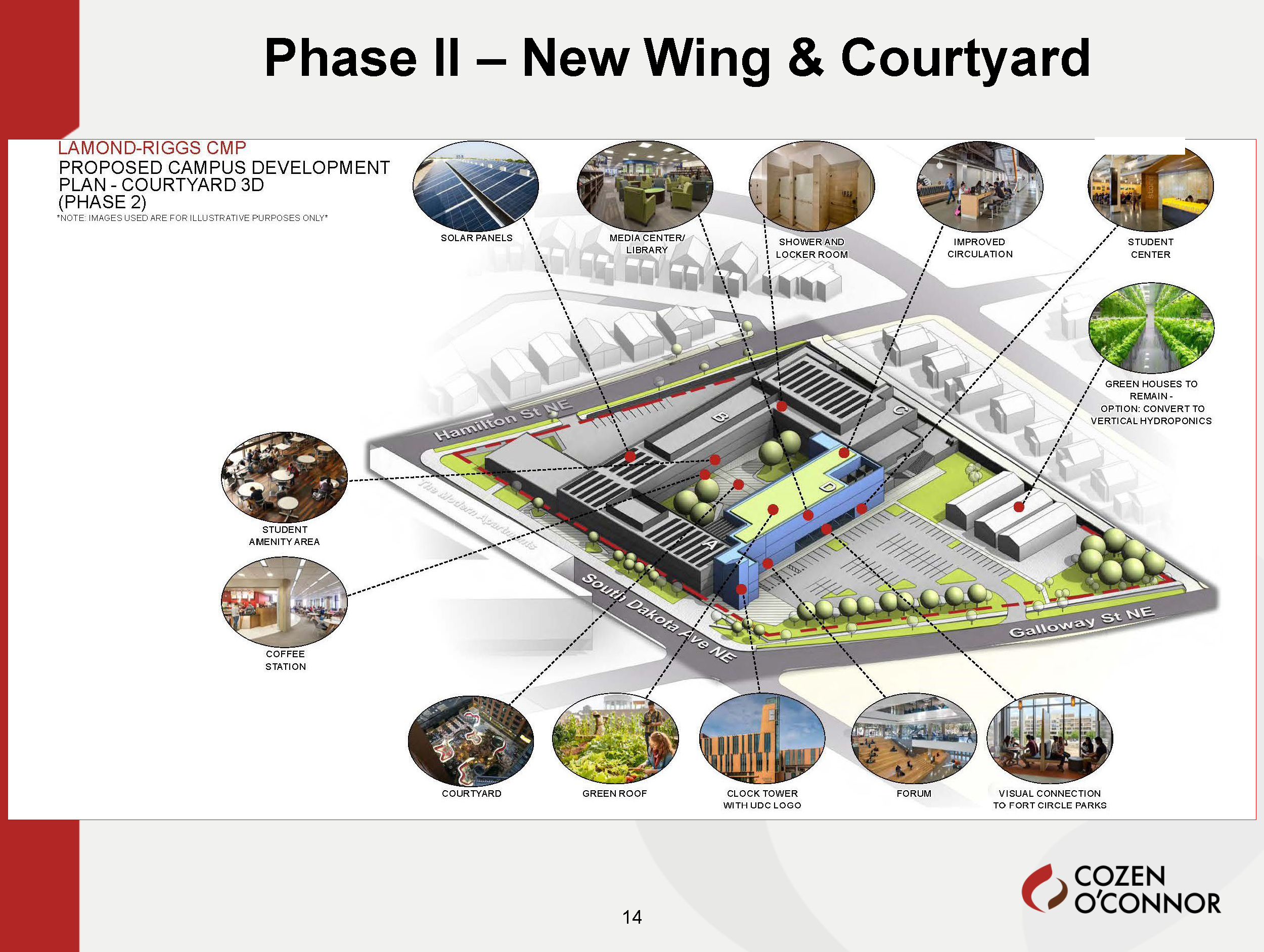
Construct the new Wing D, which will facilitate an open courtyard condition by encircling and expanding the new green space provided in Phase I.
Provide additional academic and administrative space in the new Wing D, as well as modern mechanical, electrical, and plumbing equipment intended to support the University’s sustainability goals.
Provide additional amenity space, including a new student forum.
Provide pedestrian-oriented landscaping, seating areas, stormwater management facilities, and open grass areas for rest and relaxation in the expanded courtyard.
Construct a green roof on the new Wing D to support the University and the District’s sustainability goals.
Update parking facilities – the Hamilton Street NE parking area will maintain the 18 parking spaces, and the Galloway Street NE parking area will be modified to provide approximately 100 parking spaces.
Phase II renderingPhase II rendering
UDC officials had time to answer a few specific questions about the proposal.
There is reference to a “new loading/service area” close to Hamilton Street. UDC said this not an entirely new loading area, but they acknowledged it might get more use and therefore they will have a loading management plan.
There are roughly 180 parking spaces on the Galloway side of the campus. The first phase will see a slight reduction to roughtly 160 spaces. In phase two, there will be a further reduction to 100 spaces.
The DOES American Job Center will be vacating the grounds at some point and UDC will use that space for the community college.
The existing buildings cannot support a green roof. That is why the development plan proposes a green roof only for the new wing that will be built in the second phase.
UDC clarified that they intend to replace the chain link fence with a more architectural fence similar to what was placed on the Hamilton Street side of the campus.
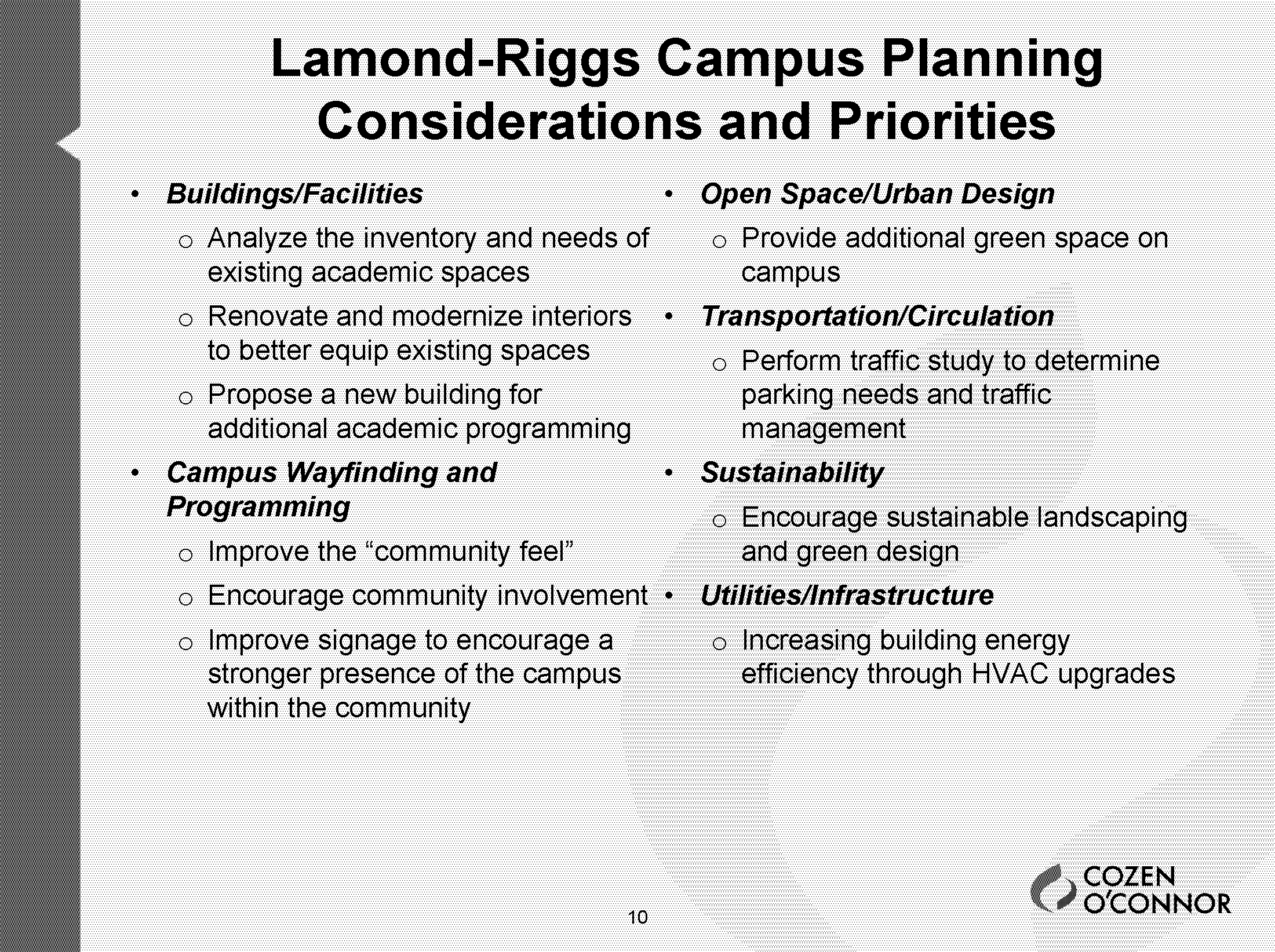
The May presentation details a bit more the priorities and considerations for the Lamond-Riggs campus related to buildings/facilities, campus wayfinding and programming, open space/urban design, transportation/circulation, sustainability, and utilities/infrastructure.
The May presentation also provides an updated timeline for this process.
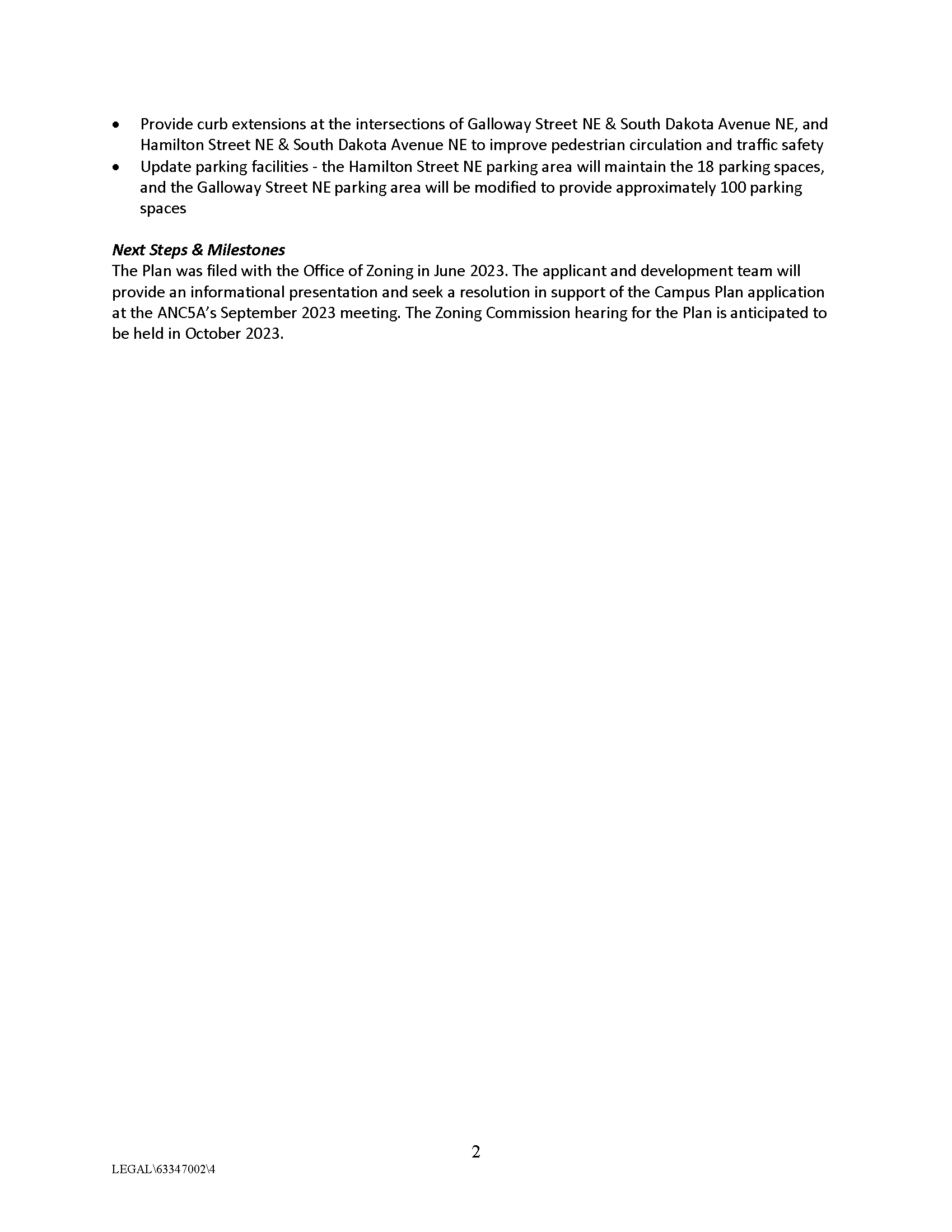
Next Steps/Milestones
May 22: Present to OP
May 22: Present to SMD5A01
Present to ANC5A at their May 24 or June 28 meeting.
Summer 2023: Lamond-Riggs Campus Plan application intended be filed with the District’s Zoning Commission.
Fall 2023: Zoning Commission approval of Campus Plan anticipated
Given the timeline, I think it would be useful for neighbors to look at the fact sheets, especially the one for the overall campus plan to think about if there are important things that we want UDC to consider including before they actually file an application. I do not know the ANC’s plan for moving forward, but it looks like UDC plans to present one more time at the ANC’s June meeting. Probably a good idea to be prepared to give feedback there.
Send questions or comments to Juanita Gray at juanita.gray@udc.edu.
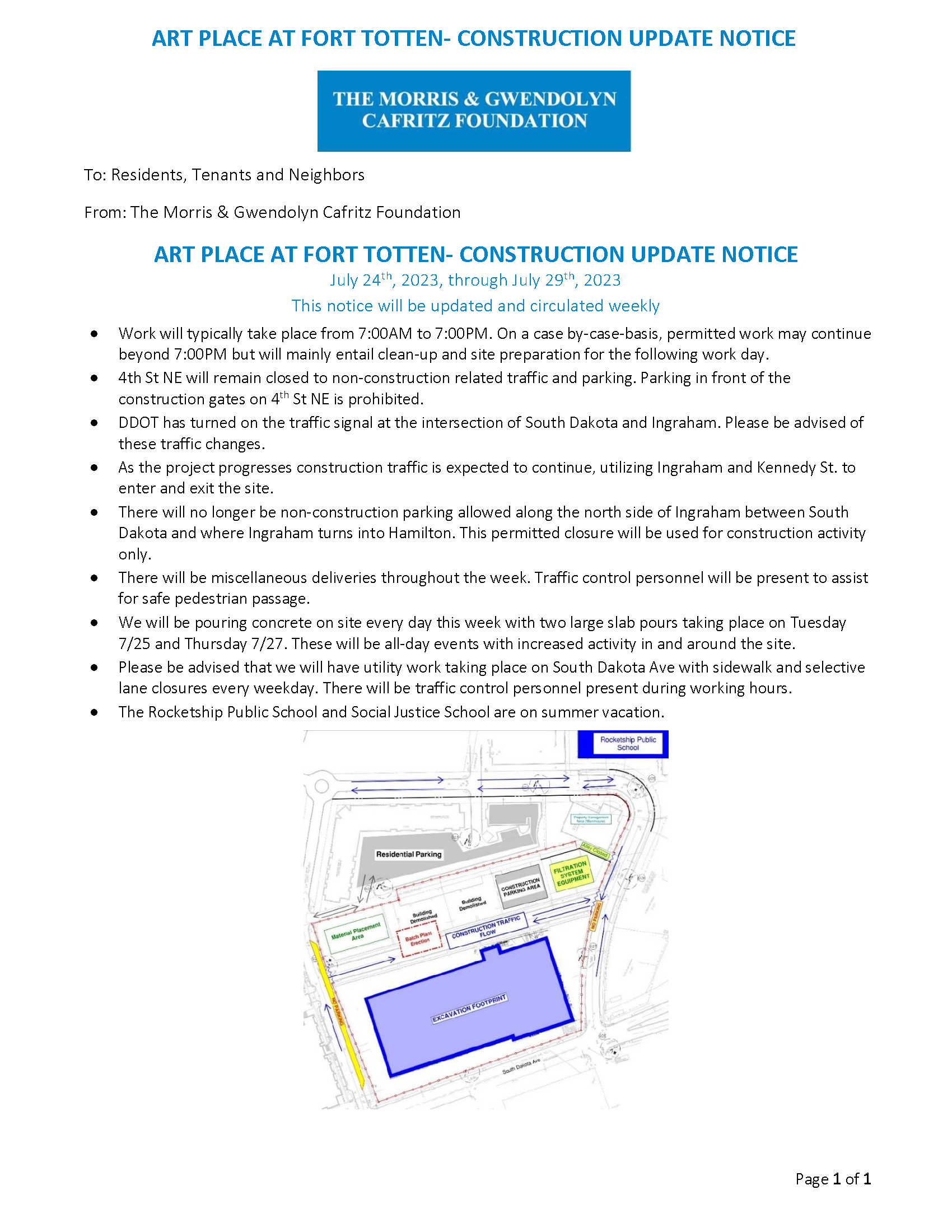
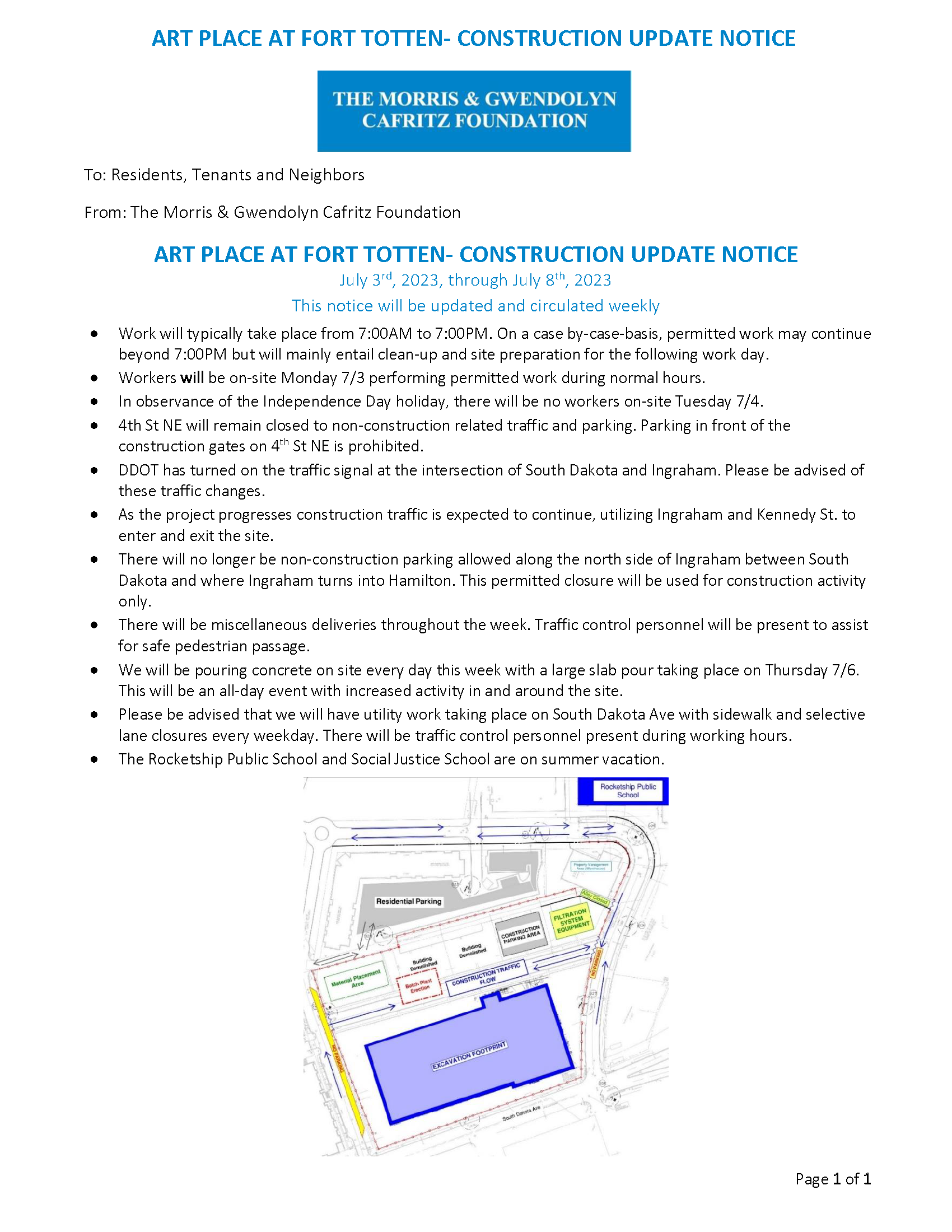
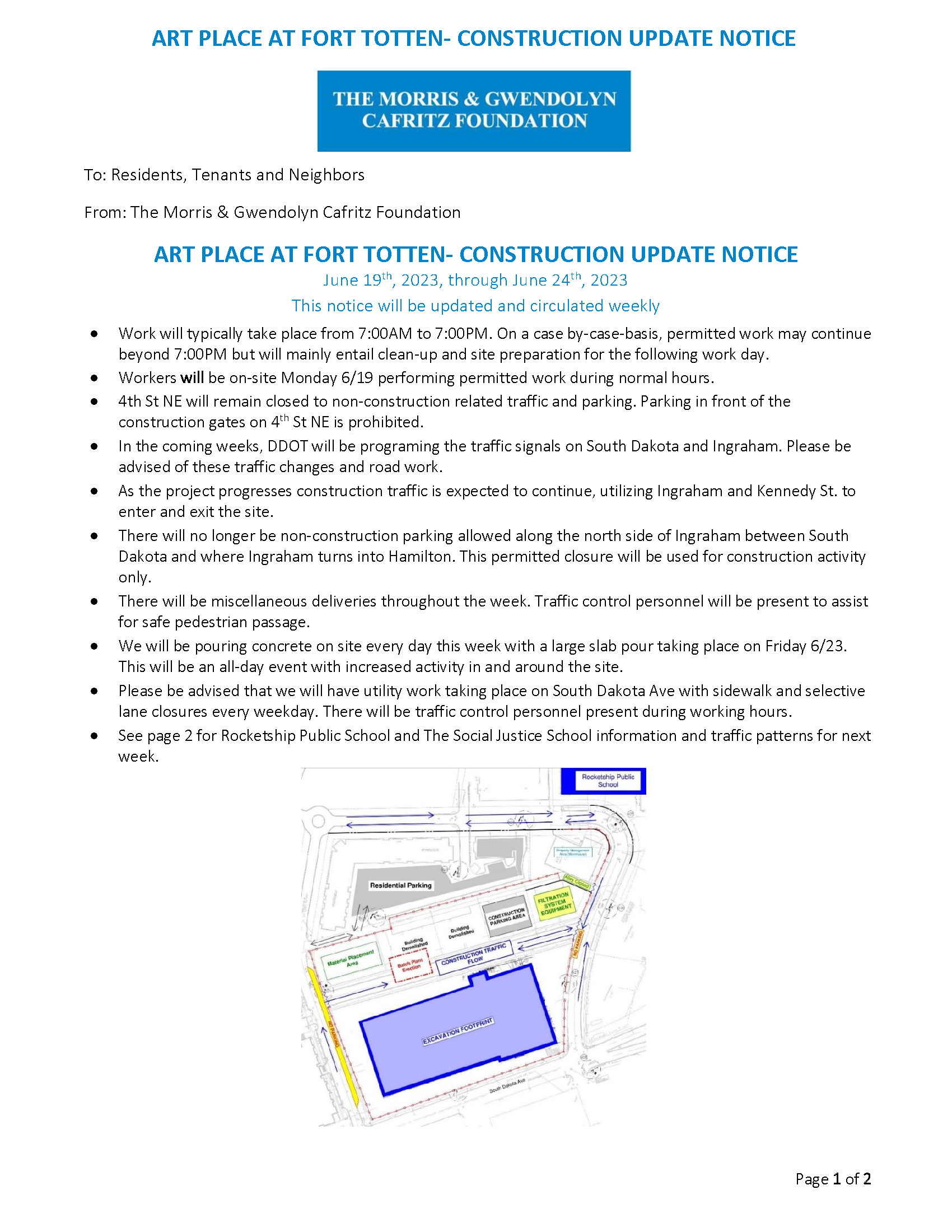
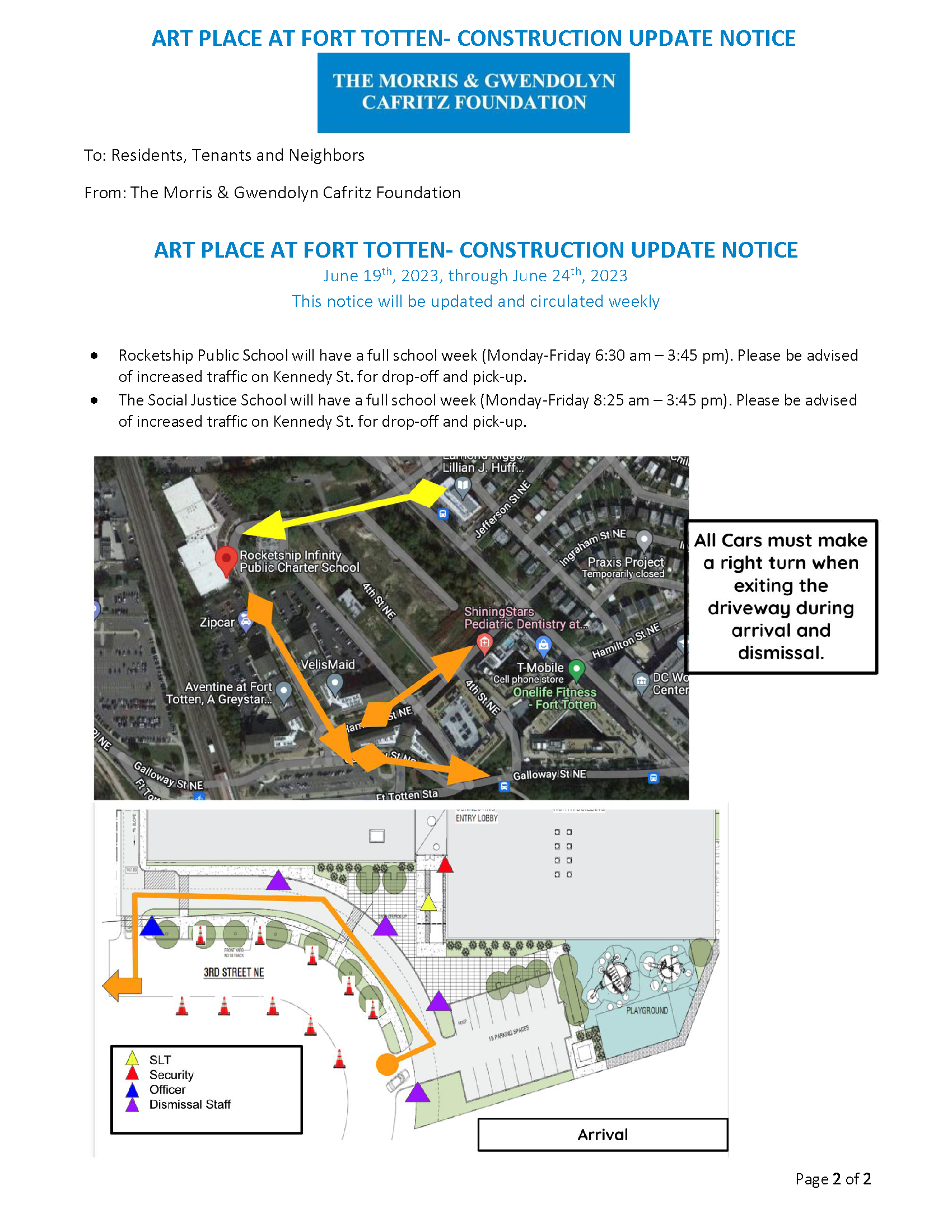
[Ed. Note: This construction notice references the traffic signal recently installed at South Dakota Avenue & Ingraham Street NE. DDOT stated that signal will be activated around June 12. I have asked DDOT about issues with the signal at South Dakota & Hamilton.]
The popular Fridays at Fort Totten summer concert series kicks off next Friday June 2. The series, sponsored by The Modern at Art Place & DC Fray, features a different artist 6pm to 8pm each Friday from June through August.
Bring a chair, hang out with neighbors, and enjoy live music, a food truck, and games.










 Next Stop...Riggs Park