Advisory Neighborhood Commission 4B’s Vision Zero Committee will meet on Wednesday, May 19, 2021, beginning at 6:00 p.m. The Committee will be meeting virtually. Details about participating/watching the meeting are included below:
For voice-only participation on a telephone, dial (301) 715-8592. Meeting ID: 831 6667 0715. Password: 488799. To watch (but not participate) via YouTube: https://youtu.be/PbHxKWu8X0s.
Flexiposts installed 400 block Galloway Street NE near the Modern
After years of 311 service requests, email exchanges, pictures, and letters to the Council during performance oversight season, the District Department of Transportation (DDOT) informed me on March 25, 2021, that they approved installation of flexiposts behind the crosswalk in the 400 block of Galloway Street NE near the Modern at Art Place. DDOT installed the flexiposts earlier this week. This is great news for those of us who have been nagging DDOT about the crosswalk near The Modern and the fact that drivers continuously parked in a way that blocked the sightline of pedestrians and drivers (see this post, for example).
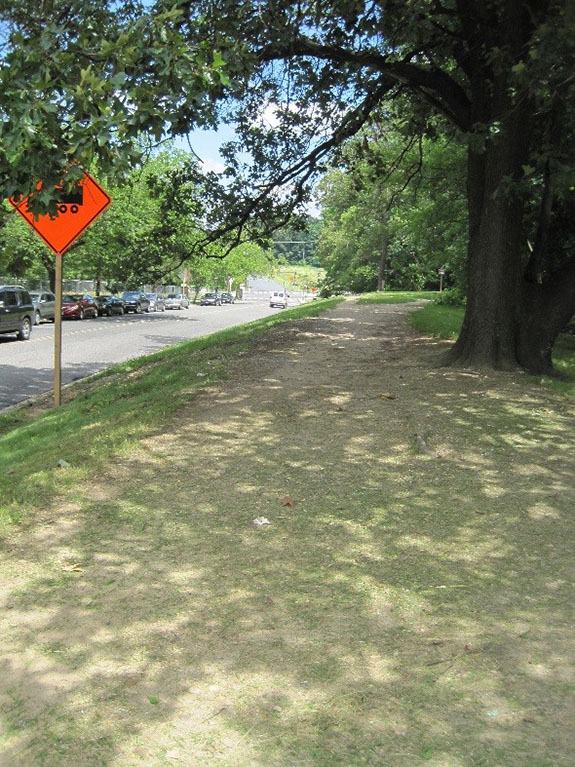
The story of this particular crosswalk is a 3.5 year saga. Before the Modern was built in 2017, 4th Street NE used to be a through street between Galloway and Kennedy. There were marked crosswalks at the intersection of 4th and Galloway. This is important because there is not a sidewalk on the south side of Galloway Street across from the Modern. Some residents choose to walk up the inclined, wooded path on the south side of the street, but many also choose to use the sidewalk on the north side and cross at 4th Street to walk to Fort Totten Metro station.
View of dirt path on south side of Galloway Street NE
During construction of the Modern, the crosswalk that was at 4th and Galloway was removed. After the Modern was built, 4th Street was permanently closed between Galloway and Ingraham, basically becoming the apartment community’s private driveway. Immediately after the building opened in fall 2017, we asked that the crosswalk in the 400 block of Galloway be reinstalled because again there is not a sidewalk on the other side of the street, and just because 4th Street was now closed, that did not mean that the crosswalk had to be removed.
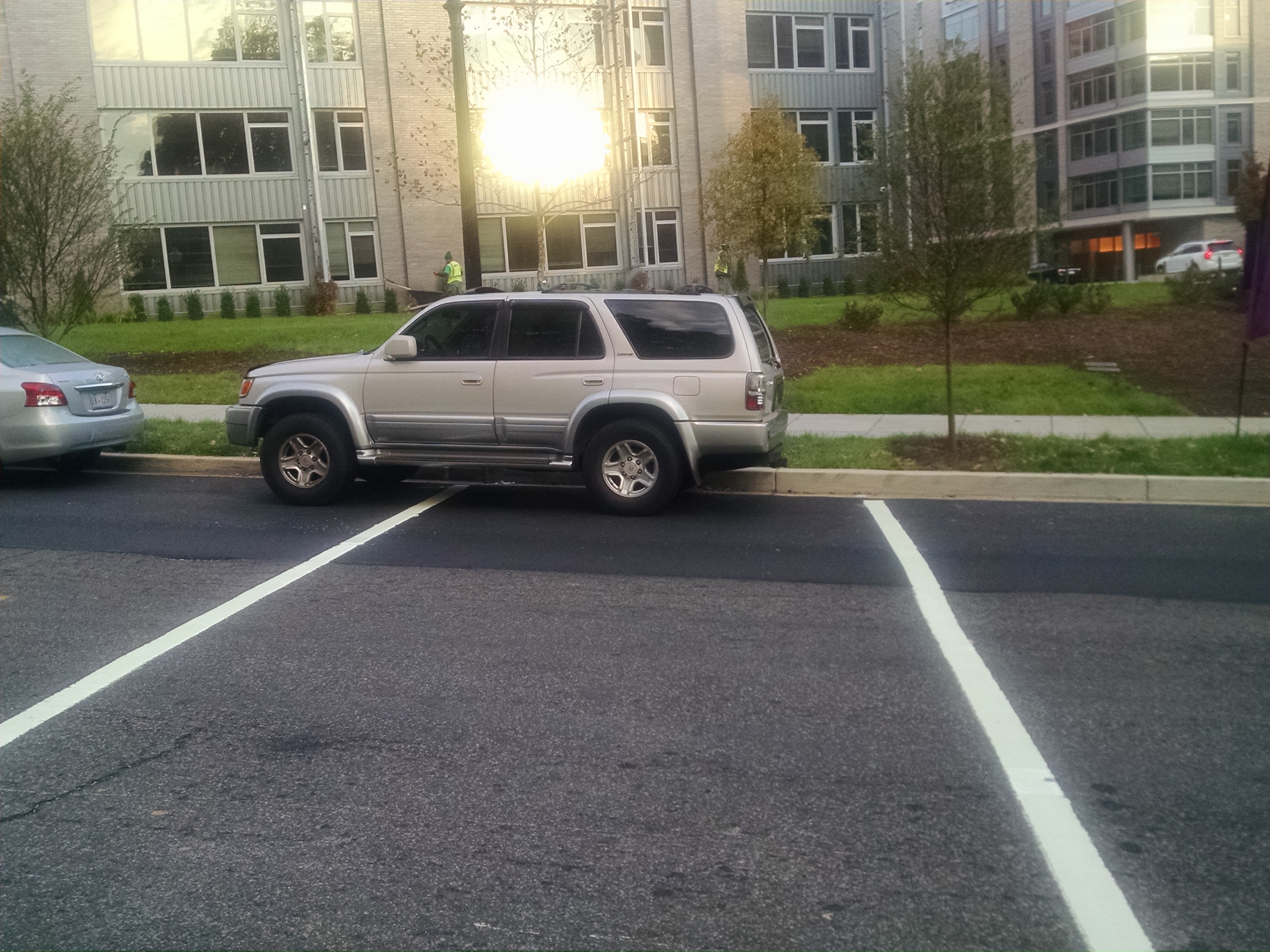
At first, DDOT wanted us to submit a service request for a new crosswalk. We all know how long it takes the agency to install a new crosswalk though. We argued that it was not a new crosswalk, and we had already submitted a service request to restripe the crosswalk. The developer should have been required to reinstall the crosswalk that had previously been there. In the interim, we were also told that DDOT in fact instructed the developer not to reinstall the crosswalk for reasons, but who knows. Anyhow, thanks to Google street view and intervention by Ward 5 Councilmember Kenyan McDuffie’s office, we were able to send DDOT photographic evidence showing that we were not making it up that a crosswalk existed there for many years. So DDOT ordered the developer to install a crosswalk. But then no curb cut was installed because remember neither the developer nor DDOT intended for there to be a crosswalk. So drivers would literally park in the crosswalk all the time because I guess they thought it was an option to do so.
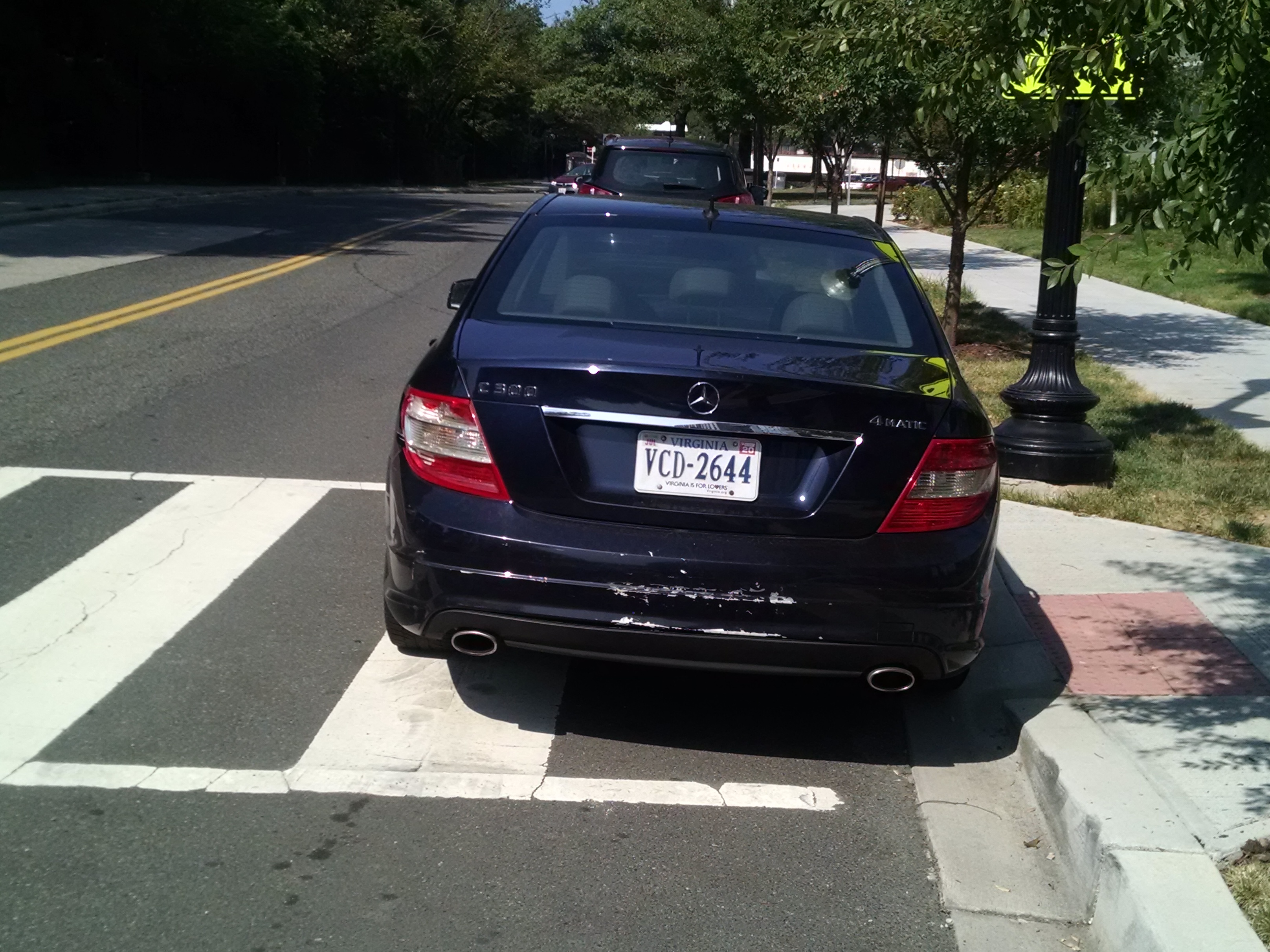
Car parked in crosswalk 400 block of Galloway Street
So we took pictures of cars parked in the crosswalk and asked that a curb cut be installed so that drivers would not park in the crosswalk. That took some time. Even then, some drivers still parked in or partially in the crosswalk (very strange behavior).
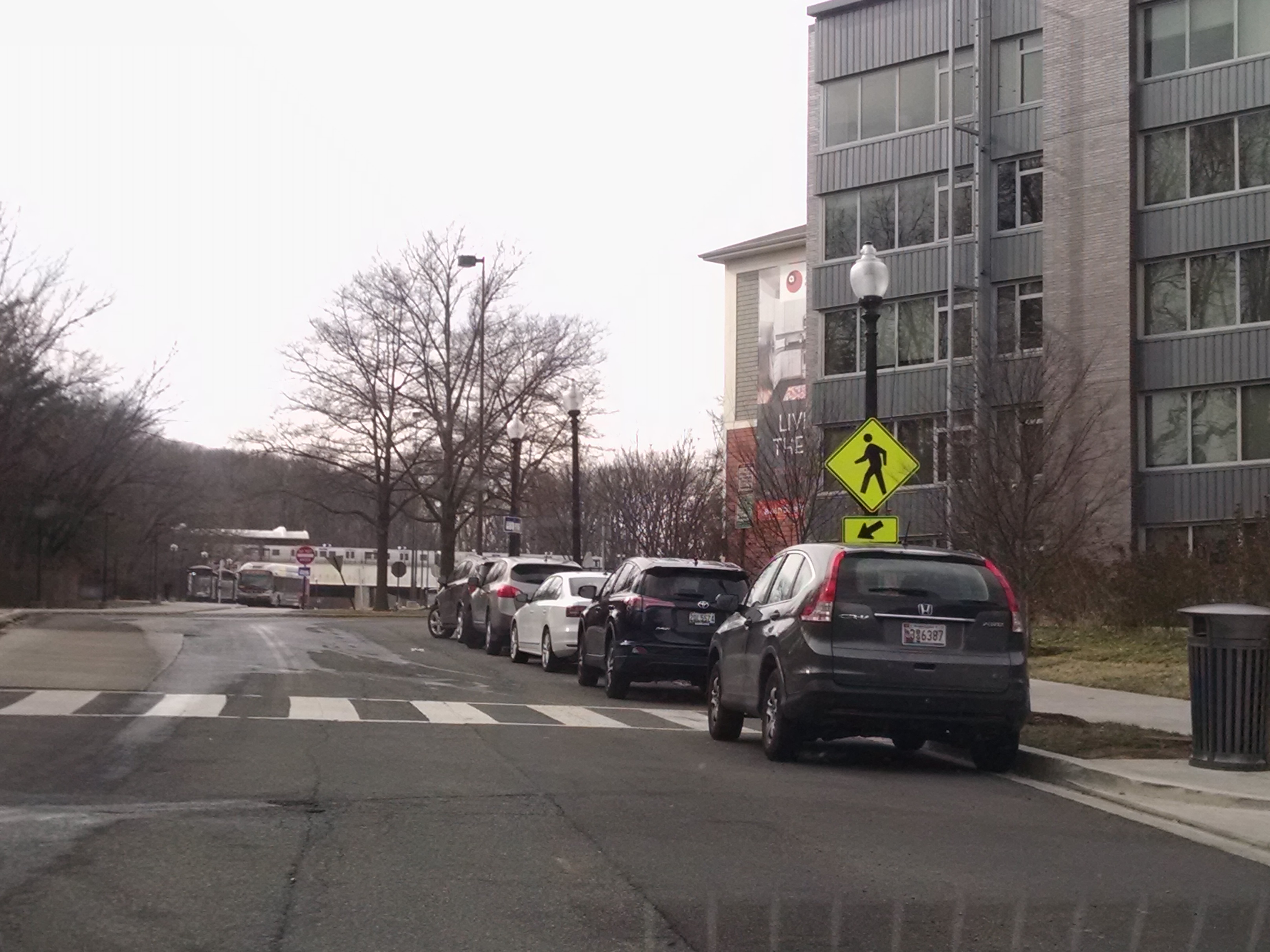
In any case, the result ended up being that there was then a crosswalk between two parked cars because there was just enough space for one car behind the crosswalk. So sometimes drivers would still park partially in the crosswalk.
The bigger issue though was that drivers could not see a pedestrian waiting to cross in the crosswalk between two parked cars and a pedestrian would have to walk out into the street to see around the car parked behind the crosswalk. None of this made any sense. We requested “no parking” signage, which DDOT put in front of the crosswalk after many months of requests, but it was placed right in front of a tree so no one could see it unless people knew to look for it.
DDOT installed high visibility pedestrian crossing signs pointing to the crosswalk so that motorists would know the crosswalk was there. For a while, DDOT told us there was only one signmaker or something so that is why it took a while to get the signs done apparently. DDOT refused to install signage indicating that no parking was allowed behind the crosswalk though because according to them the existing signage was adequate. According to them, the space behind the crosswalk was not a legal parking space because it was so close to the crosswalk and the driveway to the Modern. I suppose people were supposed to know that, but every day people would park behind the crosswalk. DDOT said it was a parking enforcement issue. And to be fair, some days DPW would ticket a car parked behind the crosswalk. I told DDOT it did not make sense to keep issuing tickets when it was clear that people thought they were allowed to legally park behind the crosswalk.
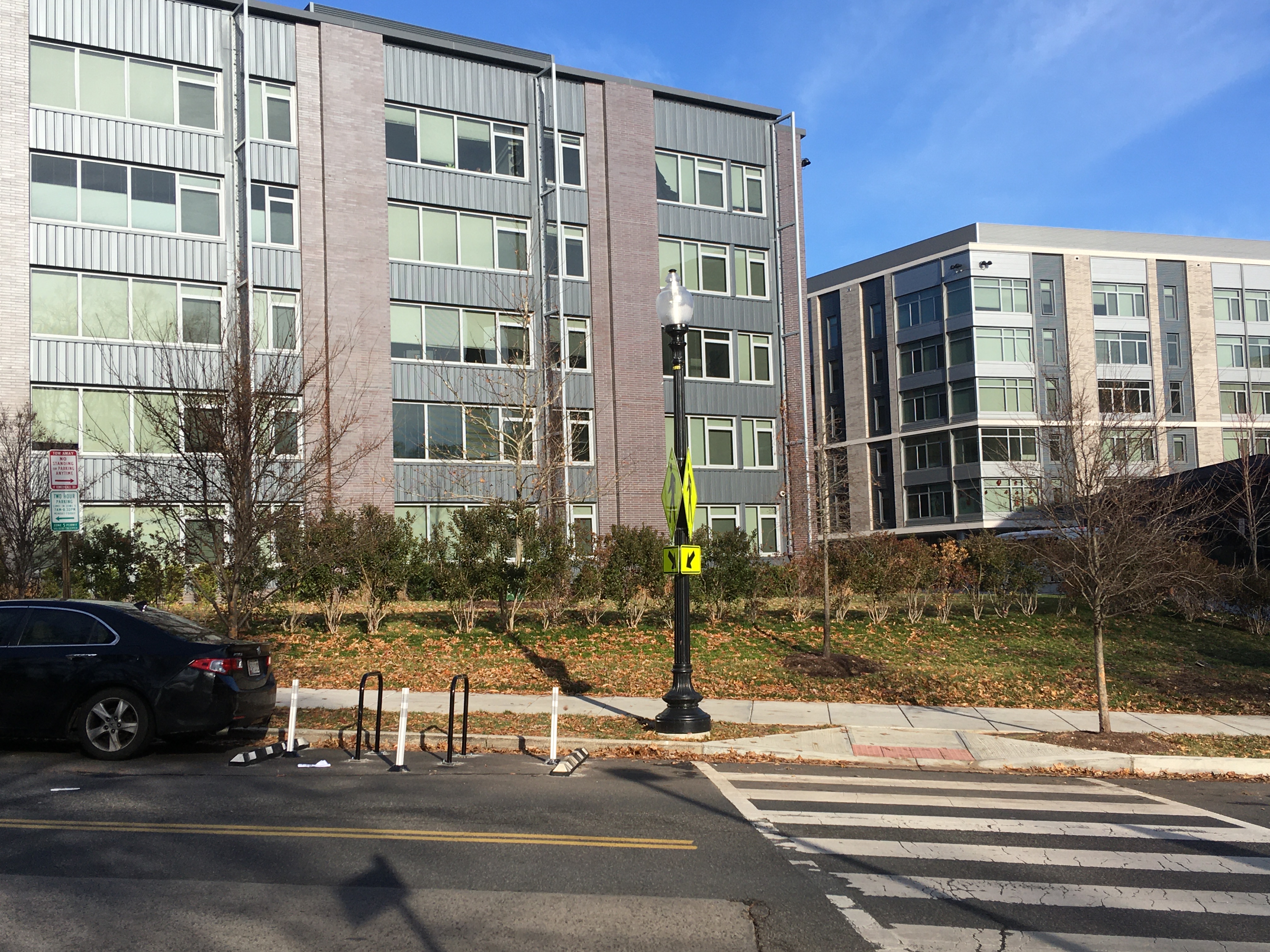
In December 2019, following multiple email exchanges among myself, the ANC, DDOT, and CM McDuffie’s office, DDOT installed a micromobility corral in front of the crosswalk to provide a buffer. Interestingly enough, that corral is actually not as big as it should be because there was a car parked behind the “no parking” sign when DDOT went to install the corral.
View of micromobility corral in 400 block of Galloway Street NE
Still DDOT did nothing about cars parked directly behind the crosswalk. So I asked the ANC to draft a resolution requesting signage and flexiposts so that cars could not be parked behind the crosswalk. DDOT dragged its feet for many more months and told me they could not put flexiposts behind the crosswalk because it was too close to the driveway or something. So I took pictures of flexiposts installed near intersections and also sent them pictures every day of cars parked behind the crosswalk blocking the sightline of pedestrians and drivers. Finally, on March 25, 2021, DDOT informed me that installation of flexiposts was approved.
I recount all of this just because there has been a renewed focus on Vision Zero, given the completely reckless driving taking place during the pandemic. To me, it seems that DDOT would want to take care of low-hanging fruit like this situation fairly quickly while the big fights about the big projects go on. There is also this sense of urgency from the mayor’s office in getting people to return to school and office buildings, meaning soon enough there will be more pedestrians traveling along this street to get to work and school. We noted to DDOT that this crosswalk is right next to a daycare center that would be opening at some point. But it took them almost four years to adequately resolve the issue of a crosswalk that should have been reinstalled after construction of a new building. The transportation plan for this new building should have included provision for replacement of the crosswalk. Residents should not have to take pictures every day and take time out of their day to send repeated communications to DDOT, the mayor’s office, or the councilmember’s office for something that should already be in a construction plan and monitored by DDOT. There is a sort of dismissiveness from the agency that becomes really grating after a while that sometimes results in residents saying “forget it,” and that is not a good result for anyone.
I will say the one bright spot in this saga was the support of DDOT’s Ward 5 liaison Kelly Jeong-Olson, who is always awesome, and Ty’on Jones before her. They deserve kudos for actually listening to residents.
We can now finally stop talking about this crosswalk and move on to other things, like that missing sidewalk on the other side of the street.
Metro is soliciting input on its proposed fiscal year 2022 budget, available at wmata.com/budget. Complete Metro’s budget survey by March 16, 2021. The survey walks you through the proposed rail changes, which are easier to digest. Metro proposes keeping rail service at current levels for the remainder of 2021 and proposes an alternative plan beginning January 1, 2022, if additional funding is not secured. The alternative rail plan includes options for service frequency, operating hours (with system closing at 9:00 pm instead of 11:00 pm), turning back trains on the red and yellow lines, and closing some metro stations (Archives, Arlington Cemetery, Cheverly, Clarendon, Cleveland Park, College Park, East Falls Church, Eisenhower Ave, Federal Center SW, Federal Triangle, Greensboro, Grosvenor-Strathmore, Judiciary Sq, McLean, Morgan Boulevard, Mt Vernon Sq, Smithsonian, Van Dorn St, Virginia Square, Innovation Center*, Loudoun Gateway*, and Reston Town Center* – *Pending opening of Silver Line Phase II).
If you are interested in commenting on bus changes, look at the links for proposed bus changes on Metro’s budget website before completing the survey.
ANC 4B recently passed a resolution addressing Metro’s proposed budget. One of the ANC’s recommendations is that Metro “reopen the public comment period for the FY2022 budget before the final six months ‘fiscal cliff’ budget period that results in substantial service cuts in January 2022, especially if there is a possibility of additional federal or jurisdictional funding.” It is worth looking at some of the other recommendations in that resolution as well.
Metro is facing a significant budget shortfall due to a decrease in ridership caused by the Covid-19 pandemic. A second relief package from Congress in December 2020 allowed Metro to avoid layoffs, continue providing essential travel service and prepare for transit ridership to return. However, even with the additional funding there is not enough money to fill the entire budget gap for the fiscal year that begins July 1, 2021.
Metro is working with our Congressional delegation to secure additional funding to continue providing service as the region comes back to work. But service cuts remain a looming threat, and Metro must plan accordingly.
Metro’s budget for Fiscal Year 2022 (July 1, 2021 – June 30, 2022) is under consideration now, and Metro is requesting your feedback. Metro’s Board of Directors and management will consider your feedback when making difficult decisions this spring.
Tell us what matters to you
Public feedback is vital in helping Metro’s Board of Directors and management make decisions about pandemic recovery. Let us know what you think by 5 p.m. Tuesday, March 16, 2021.
Because of the ongoing pandemic, Metro will be hosting all Public Hearings virtually. To provide oral testimony at a hearing, participants must call toll-free 512-580-8850 and enter the four-digit meeting code for the Public Hearing you’d like to attend.
Below is a list of dates, times and meeting codes for each of the virtual Public Hearings: Date/Time: Monday, March 8, 2021, 11 a.m. Host: Board Member Paul Smedberg Meeting Code: 9476
Date/Time: Monday, March 8, 2021, 6 p.m. Hearing will focus on proposed changes in DC, but is open to everyone. Host: Board Member Stephanie Gidigbi-Jenkins Meeting Code: 3811
Date/Time: Tuesday, March 9, 2021, 6 p.m. Hearing will focus on proposed changes in Maryland, but is open to everyone. Host: Board Member Michael Goldman Meeting Code: 9131
Date/Time: Wednesday, March 10, 2021, 6 p.m. Hearing will focus on proposed changes in Virginia, but is open to everyone. Hosts: Board Members Paul Smedberg and Walter Alcorn Meeting Code: 9141
Watch or listen live Watch or listen to the Public Hearings live on this page, on YouTube.com/MetroForward or by calling toll-free 512-580-8850 and entering in the four-digit meeting code.
Public feedback will be provided to Metro’s Board of Directors in April 2021 as part of the final decision-making process. Any Board-approved changes will begin after Board approval in April 2021.
The District Department of Transportation (DDOT) is updating its moveDC long-range transportation plan. You might have taken a survey for the 2021 update at the end of 2020 as highlighted in this post. DDOT is out with another survey for the 2021 update (also referred to as the second phase). This one is super short. Take advantage of the opportunity to leave comments by clicking on the comment icon in the survey. Complete the survey here by March 31, 2021.
The project website for the moveDC 2021 update is wemovedc.org. The first phase of the moveDC plan was rolled out in 2014. You can view implementation progress of the 2014 plan here. If you missed the February townhalls, you can view the presentations at wemovedc.org.
(Washington, DC) – The District Department of Transportation (DDOT) is updating its long-range, multimodal transportation plan, moveDC, to determine the agency’s priorities over the next two decades. DDOT will host two virtual public meetings to review how the goals and policies identified in the first round of the survey released in October 2020 will be potentially implemented.
The same information will be presented at both meetings.
WHAT: Public Meeting – update on moveDC 2021 WHEN: February 9, 2021 at 6:30 p.m. or February 11, 2021 at 1:30 p.m. WHERE:rebrand.ly/moveDC-Feb2021
For more information about moveDC, please contact DDOT Project Manager Lezlie Rupert at move.dc@dc.gov or 202-599-7371 or visit the study website at wemoveDC.org.
Can’t Make a Meeting?
Materials from this meeting will be made available on www.wemoveDC.org within 24 hours of meeting conclusion. Those who would like to leave a comment about the study can do so by leaving a comment on the project website.
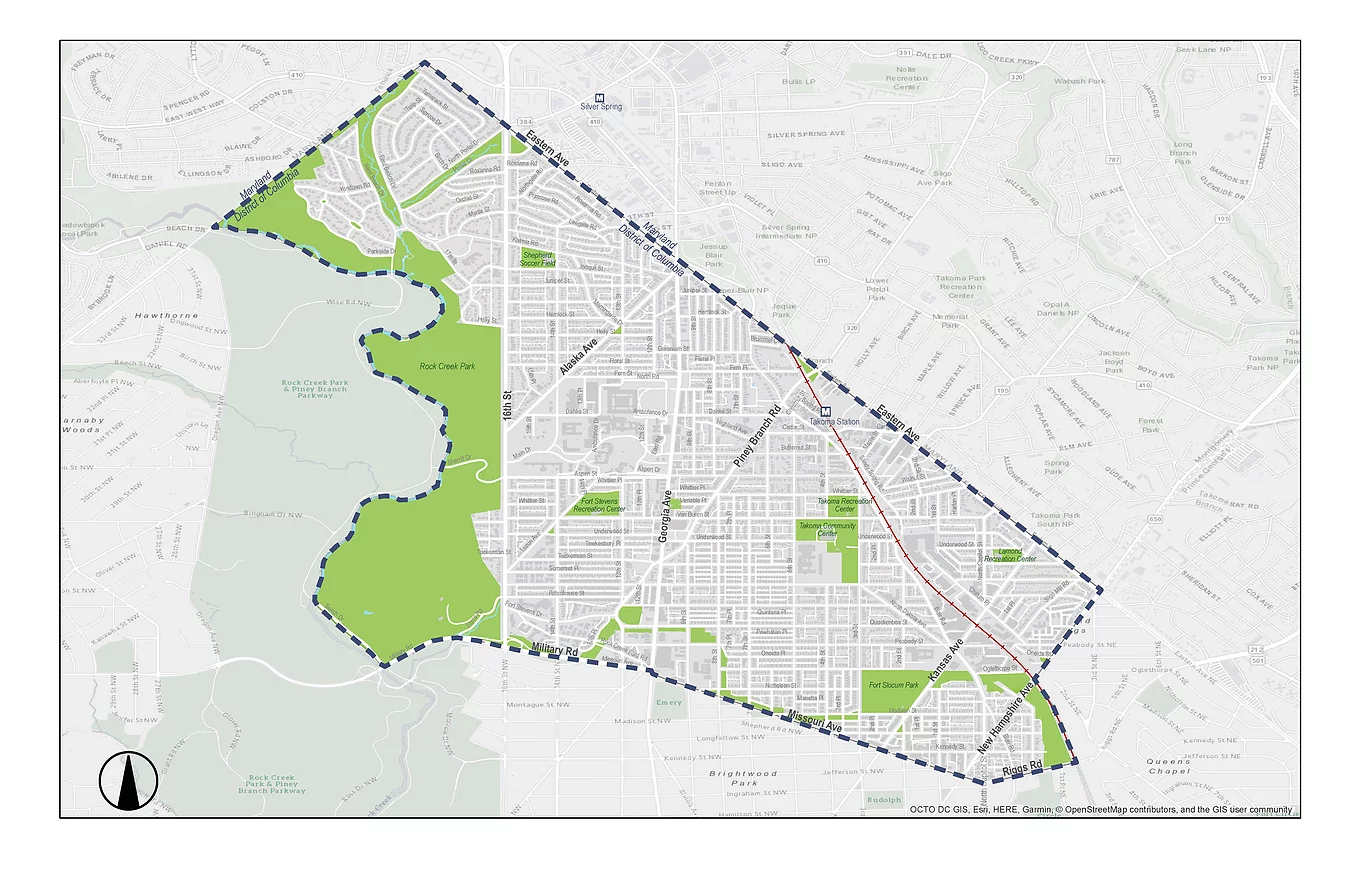
Riggs Park is just outside the study area, but Lamond is included. The study area is defined by Rock Creek and the Maryland border to the West, Eastern Avenue to the North, New Hampshire Avenue NE and the Red Line Metrorail tracks to the East, and Military Road NW, Missouri Avenue NW, and Riggs Road NE to the South
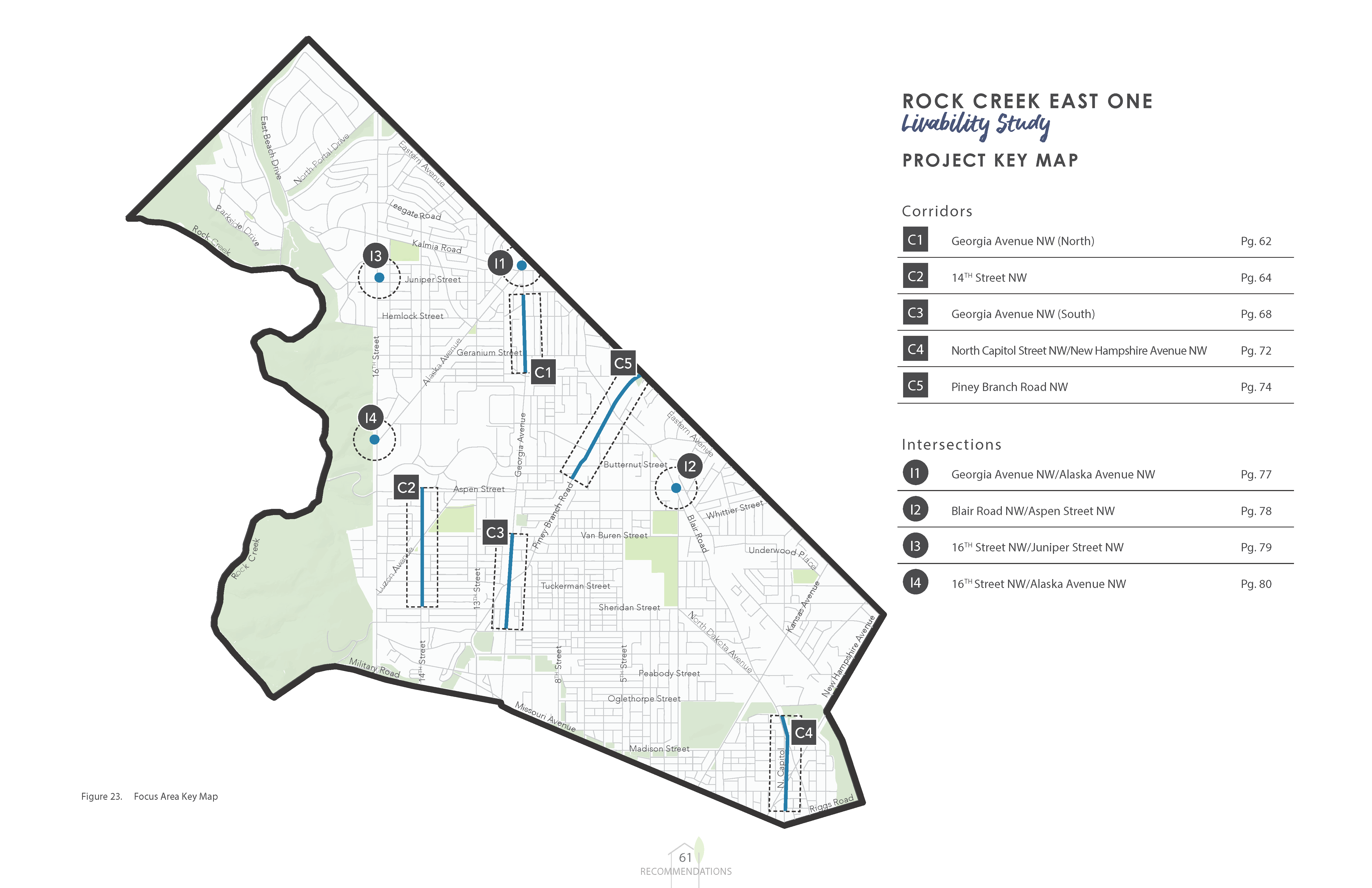
The District Department of Transportation (DDOT) announced last week that the final report for the Rock Creek East I Livability Study is now available on the project’s website. The study area includes Lamond, but not Riggs Park as Riggs Park is in a different planning area. The email from the project planner states, “DDOT welcomes any thoughts and suggestions in prioritizing project recommendations. DDOT will identify opportunities to implement short, medium, and long-term recommendations from the study.”
I have not taken a deep dive into the report but from a brief skim, it identifies several “focus area opportunities.”
Map of focus areas
Focus area corridors:
Georgia Avenuew NW (North);
14th Street NW;
Georgia Avenue NW (South);
North Capitol Street NW/New Hampshire Avenue NW;
Piney Branch Road NW
Focus area intersections:
Georgia Avenuew NW/Alaska Avenue NW
Blair Road NW/Aspen Street NW
16th Street NW/Juniper Street NW
16th Street NW/Alaska Avenue NW
I attended a a couple of the public meetings for this study but did not invest as much time or attention as I might have were Riggs Park included in the study area. That said, I did speak with DDOT representatives during the public meetings to point out areas of concern that are a couple of block outside of the study area (such as Riggs Road and South Dakota Avenue NE). Those representatives assured me that these concerns could be addressed outside of this particular study.
In any case, if residents have suggestions about short/long term fixes or priorities for any part of the study area, I am sure ANC commissioners and the Ward 4 council office would be interested in listening.
The Commission is now seeking applicants for Committee membership. You must be a resident or businessowner within the Commission’s boundaries to be a member. Check if you reside within the Commission’s boundaries here: https://anc4b.com/about-the-anc/.
If you are interested in serving as a member of the Committee, please email a statement of interest, including any relevant experience, by February 15th. The Commission will not be monitoring responses to the listservs. Please send any statements of interest directly to the Co-Chairs of the Committee, Commissioner Evan Yeats (4B01), at 4B01@anc.dc.gov and Commissioner Alison Brooks (4B08), at 4B08@anc.dc.gov.
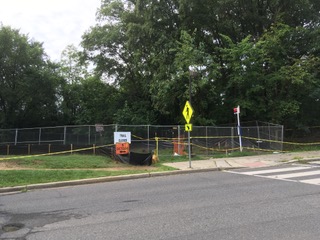
View of fenced off pedestrian trail from Galloway Street NE
Back in July of this year, the National Park Service (NPS) halted construction on a long-awaited formal pedestrian trail on the eastern side of Fort Totten Park linking North Michigan Park to Fort Totten Metro station, after the construction team found an unexploded ordnance on the unpaved trail. NPS subsequently fenced off the trail entirely to prevent people from walking through the area.
According to an update Kym Elder, NPS Program Manager for the Civil War Defenses of Washington, provided to ANC 5A and the Ward 5 council office yesterday, NPS “continues to work with a contractor to test the soil within the impacted area for any related contaminants. The contractor has just recently notified [NPS] that all test results are expected later this winter, no later than mid-January 2021. Pending the test results, the pedestrian trail construction could restart shortly after, as weather conditions permit.”
Interestingly enough, a neighbor and I independently wrote to Congresswoman Eleanor Holmes Norton’s office last month in November before a scheduled NPS meeting to inquire about the trail’s status and any updates on the ordnance. That NPS meeting ended up getting cancelled. I received an acknowledgement of my inquiry but have not received a response just yet. My neighbor received a response from Congresswoman Norton’s office dated December 15 in which NPS stated that the agency would begin testing the soil in early January 2021 and would receive results several weeks after that.
When I originally wrote about the ordnance discovery, that same neighbor reminded me that I previously covered a couple of ANC meetings that might bear on this issue. In October 2017, NPS informed ANC 5A that the agency belatedly learned that Metro brought in infill dirt from a superfund site in Spring Valley (a WWI munitions testing site) to rehabilitate an area of Fort Totten Park that NPS permitted Metro to use for staging during construction of Metro’s green line in the 1980s and 1990s. That staging area was on the western side of Fort Totten Park near the access road for Aggregate Industries concrete company. At that October 2017 ANC meeting, NPS officials stated they decided to hire a contractor to test the soil in that area out of an abundance of caution. The NPS representatives stated that they believed any health effects would be rare because of the topography of the land in that area, that the area was not near any pedestrian access points or trails, and that waterways in the area were scarce so they were not concerned about leeching into waterways. In February 2018, NPS informed the ANC that preliminary test results showed no hazardous conditions or contaminants.
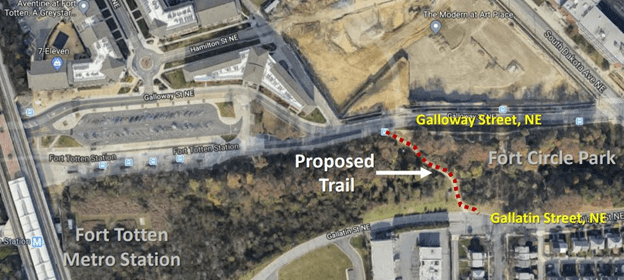
Location of trail between Gallatin Street and Galloway Street NE in Fort Totten Park
NPS’s July 2020 press release on the unexploded ordnance stated it was a WWI-era ordnance. Fort Totten Park is so named for its role in the Civil War, so armchair historians wondered how a WWI-era ordnance could have ended up in the park. Media reports in July noted that the ordnance was found after heavy rains possibly unearthed it as the construction crew worked on the new pedestrian trail. Not being an armchair historian or scientist myself, I have no idea if Metro’s rehabilitation of an area on the western side of Fort Totten Park using infill dirt from Spring Valley might have played a role in the ordnance’s appearance further east in the park. I have no idea what NPS considers the “impacted area,” if that means just the fenced off trail area, or if they are also testing widely throughout the park, particularly near other pedestrian access points. I guess we will hear more about all of this in the new year.
(Washington, DC) – Today, the District Department of Transportation (DDOT) announced that residents should continue to use the existing 2020 Visitor Parking Pass (VPP) into 2021. The District plans to launch a streamlined digital parking permit program in 2021.
The VPP program allows District residents to register for an annual pass that is used for guests to park for more than 2 hours on Residential Permit Parking or RPP-zoned blocks.
Residents who are new to the District or need a replacement VPP (due to damage or loss) should visit their local Metropolitan Police Department precinct to request a temporary parking pass instead of a VPP.
Beginning in March 2020, and continuing for the duration of the public health emergency, the District has suspended enforcement for the following infractions:
· Expired residential parking permits and visitor parking permits/passes · Expired District license plates and inspection stickers · Expired meters
For more information, please visit ddot.dc.gov or call DDOT Customer Service at 202-621-2700.
###
The mission of the District Department of Transportation (DDOT) is to enhance the quality of life for District residents and visitors by ensuring that people, goods, and information move efficiently and safely with minimal adverse impact on residents and the environment.
Metro’s FY2022 proposed budget has been in the news lately because it proposes drastic measures to reduce a large funding gap due to COVID-19. The proposals include eliminating Metrorail service on the weekends systemwide and cutting bus routes. The E4 bus route, the only uptown crosstown route, is one proposed for elimination. Other proposed bus service changes include elimination of the E2 Ivy City-Fort Totten route and modifications to other routes servicing Fort Totten metro station. The budget proposal also includes a recommendation regarding shifting more maintenance costs to the capital budget.
Metro officials hope there will be federal funding relief to stave off drastic cuts. There will be public hearings and a public comment period on the proposed budget so stay tuned for that.
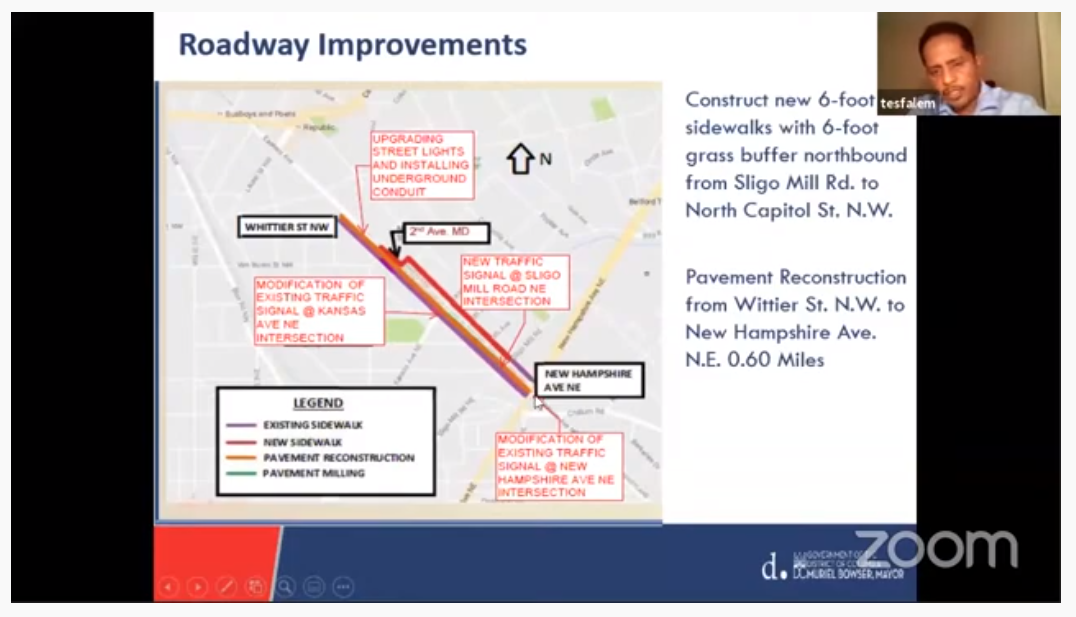
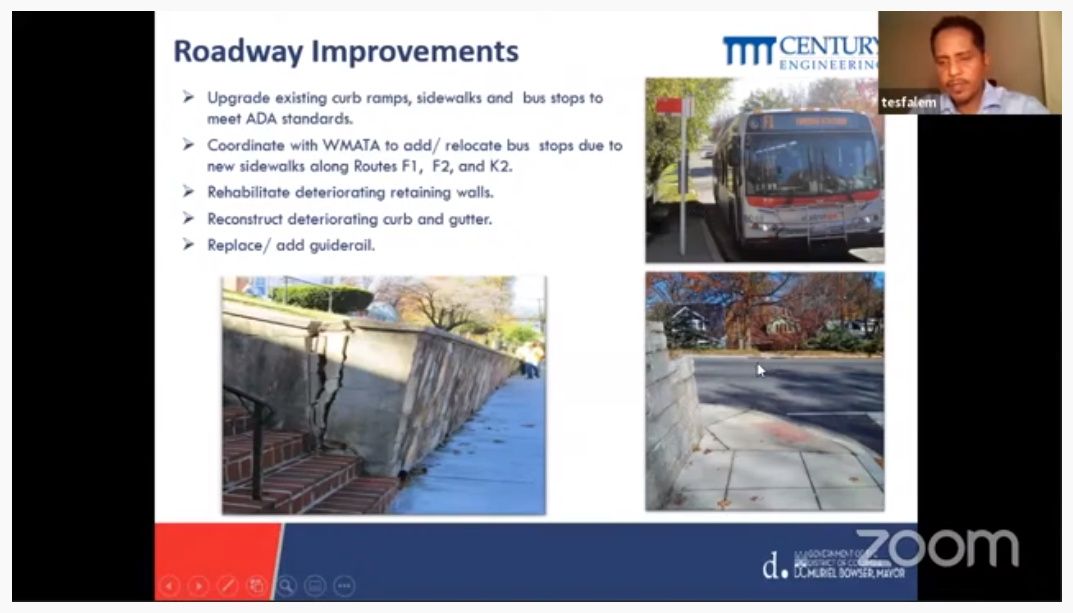
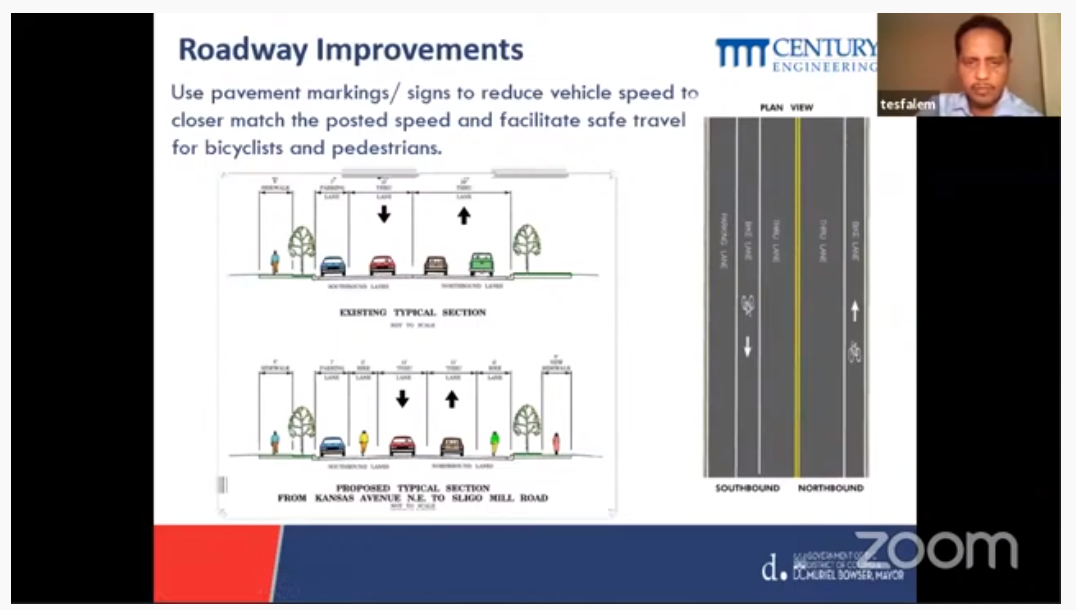
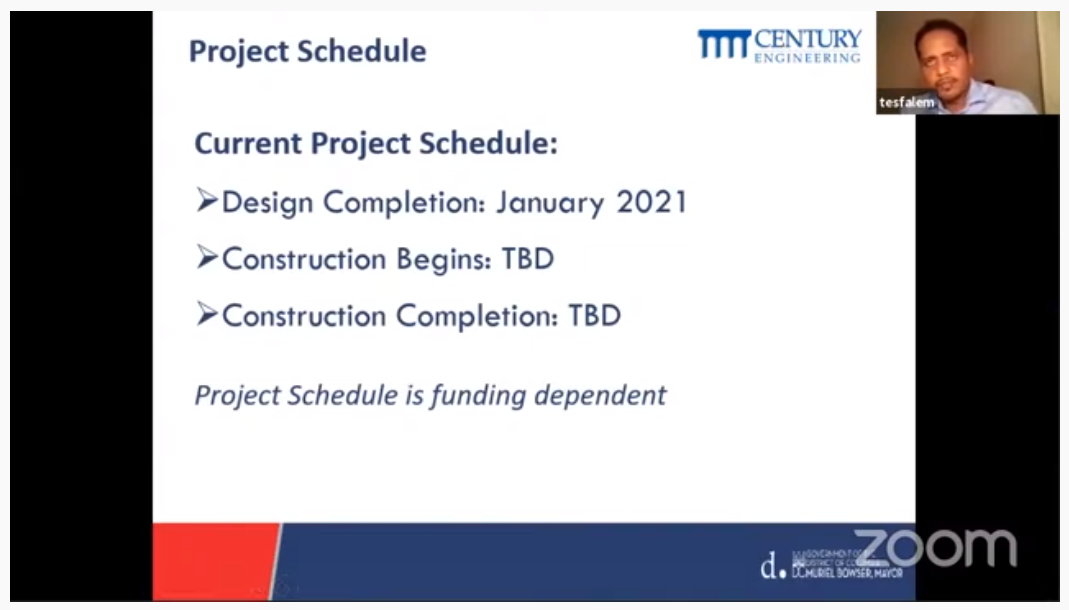
The rehabilitation of Eastern Avenue NE from New Hampshire Avenue NE to Whittier Street NW is near the 95% design stage. At ANC 4B’s meeting on October 26, 2020, the District Department of Transportation (DDOT) shared that final design is expected early 2021. There is not funding for construction yet. DDOT stated that the earliest they are looking at getting funding for construction is fiscal year 2023. You can view the livestream of the meeting here (DDOT presentation begins at the 8:22 minute mark).
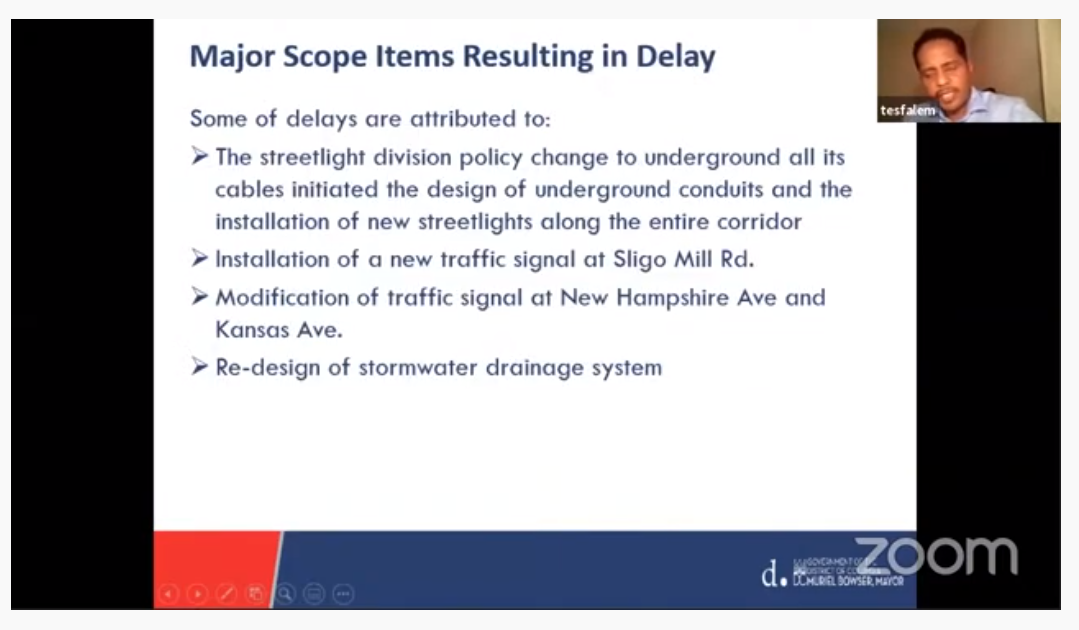
This project has been in the works for many years. DDOT explained that the delay in completing the design is due to expansion of the scope of work.
DDOT Ward 4 Liaison Sayra Molina stated that DDOT will have another meeting for residents after the design is complete. DDOT will discuss with residents interim, short-term traffic calming measures that may be possible, such as signage and markings. Because Eastern is classified as an arterial road, DDOT will not install speed humps.
We noted in this post that the District Department of Transportation (DDOT) is soliciting public input to update the moveDC long-range transportation plan that was adopted in 2014. Thanks to neighbor Gavin Baker for pulling together some proposed update highlights for Lamond-Riggs outlined below.
With respect to the bike map, there are some differences from the 2014 plan, if you are inclined to leave comments on and propose changes to the map.
The 2014 plan proposed bike facilities for Riggs Road NE/Missouri Road NW/Military Avenue NW, but in the draft 2020 map, it looks like bike facilities for the Riggs Road NE portion east of North Capitol Street have been removed. Riggs Road is one of the few places where bicyclists can cross the train tracks. It does not make sense to stop the bike network on Missouri/Military at North Capitol Street. DDOT should continue the bike network on Riggs Road NE (as proposed in the 2014 plan) especially given that there are bike lanes east of Eastern Avenue into Prince George’s County. Removing the Riggs Road NE portion from the bike network would leave a gap for no seemingly identifiable reason.
The 2014 plan did not include bike facilities on New Hampshire Avenue north and east of North Capitol Street, but these facilities are proposed in the draft 2020 map, so feel free to indicate that you like that on the map.
The draft 2020 map proposes to close the gap on Kansas Avenue between Blair Road and Chillum Place, which was not included in the 2014 plan. Again, feel free to leave a comment indicating you like that piece.
The Eastern Avenue trail is new to the 2020 draft. It looks like a lot in the National Capital Trail Network plan recently approved by MWCOG is in this draft, at least the segments for this neighborhood.
The 2014 plan included two new street connections over/under the train tracks between Kansas and Riggs, which are not shown in the 2020 draft. It is not clear if that is because they are not “bicycle facilities” and so they are not shown on the bike map, or if it is because DDOT has dropped the idea.
As for why DDOT is updating a plan that was adopted in 2014 and that still has a lot left to be implemented, DDOT stated in a virtual townhall that it is general practice to update long-range plans every five to eight years.
One key point to note is that on September 22, 2020, the DC Council unanimously passed a Vison Zero omnibus bill. The legislation is under review by the mayor’s office. Assuming the legislation goes into effect, it would require DDOT to build transit and bike facilities listed in the long-range plan when they are doing other major work on that road segment, so it would give some teeth to these maps.
Join by Phone (to hear presentation only): 1-443-529-0267; Conference ID – 396 316 663#
Topics of discussion will include:
Construction updates
Construction timelines
Neighborhood impacts
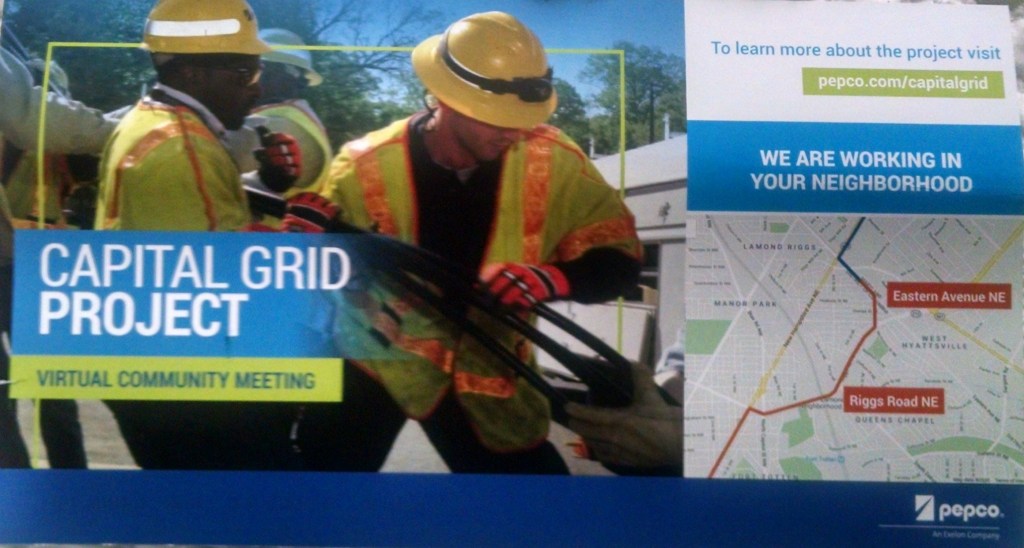
The subject of so many community meetings over the past few years, Pepco’s Capital Grid project has finally made its way to Riggs Road NE. Road work to place transmission cables underground along Riggs Road has commenced. Drivers will encounter lane closures in the work zone. You can view an interactive map of the project at https://capitalgrid.net.
Please pack some patience and pay attention to the flaggers. I have seen drivers become impatient and proceed driving contrary to instructions to stop. Needless to say, that is dangerous. Your best bet is to avoid Riggs Road NE if you can.
Other Construction Work
Site construction has started at the Riggs Park Place townhome development on the southeast corner of South Dakota Avenue and Riggs Road NE. The construction entrance is located on South Dakota Avenue, so you will see flaggers in that area directing traffic to stop to allow construction trucks to enter and exit the site.
There will be occasional lane closures on both sides of South Dakota Avenue.
Finally, there is road work taking place all over the city these days, so probably best to give yourself a few extra mintues to get wherever you need to go.
The District Department of Transportation is conducting a survey on its Slow Streets initiative. Slow streets are limited to local traffic only and the speed limit is 15 mph to facilitate neighborhood-based social distancing while walking, running, and cycling. If you have an interest in this initiative and want slow streets where you live, be sure to fill out the survey.
View of trail under construction from Galloway Street NE
As expected, the National Park Service has completely fenced off the path that was under construction between Gallatin and Galloway Street NE to formally connect North Michigan Park to Fort Totten Metro Station. NPS is still assessing next steps after finding an unexploded ordnance shortly after construction began. NPS expected construction to take no more than 120 days, but this latest development makes the timeline unclear.
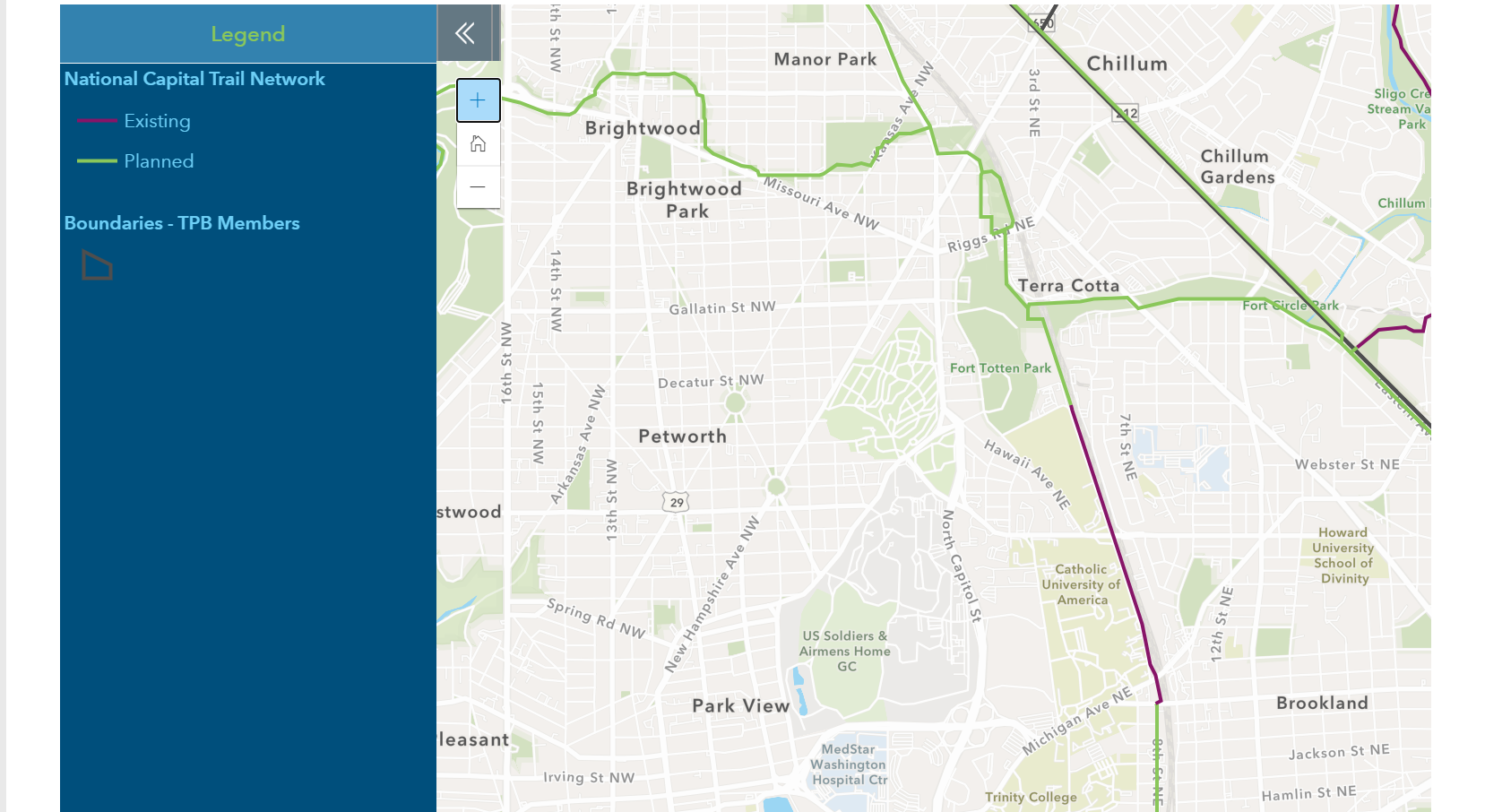
Neighbor Gavin Baker sent me an article from DCist regarding the approval of the National Capital Trail Network. Last week, the National Capital Region Transportation Planning Board, an arm of the regional Metropolitan Washington Council of Governments, approved the trail network via a board resolution. The plan includes a paved trail near/through Fort Circle Park, connecting to the Metropolitan Branch Trail near Fort Totten, and a trail along Eastern Avenue. The Fort Circle Park trail (named as a part of the Met Branch Trail) was previously included in the District Department of Transportation’s moveDC plan. The resolution calls for annual progress reports and priorization for funding for the trail network.
Temporary Lane Closures and Parking Restrictions on South Dakota Avenue from Gallatin Street to Kennedy Street NE Starting Saturday, July 25, 2020
(Washington, DC) — The District Department of Transportation (DDOT) is scheduled to temporarily close travel lanes and restrict curbside parking on South Dakota Avenue from Gallatin Street to Kennedy Street NE starting on or about Saturday,July 25, 2020, weather permitting. At least one lane will be open to traffic in each direction.
The closures and restrictions are needed for resurfacing. The contractor is authorized to work Monday through Friday from 7:00 a.m. to 5:00 p.m. Work will be authorized on some Saturdays from 7:00 a.m. to 5:00 p.m. when necessary. Construction is scheduled to be completed by Friday,August 14, 2020, weather permitting.
Parking restriction signs will be posted at least 72 hours in advance at locations where parking will not be allowed. These signs will notify the duration and dates of “No Parking” and provide contact information of the engineer in charge.
Traffic control devices will be in place. Motorists should anticipate moderate delays due to the lane closures. Drivers are advised to stay alert while traveling through these locations and to be observant of the work zone.
###
The mission of the District Department of Transportation (DDOT) is to enhance the quality of life for District residents and visitors by ensuring that people, goods, and information move efficiently and safely with minimal adverse impact on residents and the environment.
Follow us on Twitter for transportation-related updates and more; like us on Facebook and follow us on Instagram. Visit the website at www.ddot.dc.gov. Visit goDCgo.com for more information on transportation options in the District.
The construction of a pedestrian path linking Gallatin Street NE and Galloway Street NE across Fort Circle Park near Fort Totten metro station will soon become a reality. The project has been fully designed and awarded according to the National Park Service (NPS). The contractor is currently submitting the paperwork needed to begin construction.
Construction is anticipated to begin no later than June 30, 2020, and it should be completed within 120 days. The area will be closed to the public during construction, so the public will have to use the sidewalks on Gallatin, Galloway, and South Dakota Avenue until project completion. With luck, we should have a paved, lighted path this fall.
View of proposed path across Fort Circle Park between Gallatin Street NE & Galloway Street NE
But, the good news does not stop there. Progress is ongoing on project development for a sidewalk on the south side of Galloway Street NE across from The Modern at Art Place. As noted in this post, the District Department of Transportation (DDOT) is working with the National Park Service on design. Bid solicitation for contractors is anticipated in 2021 with construction anticipated in 2022. Click here for more information on the project.
Let us keep our collective fingers crossed and hope for the best.
View of Galloway Street NE between South Dakota Avenue NE and 4th Street NE where sidewalk will be constructed