
ANC 5A Special Public Meeting
February 20, 2019
6:45 pm
UDC-CC Backus (5171 South Dakota Avenue NE)
Agenda: Wesley Housing – Curb Cut Public Space Application, 1 Hawaii Avenue NE
Author Archives: nextstoprp
HAWK Signal to Be Installed at South Dakota Avenue & Ingraham Street NE
Guest Post by David Kosub
In case you were not able to make the Lamond-Riggs Citizens Association meeting on February 4, DDOT announced they will install a HAWK signal, a controlled pedestrian signal, at the intersection of Ingraham St NE and South Dakota Ave NE. This is a great step forward in strengthening pedestrian safety here in our community.
DDOT has a handy video explaining how HAWK pedestrian signals work on its website. When a HAWK signal is activated by a push button, yellow lights will flash to warn motorists to slow down for an impending red light. When the light turns red, motorists will be required to stop, just as with traditional traffic signals, to permit pedestrians to cross the street.
Work is expected to be completed around late summer/early fall 2019. We will provide regular updates on DDOT progress as they are received over the coming months.
DDOT committed to take the following actions:
South Dakota Avenue NE and Ingraham Street NE Intersection
- Install a HAWK signal in accordance with the MUTCD and DDOT guidelines.
South Dakota Avenue NE and Jefferson Street NE Intersection
- Install in-street pedestrian crossing signs (R1-6a) at both sides of crosswalk located at the southbound approach of South Dakota Avenue NE.
- Install advanced pedestrian crossing sign (W11-2) along both directions of South Dakota Avenue NE.
- Remove the pedestrian warning sign on the northwest of Jefferson Street.
Mid-block (between Ingraham Street and Jefferson Street)
- Update redundant parking regulation signs on the eastern side of South Dakota Avenue NE.
Please pat yourself on the back for this outcome. Without your letters of support, many reports to 311 and 911, outreach to elected officials, submitting traffic studies, direct engagement with city agencies, and so much more, we may not be in the position we are today.
TODAY: Fort Totten Hike
Today at 11:00 am, join the National Park Service for a hike of Fort Totten. Meet at the Fort Totten metro station entrance.
DESCRIPTION
Join the Civil War Defenses of Washington (CWDW) for an exploration of Fort Totten, one of the 68 major forts that encircled Washington DC during the Civil War. The fort saw action during the Battle of Fort Stevens in July 1864 and is one of 17 sites preserved and managed by the National Park Service.
Ranger Steve T. Phan will guide visitors in and around the historic earthen fort, including recently discovered remnants thought to be lost during the post-war era.
Meet Ranger Steve at the entrance to the Fort Totten Metro Center.
The 1.5 mile hike and will be conducted over paved sidewalks, dirt paths, and grass. Visitors will be guided back to the metro station at the conclusion of the tour.
Fort Totten Metro Center Address:
550 Galloway St NE, Washington, DC 20011
The Met Branch Trail is coming to Fort Totten. Now, how will we get there?
Guest post by Gavin Baker
Take my survey to tell me what you think, or read on for more information.
The Metropolitan Branch Trail (MBT) is a multi-use trail that will run from Silver Spring to Union Station when completed. Today, the trail segment connecting Fort Totten to the south is under construction and expected to open in 2020. When it opens, Lamond-Riggs and adjacent neighborhoods will have access to a great facility for walking, jogging, and biking. To access the MBT, the Fort Totten trailhead will be located on 1st Place NE, just west of the Fort Totten Metro station. The trailhead will connect to the sidewalk network, as well as the trail spur that connects west to Gallatin Street NE (which will be repaved as part of this project).
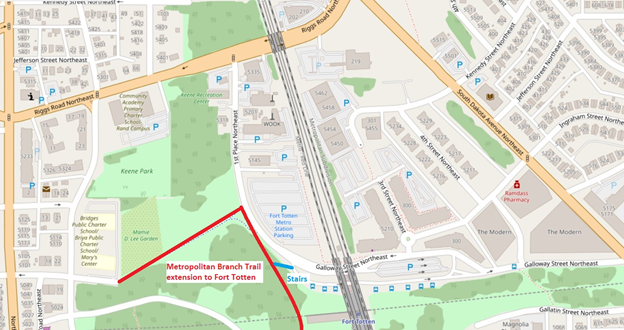
But for those of us who live in Lamond-Riggs, the question is: How are you going to bike there?
Bicycling is one of the primary purposes of the MBT, whether for recreation or commuting. However, Lamond-Riggs currently has no bike facilities, other than a single bike lane on Kansas Avenue, a mile away from Fort Totten. (Michigan Park and North Michigan Park also have no bike facilities.)
Biking on sidewalks is legal in this area, but not recommended. (Bicyclists on sidewalks have to yield to pedestrians, and are at greater risk of being struck by drivers at road crossings.)
Since there are no bike facilities and we don’t want to bike on the sidewalk, then that leaves biking in the street. Four streets provide access to the Fort Totten trailhead from Lamond-Riggs: Riggs Road, Galloway Street, Ingraham Street, or Kennedy Street (via 3rd Street). Riggs Road is a difficult option for cyclists because of high traffic speeds and volumes, so let’s look at the others. Galloway, Ingraham, and Kennedy streets all share another challenge for bicycling: a big hill. The climb on Galloway Street from South Dakota Avenue to the Fort Totten trailhead is comparable to Meridian Hill! I’ve watched many bicyclists humping up that hill, and none looked like they were having fun.
|
Up a big hill |
|||
|
Route |
Distance |
Climb |
Incline |
|
Galloway Street NE from South Dakota Avenue to the Fort Totten trailhead |
2,255′ |
85′ |
3.8% |
|
16th Street NW from U St. to Euclid St. (Meridian Hill) |
2,284′ |
85′ |
3.7% |
|
(Data from Google Maps) |
|||
Of course, that hill is exactly why Fort Totten is where it is: to have a commanding view of Confederate advances. While that topography served the Union Army well, it’s not so great for a leisurely ride.
Combine topography with traffic and this will be a frustrating spot. Drivers don’t want to be behind an exhausted bicyclist going uphill . . . and that bicyclist doesn’t want to be in front of drivers. Notably, Galloway Street is the route for several Metrobuses, as well as parking and kiss-and-ride for the Fort Totten Metro station.
The MBT is meant to be enjoyed by people of all ages and ability levels. But under the current conditions, reaching the MBT by bike from Lamond-Riggs may be an unpleasant experience for many people.
However, there may be opportunities to make some improvements so our neighborhood can have better access. There have been various plans for bike facilities on or next to Galloway Street. The District Department of Transportation’s (DDOT) 2014 moveDC plan includes a future trail along Galloway St. from the Fort Totten trailhead to South Dakota Avenue. That trail segment would continue along Gallatin St. to the District line, to a connection with the Northwest Branch Trail in Maryland. If built, that segment would connect our neighborhoods to many more miles of trails. However, at this time there seems to be no concrete plan for building it.
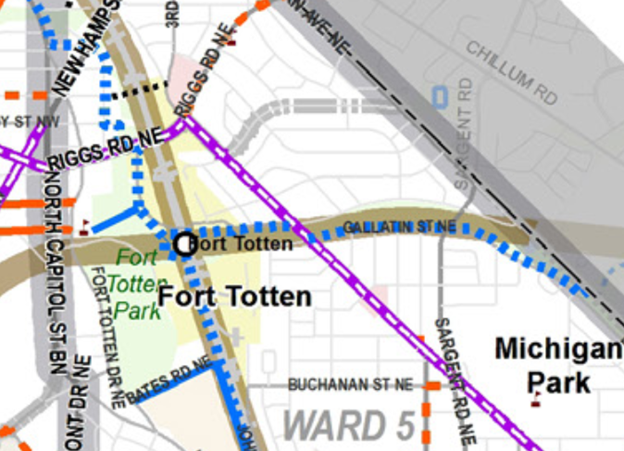
More modestly, last year DDOT listed a climbing lane as a “possible 2018 installation” on the lower portion of Galloway Street, from South Dakota Avenue to 4th St. NE (the alley through the Modern). A climbing lane is an on-street bike lane in the uphill direction only. While that would be a start, bicyclists would still have to mix with vehicular traffic the rest of the way uphill, and all the way downhill from the trailhead. More to the point, 2018 is now over and it didn’t happen yet. (However, the recent February Lamond-Riggs Citizens Association, a DDOT representative said that the planned sidewalk would be installed on the south side of Galloway Street in this location some time in 2019. Maybe the sidewalk and the bike facility are related?)
Looking north, the Cafritz Foundation’s Art Place development sits between Ingraham and Kennedy streets. Maybe new bike facilities could be built as part of any transportation changes arising from that development. In fact, the developers have stated that they would like to realign Kennedy Street in a future development phase. Realignment would involve new paving and curbs: if appropriate, maybe new bike facilities could be included.
These are some of the issues and ideas as I see them. How about you? Take my survey to tell me what you think, and let’s work together to find solutions for our neighborhood. If folks respond to the survey, I’ll share the responses out with the community.
Riggs Park Crime by The Numbers
Stories in recent years reflect a general downward trend in overall crime in the Washington, D.C. area (see here, here, and here). However, we also experienced dramatic upswings in homicides in the District last year (see here). Of course, these numbers are D.C.-wide and given the importance of public safety, I took a look at what the numbers tell us about crime in our Riggs Park neighborhood. Has it gone up? Down? Which offenses are most frequent? Any trends in recent years?
To address these questions, I pulled the following data from the Metropolitan Police Department (MPD) Crime Map*:
- Reported offenses, including arson, assault with a deadly weapon, burglary, homicide, motor vehicle theft, robbery, sex assault, theft from autos, and other theft (as described here in D.C. Code).
- Date of reports made to MPD from calendar years 2009 to 2018 (note reporting date may be later than the date the offense occurred).
- Advisory Neighborhood Commission (ANC) 4B and 5A, which serve the majority of Riggs Park and nearby areas. (Note: ANC boundaries were adjusted after the 2010 Decennial Census. ANC boundaries are larger than police service area (PSA) and neighborhood boundaries. PSA boundaries were redrawn in 2004 and again in January 2019. Crime trends at the ANC level may diverge from trends at the PSA and neighborhood level, but for purposes of this post ANC-level data are used as as indicators for trends in neighborhood crime).
- Note: Data presented here represent only reports of the offenses (no indication if the case was closed) and does not include demographic or other identifying information about the offenders or victims. The Crime Map did not provide data on illicit drug offenses. Further, the data are not normalized to the annual population changes in the neighborhood.
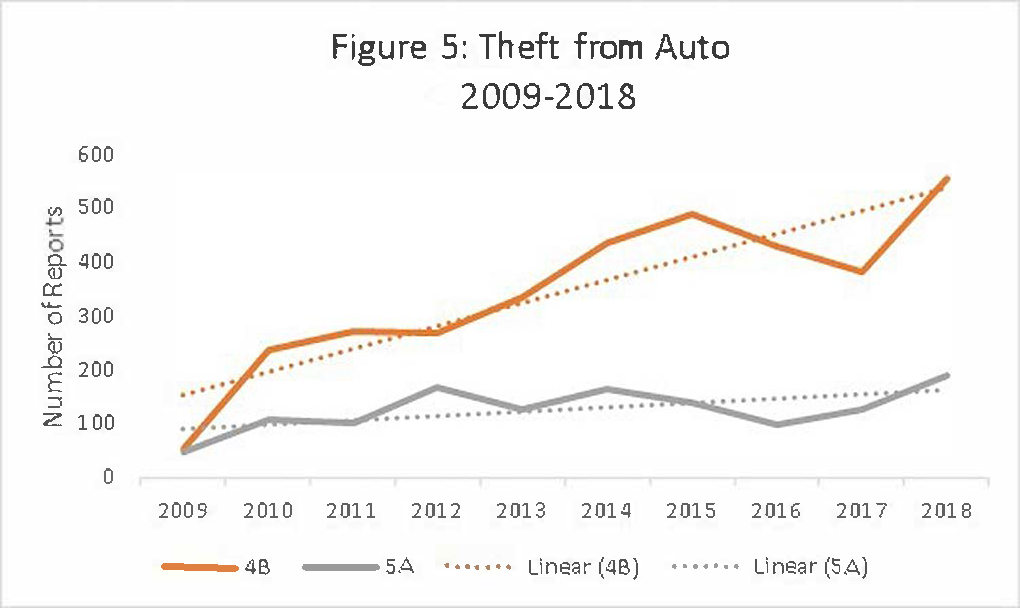
Below are some of the findings. The complete data and my analyses are available here (excel spreadsheet). Please note that for each graph, the “X” axis represents the calendar year, while the “Y” axis is the aggregate number of reports made. Solid orange and gray lines represent ANC 4B and ANC 5A, respectively. Dashed orange and gray lines represent trendlines for the two ANC areas as well.
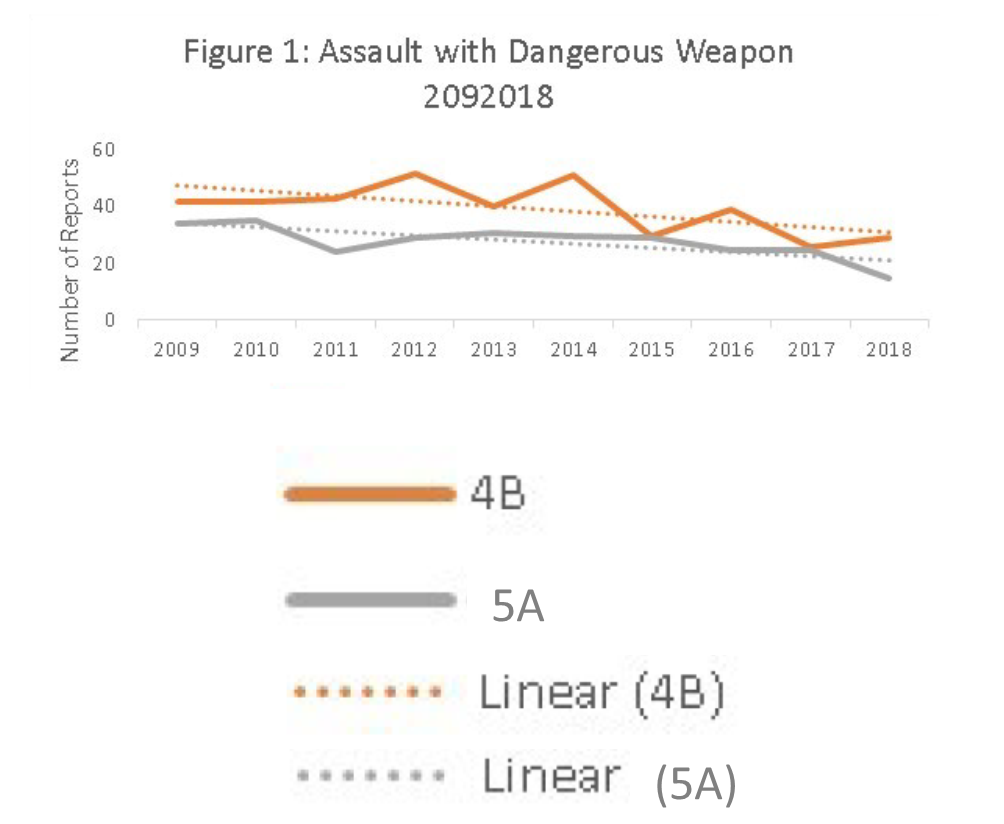
Assaults with a dangerous weapon (ADW) are defined as aggravated assaults that knowingly or purposely cause serious bodily injury, threaten to do so, or knowingly engage in conduct that creates a grave risk of serious bodily injury to another person. In ANC 4B and 5A, these offenses apear to be trending downward over the decade (Figure 1, above). Since 2009, ANC 4B and 5A experienced a 31 percent and 55 percent decline, respectively, in reports of this crime.
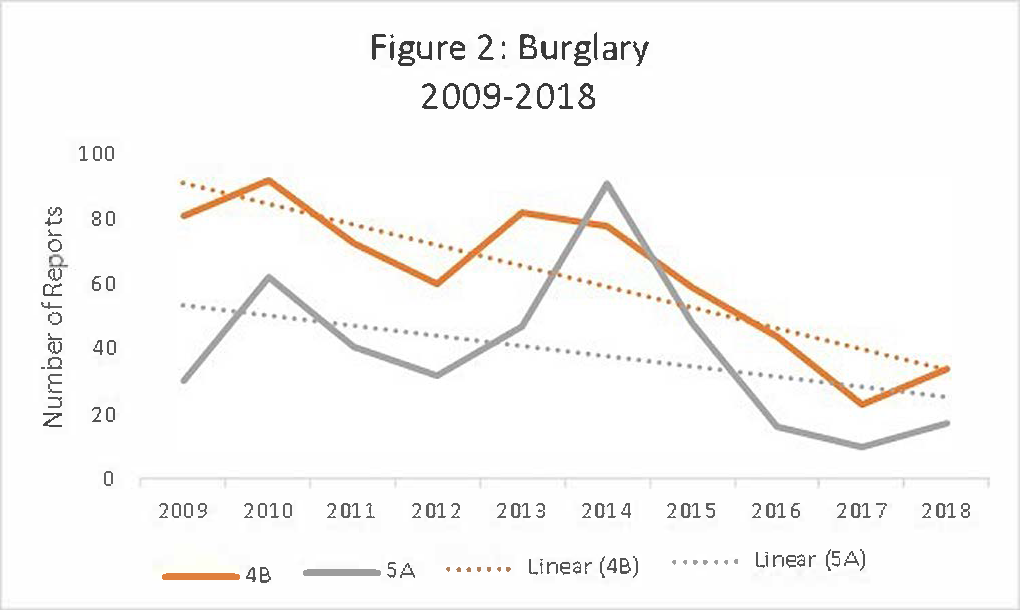
Figure 2 shows that burglaries in the neighborhood are also trending downwards. Burglary is the unlawful entry of a structure, vessel, watercraft, railroad car or yard where chattels are deposited with the intent to commit any criminal offense. ANC 4B and 5A experienced a 58 percent and 43 percent decline, respectively, in this reported crime between 2009 and 2018.

Building on the downward trends, motor vehicle thefts, which are defined as the theft of any self-propelled, motor driven vehicle that is primarily intended to transport persons and property on a highway, also show declines over the decade. From Figure 3, we can see a 36 percent and 48 percent decline in the report of this offense in ANC 4B and 5A since 2009.
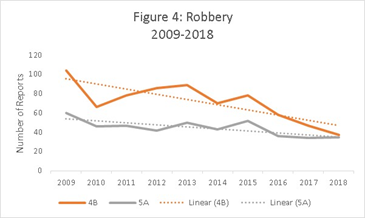
Robberies are defined as taking of anything of value from another person by force, violence, or fear. The downward trend in offenses goes for robbery too in our neighborhood. When looking at 2009 to 2018, a 64 percent and 41 percent decline were observed in ANC 4B and 5A, respectively, for reports of robbery (Figure 4). Not everything is going down though. As MPD officers regularly remind us at community meetings, thefts are a major problem. Generally speaking, theft is defined as wwrongfully obtaining or using the property of another with the intent to deprive the owner of the value thereof.
Not everything is going down though. As MPD officers regularly remind us at community meetings, thefts are a major problem. Generally speaking, theft is defined as wwrongfully obtaining or using the property of another with the intent to deprive the owner of the value thereof.
Let’s focus our attention first on theft from automobiles. This is specific foritems from within a vehicle, excluding motor vehicle parts and accessories. As Figure 5 shows, this offense has steadily risen in our neighborhood ANCs over the decade. ANC 4B and 5A experienced 10x and 2x increase in reports of thefts from autos when comparing 2009 to 2018.

Further, reports of other thefts (e.g., embezzlement, theft of services, fraud, and false pretenses) are a mixed bag. This category of offenses held relatively steady, according to the trendlines (Figure 6), over the decade in ANC 4B, while 5A did experience a modest decline.
Reports of homicide, sex assault, and arson were best displayed as absolute numbers rather than in graphical form (Table 1). For reference, MPD defines homicide as the killing of another purposely, or otherwise, with malice aforethought. Sex abuse is engaging in or causing another person to submit to a sexual act, by force, threat, fear, involuntary impairment, or rendering unconscious, where consent was not willingly given. Arson is the malicious burning, or attempt to burn, any structure, vessel, vehicle, railroad car or property of another.
Table 1 | ||||||
| Homicide` | Sex Abuse | Arson | |||
Year | 4B | 5A | 4B | 5A | 4B | 5A |
2009 | 0 | 2 | 3 | 4 | 0 | 0 |
2010 | 3 | 2 | 1 | 1 | 0 | 0 |
2011 | 4 | 0 | 1 | 2 | 1 | 0 |
2012 | 0 | 5 | 7 | 5 | 0 | 0 |
2013 | 3 | 0 | 7 | 3 | 1 | 0 |
2014 | 0 | 1 | 4 | 8 | 0 | 0 |
2015 | 2 | 1 | 8 | 7 | 0 | 0 |
2016 | 3 | 0 | 7 | 7 | 0 | 0 |
2017 | 2 | 2 | 8 | 3 | 0 | 0 |
2018 | 3 | 0 | 3 | 6 | 0 | 1 |
Total | 20 | 13 | 49 | 46 | 2 | 1 |
Reports of homicide, sex assault, and arson were best displayed as absolute numbers rather than in graphical form (Table 1). For reference, MPD defines homicide as the killing of another purposely, or otherwise, with malice aforethought. Sex abuse is engaging in or causing another person to submit to a sexual act, by force, threat, fear, involuntary impairment, or rendering unconscious, where consent was not willingly given. Arson is the malicious burning, or attempt to burn, any structure, vessel, vehicle, railroad car or property of another.
Community members often express concern that the majority of crime in Riggs Park likely occurs within close proximity to the Riggs-LaSalle Recreation Center. So, I pulled those data too, and you can decide for yourself.
Table 2 below depicts the aggregate counts of offenses reported over the decade within a 1,500-ft radius of this ANC 4B facility. For those interested, additional data are available on the Lamond Recreation Center in the supporting materials linked above.
Table 2 | ||||||||
Year | ADW | Burglary | Homicide | Vehicle Theft | Robbery | Sex Abuse | Theft from Auto | Theft Other |
2009 | 11 | 5 | 0 | 14 | 15 | 0 | 4 | 24 |
2010 | 6 | 4 | 0 | 20 | 7 | 1 | 22 | 14 |
2011 | 5 | 8 | 1 | 22 | 3 | 0 | 27 | 10 |
2012 | 4 | 3 | 0 | 14 | 7 | 1 | 20 | 17 |
2013 | 4 | 6 | 0 | 12 | 9 | 2 | 21 | 17 |
2014 | 5 | 5 | 0 | 10 | 14 | 0 | 36 | 39 |
2015 | 14 | 6 | 0 | 10 | 11 | 3 | 39 | 45 |
2016 | 12 | 4 | 2 | 7 | 5 | 1 | 63 | 89 |
2017 | 8 | 4 | 0 | 5 | 18 | 0 | 53 | 82 |
2018 | 5 | 3 | 1 | 9 | 3 | 1 | 89 | 85 |
Total | 74 | 48 | 4 | 123 | 92 | 9 | 374 | 422 |
In summary, reports of offenses such as assaults with a dangerous weapon, burglary, motor vehicle theft, and robbery are trending downwards in our community, while reports of thefts from automobiles have risen over the decade.
Though each offense is one too many, especially if you are a victim of the crime, the overall trend is promising for the Riggs Park area. The data show we’re moving in the right direction for the most part. We must build on this together by continuing to encourage public safety generally, getting to know our MPD officers, and by maintaining vigilance in our daily lives. Further, we must heed the advice from MPD officers and not keep any items of value visible in our vehicles. We must not stay silent, but rather speak out when illegal behavior happens, like in this Next Stop . . . Riggs Park post. As we are reminded in community meetings, it is up to us, as community members, to report crimes when they occur. And yes, you actually can be anonymous when calling 911 and when texting tips to the police at 50411. By doing this, and remaining civil with each other in the process, we will achieve a community where everybody can feel safe and welcome in their neighborhood.
February 6: Rock Creek East I Livability Study

Riggs Park is just outside the study area, but Lamond is included. The study area is defined by Rock Creek and the Maryland border to the West, Eastern Avenue to the North, New Hampshire Avenue NE and the Red Line Metrorail tracks to the East, and Military Road NW, Missouri Avenue NW, and Riggs Road NE to the South.
The District Department of Transportation (DDOT) will host its first public event for the Rock Creek East I Livability Study on Wednesday, February 6, 2019, from 6:30 pm to 8:30 pm. The purpose of this neighborhood study is to identify opportunities to enhance community quality of life through transportation safety and access improvements for all modes within the study area. At the first public event, DDOT will introduce the project, share data collection, and provide opportunities for participants to share existing concerns.
When: Wednesday, February 6, 2019, 6:30pm – 8:30pm
Where: Juanita E. Thornton/Shepherd Park Neighborhood Library
7420 Georgia Ave. NW (SPK Meeting Room 2)
Washington, DC 20012
Project Background
DDOT is undertaking the Rock Creek East I Livability Study to evaluate the transportation network in the study area from a system perspective, and look for opportunities for a safer and more accessible multimodal network. This study will be led with a data-driven approach, using existing and future conditions to understand transportation challenges and opportunities and to recommend specific implementable actions. The study will be supported with robust public outreach throughout the process. You can find out more about the study by visiting www.rceast1.com.
DDOT is undertaking the Rock Creek East I Livability Study to evaluate the transportation network in the study area from a system perspective, and look for opportunities for a safer and more accessible multimodal network. This study will be led with a data-driven approach, using existing and future conditions to understand transportation challenges and opportunities and to recommend specific implementable actions. The study will be supported with robust public outreach throughout the process. You can find out more about the study by visiting www.rceast1.com.
Questions?
Contact the DDOT Project Manager: Cynthia Lin, cynthia.lin@dc.gov, (202) 671-2381
Aldi Press Release
MORRIS AND GWENDOLYN CAFRITZ FOUNDATION PARTNER WITH ALDI IN FORT TROTTEN
Art Place Mixed-Use Development In Northeast Washington, D.C. Opening 2022
WASHINGTON – February 4, 2019 – The Morris and Gwendolyn Cafritz Foundation (Cafritz Foundation), developers of the Fort Totten mixed-use development project Art Place, today announced that the lease has been executed for an approximately 25,000 square-foot ALDI store at Art Place at Fort Totten. Located on the corner of South Dakota Avenue and Kennedy Street, this will be the largest ALDI DC location and the second ALDI in the city, the first being in the H Street Corridor.
ALDI is a leader in the grocery retailing industry and operates more than 1,800 stores in 35 states. More than 40 million customers each month benefit from the simple, streamlined approach ALDI brings to retailing. ALDI sells frequently purchased grocery and household items, primarily under its exclusive brands, which meet or exceed national name brands on taste and quality.
“We are excited to announce this new addition to the Fort Totten area as part of Art Place,” said Jane Cafritz of the Morris and Gwendolyn Cafritz Foundation. “ALDI is known for providing customers with quality and value while ensuring a shopping experience that works with people’s busy lives. We welcome this transformative retailer to the area as we continue to enhance Fort Totten with innovative and art-focused partners.”
The new ALDI store is part of the second phase of the Art Place at Fort Totten development. The first phase opened in the fall of 2017 and includes, The Modern at Art Place, a 520-unit apartment building, Ramdass Pharmacy, Shiningstars Pediatric Dentistry and DMV Urgent Care.
The announcement of ALDI joining the development comes on the heels of the Cafritz Foundation’s announcement that Meow Wolf, the nationally renowned, immersive art experience will also be opening a 75,000-square-foot exhibition in the second phase of the development in 2022.
“In partnership with The Morris and Gwendolyn Cafritz Foundation, the Fort Totten ALDI store is one of our most innovative and cutting-edge real estate ventures to date,” said Jake DiPiazza, ALDI Frederick Director of Real Estate. “We’re eager to expand our presence in the Washington D.C. metropolitan area, and the Fort Totten store will be our second mixed-use development in the area, conveniently located for urban shoppers. The future is bright for our ALDI Washington, D.C. expansion.”
At full build out, the multi-phase development is anticipated to include nearly 2 million square feet across a mix of uses. These uses include multi-family residential, retail, cultural, art, public and entertainment spaces.
For more information on the Cafritz Foundation please visit http://www.cafritzfoundation.org.
Media Contact:
Sofia Royce, PR Director
The Brand Guild
sofia@thebrandguild.com
202.733.5223
About The Morris and Gwendolyn Cafritz Foundation
The Morris and Gwendolyn Cafritz Foundation is the largest private, independent, local foundation dedicated exclusively to the Washington, D.C. metropolitan area. The Foundation is the legacy of Morris Cafritz–one of Washington’s leading commercial and residential builders from the early 1920’s to the mid-60’s–and is committed to improve the quality of life for residents of the area. Since 1970, the foundation has granted awards totaling more than $447 million. In just the last ten years, $185 million has been awarded to more than 961 organizations in Community Services, Arts & Humanities, Education, Health and the Environment.
Aldi coming to neighborhood
Washington Business Journal is out with the news that Aldi will be coming to Riggs Park in the second phase of Art Place at Fort Totten with an anticipated opening date in 2022.
February 4: LRCA Monthly Public Meeting
Lamond-Riggs Citizens Association
Public Meeting
February 4, 2019
7:00 pm-8:30 pm
Location: LaSalle-Backus Education Campus (501 Riggs Road NE, enter auditorium on Madison Street)
Agenda:
* DC Fire & EMS – Update on Right Care, Right Now ambulance transport policy
* DDOT – Pedestrian Safety Issues on South Dakota Avenue/Riggs Road NE corridor
ANC 5A January 30, 2019 Meeting Recap: Providence, Wesley Housing, & South Dakota Ave. Pedestrian Safety Improvements
ANC 5A held its monthly public meeting on January 30, 2019. Five commissioners were present for a quorum: Frank Wilds (5A01); Emily Lucio (5A03); Ronnie Edwards (5A05); Sandi Washington (5A07); Gordon Fletcher (5A08).
Providence Health Services
Providence Health Services Flyer
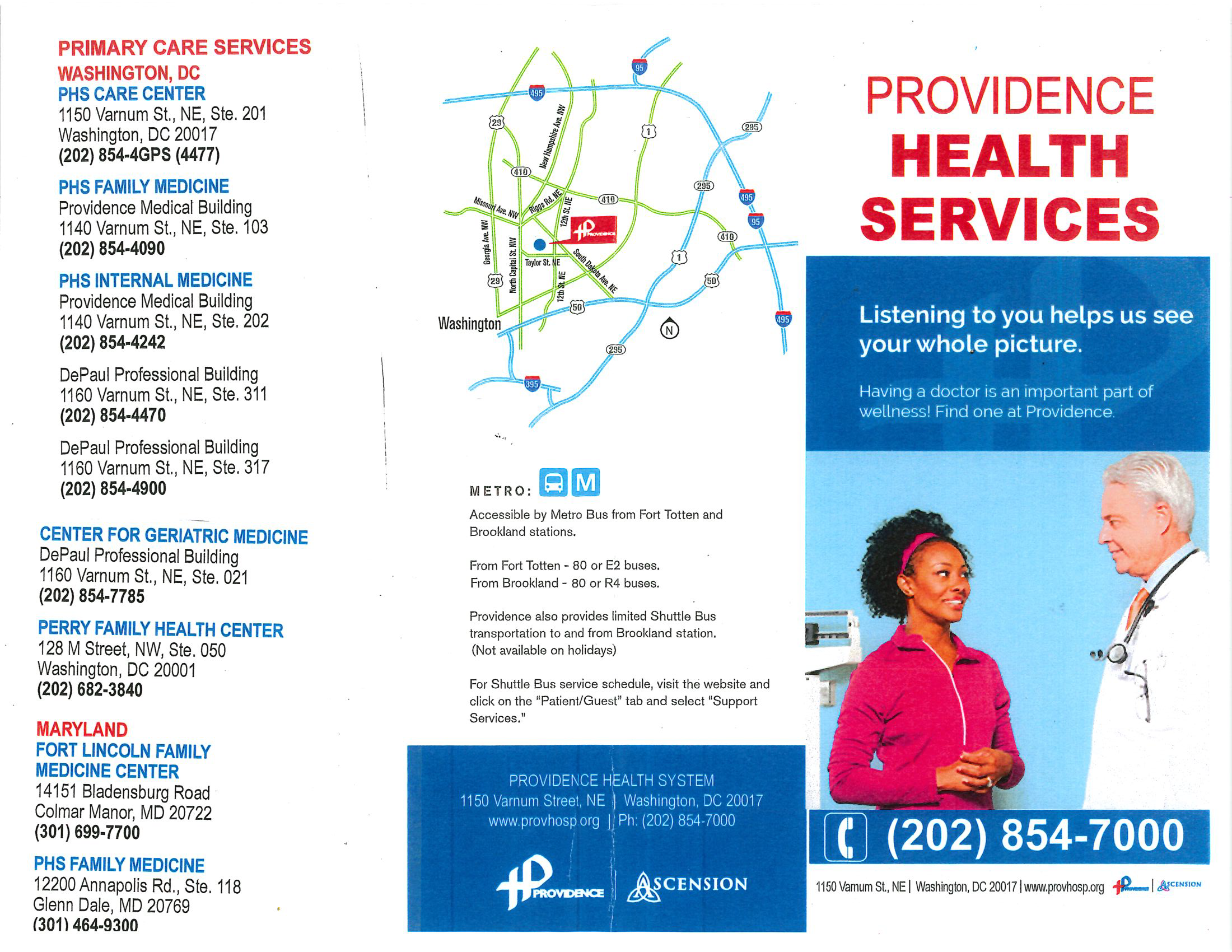
Providence took up most of the discussion time. The long and short of it is that Providence Hospital is ending its emergency and acute care services on April 30, 2019, as has been widely discussed. What has been less discussed is that Providence intends to continue providing primary and outpatient behavorial health care, as noted in this press release from December 2018, through an entity called Providence Health Services (PHS). Primary care services include internal medicine, family medicine, and geriatric services. A pediatric clinic and outpatient behavorial health services are provided on the campus by separate entities and will continue operating. Carroll Manor Nursing and Rehabilitation center will also remain in operation on the campus. PHS representatives explained that PHS is a group of practitioners providing primary care services under the license of Providence Hospital. PHS would like to continue providing primary care services once the hospital closes, but in order to do so it needs its own certificate of need (or license) from DC’s Department of Health (DOH). PHS stated they receive the majority of their patients from Wards 1, 5, 6, 7, and 8, so they are visiting the ANCs in those wards to show DOH that it has done outreach to those communities to explain that it is seeking a certificate of need to continue providing services.
Providence Hospital and Providence Health Services are both owned by Ascension (one resident noted Providence should have brought a flow chart to show the corporate structure). The PHS representatives repeatedly stated that Ascension is committed to continue providing primary services via PHS. Commissioners and residents alike questioned why anyone should trust what Ascension says given the lack of candor and communication around the closure of services at Providence Hospital. Residents noted that Providence’s messaging about what services are closed and which ones will remain open has been lacking and inconsistent throughout this transition process. PHS committed to communicating with Commissioner Lucio (5A03), who represents the area in which the hospital is located, to keep residents informed about the transition.
(Aside: The day after the ANC meeting, Providence issued a news release stating it is seeking a certificate of need to provide urgent care services on the campus. Then a new banner explaining that primary care services will continue to be provided was prominently featured on the website, though the link to the content in that banner appears to be broken.)
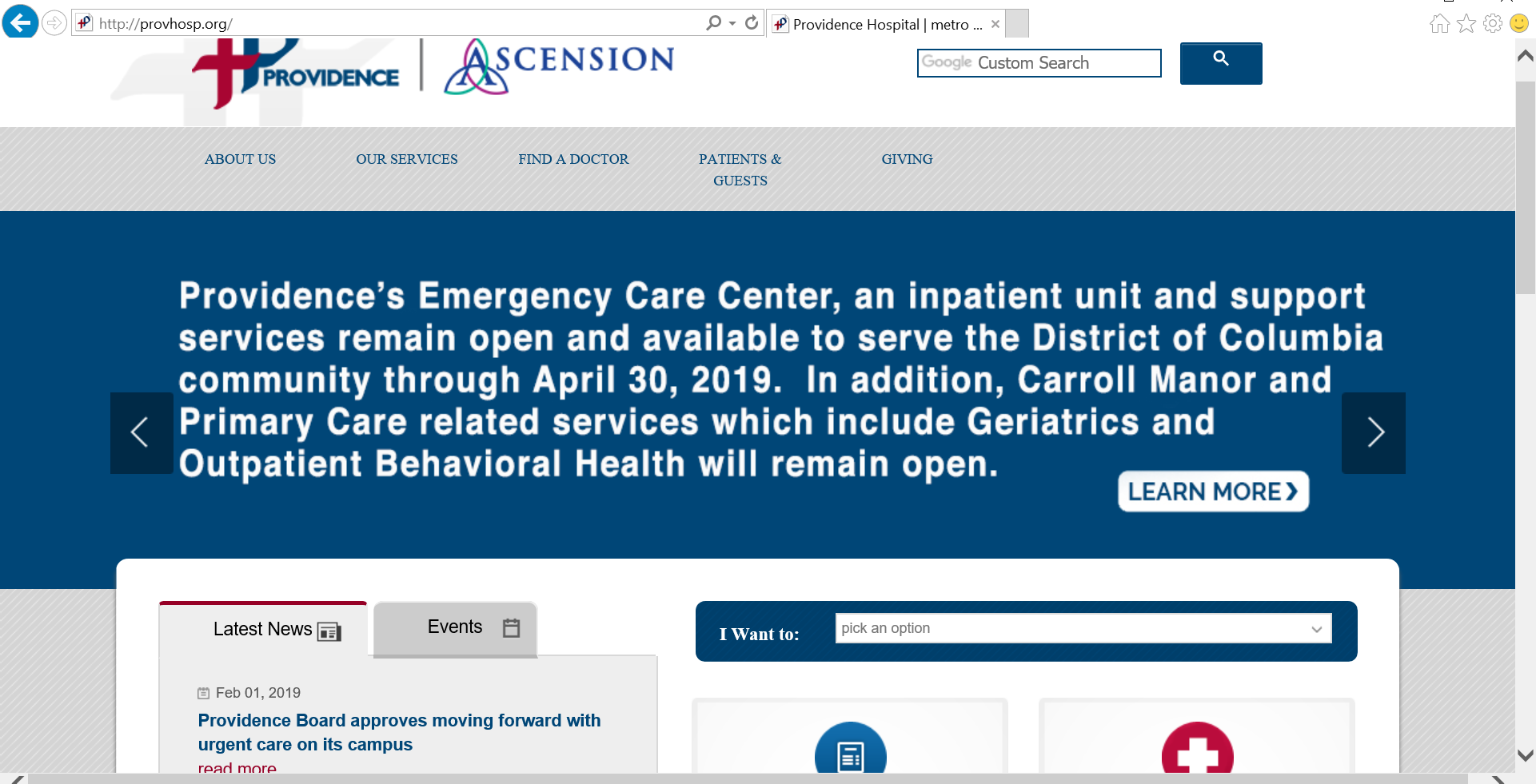
Providence website updated February 1, 2019
Wesley Housing
-
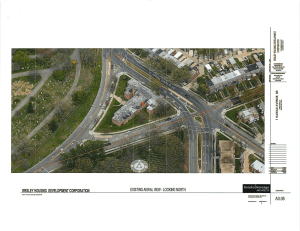
- Aerial view of existing building
-
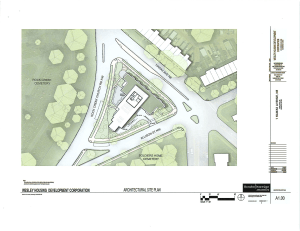
- Aerial rendering of proposed new building
Wesley Housing was back before the ANC to receive approval for its curb cut application that is pending with the District Department of Tranportation’s public space committee. As explained previously, Wesley Housing wants to move the existing curb cut on Rock Creek Church Road NW to Allison Street NW. The issue is that they applied for the curb cut at the same time that they applied for approval to replace the entire apartment building with a new one with more units, a separate planned unit development (PUD) process that will need to be approved by DC’s Zoning Commission. This project is also contingent on receiving financing from the District Department of Housing and Community Development. The developer will present on the proposed development at a later date, but anticipates that with all of the required regulatory processes, construction will not start until 2021.
Wesley Housing explained last night that they filed the curb cut and PUD applications concurrently on the advice of DDOT and that they do not plan to put in the desired curb cut before the new development is constructed. The developer wants the curb cut on Allison Street for the new project because they plan to build a below-grade garage, having the cut on Allison will enable them to build out a terrace overlooking Rock Creek Church, they do not want to back up traffic on Rock Creek Church, and Allison is a one-way street so it will be easier for vehicles to maneuver turns into and out of the driveway.
When commissioners continued to express that it makes no sense for the commission to consider a curb cut application separate and apart from the proposed development itself, Wesley Housing’s representative stated that ANCs should prepare themselves to see other developers file these types of concurrent applications because developers seem to think this approach could reduce the amount of time it takes projects to get approved.
The ANC again tabled a vote on the curb cut application stating it does not make sense for them to be considering items piecemeal for a project on which they have not been briefed and that might not be approved. The ANC plans to reach out to DDOT to figure out why DDOT thinks this makes sense. The ANC will once again consider a special meeting, tentatively scheduled for February 20, to discuss and possibly vote on the curb cut issue. A hearing on the curb cut application is scheduled for February 28.
South Dakota Avenue Pedestrian Safety Improvements
Riggs Park resident David Kosub presented on pedestrian safety improvements at South Dakota Avenue and Ingraham Street NE, for which residents are requesting the ANC’s support in the form of a resolution.
Mr. Kosub highlighted the problems pedestrians face (with video footage, apologies from Mr. Kosub for the brief curse word), outlined the actions residents have taken to date to address the issues, and encouraged the ANC to support a resolution to enhance pedestrian safety. (Mr. Kosub previously wrote about these issues on this blog here, here, and here). The specific community concerns that the resolution seeks to address include:
- Issue for public safety and well-being
- Should not fear crossing the street
- Vehicular traffic regularly fails to stop for pedestrians
- Inadequate signage on South Dakota for pedestrian crossings
- Unclear why the most appropriate path to the metro station (Ingraham) remains unsignalized
- Anxious issue will go unaddressed and become worse due to inaction
The draft resolution requests that the District Department of Transportation:
- Continue engaging with the Commission and residents to identify all hazardous locations for pedestrians along the South Dakota Ave corridor from Riggs Road to Galloway Street NE
- Install a traffic signal at the intersection of Ingraham Street NE with South Dakota Ave NE (as originally discussed in the Planned Unit Development for the Art Place at Fort Totten project reviewed by the District Department of Transportation, Case #06-10)
- Expedite remedies for the South Dakota Avenue NE intersections with Ingraham St NE and Jefferson St NE to improve pedestrian safety
- In the absence of a signalized intersection at Ingraham Street NE and South Dakota Ave NE, install static signage (including Pedestrian Crossing, Yield, Radar announcements, etc.) for pedestrian crossings with red flashing lights
- Improve lighting on the entire South Dakota Avenue NE Corridor from Riggs Road NE to Galloway Street NE, particularly at intersections so that drivers can see and stop for pedestrians waiting to use crosswalks
- Investigate the timing of signalization lights along the South Dakota Avenue NE corridor to identify a potential strategy to reduce speeding and red light running
(Disclosure: I had a hand in contributing to the resolution)
The resolution notes that these action items are consistent with the District’s Vision Zero goals as well as the neighborhood’s small area plan. Several residents spoke up in favor of the pressing need for ANC as well as Council support for getting these improvements done, as residents have been working to resolve these issues since November 2017.
Most of the commissioners acknowledged that crossing South Dakota Avenue is an issue and were generally supportive. Commissioner Wilds, who represents the area in which this is an issue, stated that having a traffic signal at Ingraham would delay motorists; he generally seemed confused about which streets lead directly to Fort Totten metro station; and he seemed to seriously dispute residents and commissioners alike that motorists speed down South Dakota Avenue. When it came time for the ANC to vote on the draft resolution, Commissioner Wilds abstained. When asked why he was abstaining, he stated that he had not been invited to the community brainstorming session held in December 2018. Mr. Kosub stated he invited Commissioner Wilds to that meeting in person and via email. The four other commissioners present–Commissioners Lucio (5A03), Edwards (5A05), Washington (5A07), and Fletcher (5A08)–all voted to support the sense of the draft resolution with the goal of finalizing a resolution for presentation to DDOT.
Miscellaneous
The commission agreed to work with a resident that requested the ANC to work with the Office of Advisory Neighborhood Commissions to correct the official record that discusses when the first commissioners were elected and who served when in the early years of the ANCs. The resident identified some errors in the record with respect to Ward 5 ANCs so he stated there are probably others and he believes it is important for the record to be accurate.
Representatives from Mundo Verde spoke briefly about the school and its continued desire to expand to a campus at 8th and Varnum NE. The school has presented several times before the commission.
Ward 5 Councilmember Kenyan McDuffie is holding a Ward 5 Budget Engagement Forum on February 13, 2019, at 6:30 pm at Luke C. Moore High School (1001 Monroe Street NE).
Councilmember McDuffie is working with the ANC to explore a liquor license moratorium for North Michigan Park. The ANC protested a liquor license for Pax Liquor, which is seeking to open a liquor store in North Michigan Park. A hearing on that liquor license application was held on January 16, 2019. Commissioner Edwards said he expects a decision within 60 days from the date of the hearing.
The ANC voted to seek bids for cameras for the ANC office that is located inside UDC-CC Backus. Commissioners believe someone is using supplies that belong to the ANC without authorization because the ANC’s copier broke and its supplies have been depleted.
January 30: ANC 5A Meeting Tonight
January 30, 2019
6:45 pm
UDC-CC Backus (5171 South Dakota Avenue NE)
Agenda:
1. Providence Hospital Update
2. 1 Hawaii Avenue NE Project Update
3. Public Safety Issues Crossing South Dakota Ave
Second Phase Art Place Prehearing Submission Filed
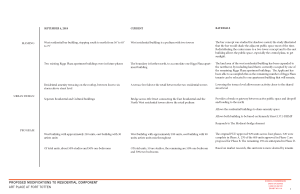
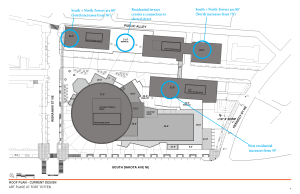
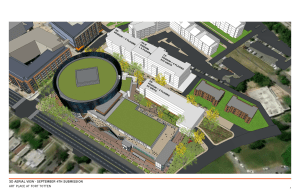
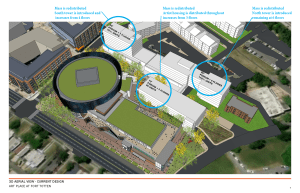
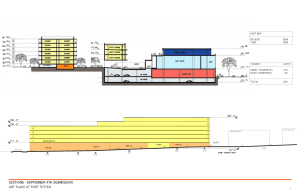
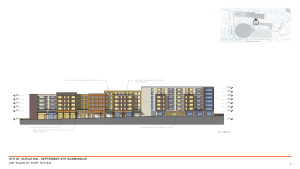
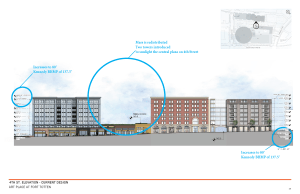
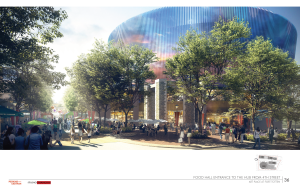
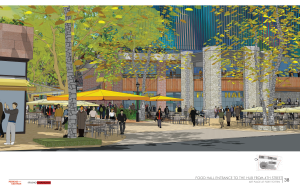
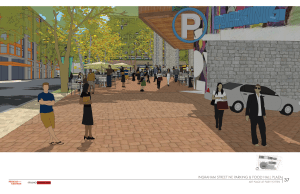
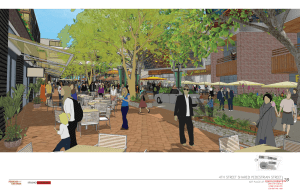
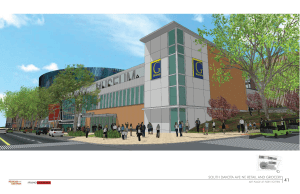
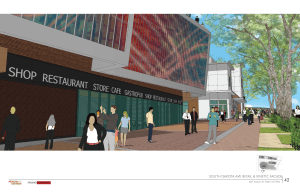
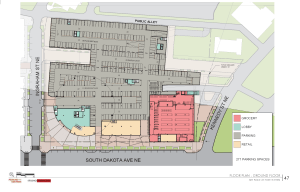
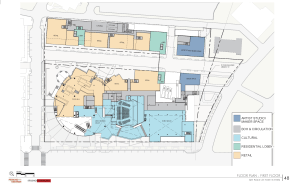
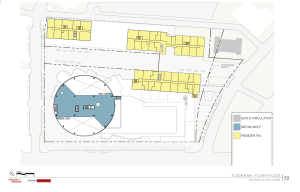
Back in September 2018, the Cafritz Foundation released big plans for the second phase of Art Place at Fort Totten, also known as the FEZ at Art Place or Block B in the plans. In December 2018, the developer announced that Meow Wolf would operate part of the family entertainment zone. On January 25, 2019, the developer filed updated plans to respond to issues raised by the Office of Planning (OP) and the District Department of Transportation (DDOT) when the project was recommended to be set down for a hearing. Some of the changes/clarifications include:
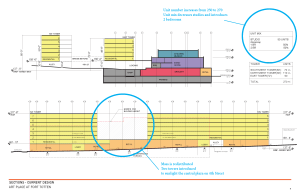
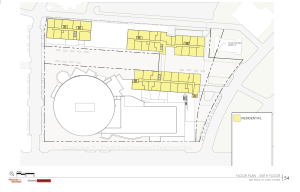
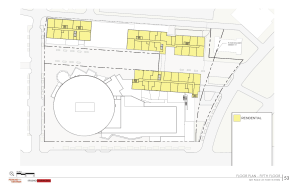
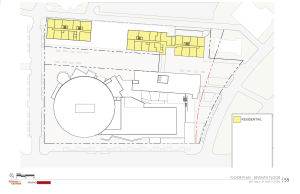
- Increase in residential units to 270 (originally proposed 210-250 in September): 180 units in two towers 80 feet tall above a retail podium in the west building & 90 units in a five-story east building with bridge connecting the two buildings
- Change in massing of residential buildings to allow more sunlight to reach 4th Street where an expanded Central Plaza will be located
- Mix of 50 studio, 106-110 one-bedroom, and 106-110 two-bedroom apartments; previous plan contained 50% studios and 50% one-bedroom units
and 50% two-bedroom units - Dispersal of the 30 artist housing units that were previously going to be in the 3-story east building throughout the east & west buildings; units will be reserved as affordable for a period of 20 years at 80% AMI
- Ground floor artist studio spaces in west building similar to Brookland Arts Walk concept
- Increase in parking from 765 spaces to 930 spaces
- One Riggs Plaza apartment building will remain
- Removal of proposed curb cut on South Dakota Avenue; no parking entrance to project on South Dakota
- Developer states lighting of the “HUB,” the circular structure, is intended to be “subtle” so that it does not spill past the South Dakota right of way
- OP’s setdown report noted that it continues to encourage the developer to proffer more affordable housing than the 171 affordable units required in original PUD order – does not look like the developer is going to do that, but by moving 30 affordable units from Block C to Block B, developer will construct the total 171 affordable units in the first two phases (141 already constructed in 1st phase and 30 proposed for 2nd phase). Developer also notes that arts and cultural uses of the project would not happen without significant financial subsidy from the developer
The developer states some of these changes were driven by Meow Wolf and the grocery store operator. On that note, the developer states it is very close to announcing the grocery store, as in the next couple of weeks. As this submission and also residents have noted, the city is full of free museums and other programming. Therefore, this family entertainment zone needs to offer something unique. The developers believe some of these changes will help to accomplish that goal.
It’s worth looking at their prehearing statement. To view the full book submitted with the prehearing sttement, look up case number 06-10D on the Zoning Commission’s website. A hearing is scheduled for April 4, 2019. Stay tuned for community meetings on these updates before then.
Proposed residential changes

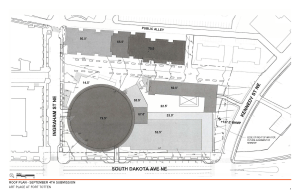
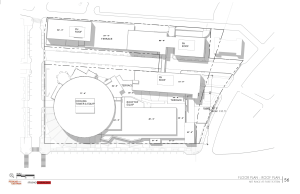
Renderings





Updates on Art Place Phase I: T-Mobile & Gym
A couple of updates on the first phase of Art Place at Fort Totten. T-Mobile is open at Art Place, located at 5210 South Dakota Avenue NE. Store hours are Monday through Friday 9:00 am-8:00 pm; Saturday 10:00 am-7:00 pm; and Sunday 12:00 pm-6:00 pm.
I have also gotten a lot of questions about the gym and when it will open. As noted individually to some readers, there really is not an update to provide since our last one. The developer is in late-stage negotiations with an operator. No word on when it will open. Sorry I cannot be the bearer of better news. I know residents are anxious for a neighborhood gym.
Community Letters of Support for Enhanced Pedestrian Safety along the South Dakota Avenue NE Corridor
Guest post by David Kosub
In no particular order, these letters of support come voluntarily from members of the Riggs Park community. Their goal is encouraging Advisory Neighborhood Commission (ANC) 5A to endorse a resolution requesting the District Department of Transportation (DDOT) to strengthen pedestrian safety crossing South Dakota Avenue NE.
As some requested anonymity, I decided to respect everybody’s privacy and remove all names and other identifying information from this public post. That said, their words still demonstrate passion. Concerns are vividly expressed. Personal experiences are relived. Actions taken are retold. And, most importantly, you will see how much they care for their community.
A resolution and our concerns will be presented at the January 30, 2019, ANC 5A meeting at 6:45 p.m. at UDC-CC Backus, so please attend if your schedule permits. If you would like your voice included as part of this initiative, please add your thoughts in the Comments section below.
———————–
Letter #1
I am writing to voice support for the resolution brought forth by David Kosub. My husband and I moved to the neighborhood two years ago and began voicing concerns related to pedestrian safety and well-being crossing South Dakota Avenue NE at Ingraham Street NE and Jefferson Street NE (right by our public library) since that time.
We have collectively submitted dozens of 311 requests asking for improvements to safety in that area – ranging from white striping to signage to HAWK lights and even a traffic light. Each request is dutifully closed without any action taken. MPD officers themselves speed down South Dakota Avenue and do not stop at crosswalks. I’ve witnessed it many times. Every single time you cross, you literally take your life into your hands.
These two crosswalks are our main method of walking to and from the Metro Transit station each day. And it’s not just ours – it’s the pathway taken by nearly anyone in the neighborhood who travels via Metro – including young children, senior residents, families and even individuals who have disabilities or impairments. We’ve witnessed accidents (including a young pedestrian getting hit) which we’ve reported and near accidents personally. Better signage is seen throughout the South Dakota Avenue corridor and it’s incomprehensible at how much push back and delays we have faced to get the same signage installed at those two crossings.
As mentioned in the draft resolution, such concerns are likely to amplify as more residents move into nearby apartment buildings, development continues, commercial retail opens, Main Street aesthetic improvements are made, our local branch library reconstruction ramps up, and more citizens are encouraged to walk throughout the neighborhood (and/or come to visit the neighborhood).
The lack of safety precautions and appropriate lighting make this intersection deadly and it should not take a death for DC departments including the Mayors office, DDOT and MPD to work together to fix this problem. But from this lack of action and collaboration it feels as if that’s what these departments are waiting for. This lack of action is terrible customer service and very inconsistent with DC’s Vision Zero goals. I know that District officials can do better and offer a better response than what has been provided thus far. We’ve been waiting nearly two years and that’s long enough – I urge you to take action now.
———————–
Letter #2
I am very familiar with the situation at South Dakota and Ingraham. I walk to Metro every weekday from my house on Kennedy St., crossing South Dakota Avenue at the area under discussion. I walk back each weekday evening. As I have watched the Modern arise over the past few years, I have often wondered why the traffic signal remained at Hamilton and was not relocated to Ingraham.
From my personal experience, I do not have a problem crossing South Dakota in the morning. It is light out and there is often a substantial break in traffic to cross safely. Cars often slow down or stop for me. However, coming home in the evening is different. Northbound traffic seems to move much faster than the 25-mph limit. (I suppose people want to get home.) I also feel that I am not well seen in the evening.
I urge DDOT to reopen their exploration of this series of intersections and attempt to make it safer before something bad happens to a pedestrian.
———————–
Letter #3
We’re new homeowners in Lamond-Riggs, and proximity to metro and walkability were priorities when considering where to live. While we love being within walking distance of the Fort Totten metro, we’ve been dismayed at how dangerous it is to cross South Dakota Avenue to get to and from work each day.
Cars treat the stretch of South Dakota between Gallatin Street and Riggs Road like a raceway, and we sometimes have to step into traffic and wildly wave our arms at oncoming traffic in order to get them to stop. We’ve seen older residents stuck on the corner waiting for a break in traffic; cars that speed up because they’re coming off the light, even as people are already in the crosswalk; and drivers mockingly waving at people in the crosswalk as they speed through. It’s only a matter of time before someone is seriously hurt.
At a recent meeting with a DDOT representative, we were upset to hear that they did not know how long it would take to get signage at the intersection of South Dakota and Ingraham Street — the main access point to metro — and that there was no plan by DDOT to deploy the kind of infrastructure we’ve seen in other neighborhoods (traffic calming measures, flashing lights, or a traffic light, for instance).
If the city is serious about redeveloping Fort Totten, it must prioritize pedestrian access and safety, especially along such a primary access point to metro across a busy road.
———————–
Letter #4
I am writing this letter to express my strong support of efforts to increase pedestrian safety at the intersections of South Dakota Avenue and Jefferson Street NE and of South Dakota Avenue and Ingraham Street NE. I moved to Jefferson Street NE in September 2018 with my husband, and I use the crosswalk at South Dakota and Jefferson every weekday morning and evening to get to and from Ft. Totten Metro Station.
My experience with the crosswalk at Jefferson has been frustrating and frightening, because the vast, vast majority of drivers ignore pedestrian right of way at these intersections-even when I’m in the middle of a crosswalk. On average, I estimate that a vehicle only stops to let me start to cross the road once every 2 weeks. Every other time I’m at the intersection I have to wait for a break in traffic to be able to cross the street. I used to enter the crosswalk when the road was clear for the first section, so that I didn’t have to wait as long, but about once every week a driver would still drive through the crosswalk right in front of me without stopping. Earlier this month a driver doing this was also speeding, and I narrowly avoided him killing me.
Safe pedestrian access to the Metro station is too important to ignore. Please help.
———————–
Letter #5
I have lived on Ingraham Street NE for eight years and have observed one measure taken to address pedestrian safety since I have moved into the neighborhood – the addition of crosswalk painted lines to cross South Dakota Avenue. I walk and drive on South Dakota Avenue NE multiple times a day and worry about the safety of those crossing the street, particularly during rush hour and night times. That intersection is also not particularly well lit, making it difficult for drivers to see pedestrians waiting to cross.
As a frequent driver, I have noticed this firsthand – I will stop at the crosswalk to let a pedestrian cross only to have 10 cars drive past me instead of stopping.
Please help us keep my neighbors safe by installing additional pedestrian safety measures such as hawk lights and advanced pedestrian warning signs at this intersection.
———————–
Letter #6
I am writing to express my disappointment that the City has failed to properly ensure a safe street crossing at the intersection of South Dakota Ave. and Ingraham St. NE.
Our community is a diverse populous which includes many senior citizens, children, disabled citizens, and pets. All of us, but most particularly these residents, rely on quick and safe passage to the Fort Totten metro station. Many of these people can’t and shouldn’t have to divert their walking path due to the City’s failure to resolve a very dangerous crosswalk.
At this crosswalk, one of our neighborhood’s primary paths to Fort Totten metro station, cars often do not slow/stop for or even notice the pedestrians attempting to cross. I have experienced firsthand the dangers of crossing at this crosswalk. Luckily, I am able to divert my route to avoid this dangerous crossing because I do not have mobility issues. Many of our neighbors do not have this luxury. If a solution is not rectified soon, I am afraid of a fatal accident involving one of our neighbors.
———————–
Letter #7
I am a resident of Riggs Park. I live on Ingraham St NE and I cross the crosswalk on Ingraham and South Dakota on my route to the metro every day for work.
I constantly struggle with crossing South Dakota because there is no enforcement for cars to stop for pedestrians. It is especially difficult during rush hour as there are more cars speeding down the road which usually takes me minutes to wait for cars and/or traffic to come to a halt. It is most concerning when I see kids and teens crossing the street going and coming from school.
Please help us find a solution to keep the residents of our neighborhood safe.
———————–
Letter #8
We are writing in support of increased pedestrian safety at Ingraham St. and South Dakota Ave. NE. We can attest, as Riggs Park residents, to the need for slower traffic patterns on South Dakota Avenue. Cars traveling on South Dakota frequently ignore pedestrians looking to cross the avenue on the way to the Fort Totten metro station. Additional traffic lights, cross walks, and other measures are necessary.
———————–
Letter #9
We are writing to express our concerns with the current state of the pedestrian crossings on South Dakota Avenue NE between Hamilton Street NE and Jefferson Street NE. We purchased our home in June of 2016, while the Modern at Art Place was still under construction. We were hopeful that the pedestrian conditions on South Dakota Avenue would improve with the completion of the development, but it seems as though the opposite has happened.
The signalized intersection at Hamilton Street NE seems to give priority to the currently nearly non-existent traffic exiting from the parking garage over pedestrians, and the crosswalks at the intersections of Ingraham Street NE and Jefferson Street NE are poorly marked, poorly lit, and poorly signed. We have given up trying to cross at either Ingraham or Jefferson and walk out of our way to Hamilton or Gallatin on our way to Metro. Motorists often drive through the intersections at a high rate of speed, and even when they are driving the speed limit, they rarely stop for pedestrians at Ingraham and Jefferson as required by DC Law. This is obviously a dangerous situation for pedestrians in the Lamond-Riggs neighborhood who need to access Metro.
We encourage the ANC to work with DDOT to improve pedestrian safety on this stretch of South Dakota Avenue so that residents of the Lamond-Riggs neighborhood have a safe way to access the new retail at the Modern as well as the Metro.
———————–
Letter #10
I cross Riggs Rd. and South Dakota Ave. every day during my commute to and from work. I frequently cross at the intersection of Riggs and South Dakota.
This major intersection is dangerous. It is heavily trafficked during rush hour, and the turning patterns are not safe for pedestrians. I can only speak anecdotally, but as a 31-year-old man I have to think that if I don’t feel safe crossing, it must be much worse for slower walkers or those with a disability.
In the morning, people trying to turn from South Dakota onto Riggs frequently block the box and attempt to beat the light. The result is that, despite having a walk signal, pedestrians have to weave through cars, heavy trucks, and buses to try and cross in the short period of time allotted. Any delay, such as having to walk around a large vehicle, puts a pedestrian in danger of still being in the crosswalk when the light changes. Additionally, because cars are trying to beat the light, cars are regularly still turning through the crosswalk when the walk signal is illuminated.
In the evening, drivers barrel down the hill from Riggs and turn onto South Dakota. Vehicles often make this turn at speed, regardless of whether they have a green light. I have been almost hit several times by drivers making this turn despite having a walk signal.
I feel like the entire South Dakota corridor needs to be slowed and better tailored towards pedestrian safety. A red-light camera at Riggs and South Dakota would go a long way to slowing traffic down and prevent blocking the box, as would a prohibition of turning right on red.
When I speak to neighbors, I hear frequently of issues trying to cross South Dakota at various pints to get to the Fort Totten Metro Station. As the area continues to develop and seek to attract more pedestrians as part of the Main Street program, I hope that attention is given, and planning made for this planned influx of people and their safety is prioritized.
———————–
Letter #11
I write this letter in support of a resolution by the ANC to request that DDOT take action to improve pedestrian safety along the South Dakota Avenue/Riggs Road NE corridor.
Specifically, I write in support of a request that DDOT:
- Install a traffic signal at South Dakota and Ingraham Street NE. Ingraham Street serves as the through street for pedestrians to walk to Fort Totten metro
- Install pedestrian crossing warning signs along the corridor, starting with but not limited to the intersections at South Dakota Avenue & Ingraham Street NE as well as South Dakota Avenue & Jefferson Street NE
- Install permanent driver feedback signs in both directions on South Dakota Avenue approaching the South Dakota & Ingraham intersection
As a community leader, I have been working to address pedestrian safety issues along this corridor. I receive emails on this issue on a nearly weekly basis. Given the importance of pedestrian safety, I encourage the commission to request that DDOT act without delay. Mayor Bowser recently appointed a Vision Zero director within DDOT. It is past time for District officials to make real investments to achieve its Vision Zero goals instead of just offering platitudes.
———————–
Letter #12
I am writing in support that ANC 5A take up the resolution as presented by David Kosub to increase pedestrian safety along the South Dakota Ave/Riggs Road NE Corridor. I am most concerned about the intersection of South Dakota NE and Ingraham NE, which is the throughway to the metro train and numerous metro busses that serve the Lamond-Riggs and adjacent communities.
I have experienced numerous near-accidents from cars zooming down South Dakota, completely ignoring the marked pedestrian crossings at Ingraham St NE and Jefferson St. NE. Sometimes, motorists even angrily gesture at me for crossing the street at the legally marked crosswalks, and most do not stop or even slow down. When an attentive motorist does stop, those behind it tend to still ignore the pedestrian crossing and instead, go around the stopping car to pass through the crosswalk. It is scary, especially as a pregnant woman, that despite numerous alerts and requests from citizens about these dangers, that the City and DDOT do not follow through with securing these intersections. I worry about myself, my growing family, my elderly neighbors, children of all ages, and community members with disabilities (e.g. wheelchairs, walkers, and who are visually impaired).
A solution is possible – ideally a traffic signal or a HAWK signal with adequate lighting and signage – to contribute to keep our neighborhood safe for pedestrian’s and motorists alike, particularly as construction of the second phase of the Modern begins.
———————–
Letter #13 (Added 1/30/2019)
Currently the only intersection that has a pedestrian friendly walk signal to get to the Ft. Totten Metro station is at Hamilton Street NE. Before “THE MODERN” was completed, Hamilton Street NE was the through street to the Ft. Totten Station. Now, Hamilton Street ends at South Dakota Ave. and it is Ingraham Street at South Dakota Ave. that serves as a direct link to the station.
There is a need to have a pedestrian friendly signal to cross South Dakota Ave. at Ingraham Street N.E or at South Dakota Ave. and Jefferson St. NE.
We are personally affected or know someone who uses this route daily and would like to see the installation of some type of traffic signal or pedestrian friendly walk signal that would ensure the safety for all.
Signed by 26 community members of Jefferson St NE
———————–
Letter #14 (Added 1/30/2019)
I write to ask for your support for a traffic signal at the intersection of South Dakota Avenue and Ingraham Street Northeast and other pedestrian safety improvements on South Dakota in this area.
I walk through this area daily to and from the Fort Totten Metro station and I have felt concerned about my safety on several occasions. Guests visiting my house have also expressed difficulty crossing South Dakota here. Walking in our neighborhood should be safe for everyone, including our seniors, children, and people with disabilities. Installing a traffic signal at Ingraham Street is the best solution to provide safe crossing for our residents coming from Ingraham, Jefferson, and cross streets, including the Lamond-Riggs Library. Sadly, DDOT has not acted decisively when our neighborhood has raised these concerns in the past.
Our neighborhood deserves better. I urge the Commission to pass a resolution putting its weight behind our efforts to push DDOT to address this situation and keep our neighborhood safe.
———————–
Letter #15 (Added 2/4/2019)
As the Ward 5 representative on the D.C. Pedestrian Advisory Council, I write to express my concern about the conditions faced by pedestrians crossing South Dakota Avenue Northeast at Ingraham Street and Jefferson Street, and to request an urgent response to determine what infrastructure can be put in place to protect these residents as soon as possible.
Neighbors have recently reported several near-miss incidents where pedestrians were almost struck by drivers while crossing South Dakota Avenue at these intersections. This is unacceptable anywhere in the District of Columbia, but it is especially concerning for a primary pedestrian access route to the Fort Totten Metro station. No resident of the District should be forced to take their life into their hands in order to access public transportation.
I join with neighbors and ANC 5A in asking DDOT to promptly implement safety improvements that will reduce the risk to pedestrians from vehicular traffic at these crossings. I urge DDOT to perform a traffic count to determine whether a traffic signal or rapid flashing beacon can be installed at the intersection of South Dakota Avenue NE and Ingraham Street. Enhanced lighting and signage are needed to help improve the pedestrian experience at this location, and improvements to the roadway design are also needed to deter speeding and red light running in the vicinity. I urge DDOT not to remove the zebra stripes at the Jefferson Street crossing, which would add to the difficulty of crossing South Dakota Avenue, but to instead add sufficient measures such as curb extensions or a median island that would make crossing here safer.
Thank you for your prompt attention to this matter.
Lamond-Riggs Library Community Meeting Presentation
If you missed the Lamond-Riggs Library presentation with the design team on January 17, DC Public Library has posted a copy of the presentation as well as comments from the community on the project website. It is still very early in the design phase so more meetings and opportunity for public input will take place in the future.
Community Yoga Wednesdays at Culture Coffee Too

Did you know there is community yoga at Culture Coffee Too (300 Riggs Road NE) every Wednesday at 6:30 pm? Melody, creator of AndLoveCommunity on instagram, strives to create an inclusive community of yoga practitioners. Bring $5 and a mat and enjoy midweek gentle yoga flow yoga with your neighbors.
Mixed Signals
Guest post by David Kosub
From asking why we are here to wondering what exactly is in a hot dog, I enjoy thinking about life’s unsolved mysteries. This even goes for our local mysteries too—like why is there a traffic signal at Hamilton Street NE at South Dakota Avenue, but not at Ingraham Street.
This particular mystery originated when the Modern at Art Place, the first phase of the Art Place at Fort Totten development, opened in late 2017. Before construction on the project began, Hamilton was a through street to Fort Totten metro station for Riggs Park residents. This would change once construction on the Modern was completed. Now, Hamilton ends at South Dakota, while Ingraham serves as the new through street to the metro flanked by retail. Despite this change, the traffic signal remained at Hamilton.
-

- South Dakota Avenue and Hamilton Street NE intersection (January 2019)
-

- South Dakota Avenue & Ingraham Street NE intersection (Google street view July 2018)
The developer’s original traffic study for the project assumed the traffic signal would be at Ingraham, not Hamilton. After the project was initially approved, it appears from traffic study filings from the developer with the Zoning Commission in 2012 that DDOT instructed the developers to “modify” the signal at Hamilton in addition to installing a traffic signal at Ingraham. A 2014 brochure from the leasing agent reflected this understanding too.
Something must have changed after construction began in 2014; perhaps DDOT had further conversations with the developer and they changed their mind again about where to have a traffic signal. The developer did in fact keep and upgrade the traffic signal at Hamilton as requested by DDOT, but for whatever reason, a traffic signal has not been installed at Ingraham.
Though more information is needed regarding the placement of the existing signal, the most obvious pedestrian access point to the metro and retail remains unsignalized. So, why can’t a HAWK signal or other traffic safety measure at Ingraham Street and Jefferson Street be installed instead to increase pedestrian safety and well-being?
Residents have requested many pedestrian improvements going back to November 2017 related to these intersections (see timeline at the end of this post). At the community walk through in March 2018, DDOT informed neighbors the traffic study was nearly complete, that a HAWK signal would be installed at Ingraham, and that it would take six months to install. Spoiler alert, there is still no pedestrian signal today. Neighbors, despite many attempts, have not succeeded at understanding this DDOT decision.
So, I FOIA’ed them and here is what I found.
The Study (see DDOT provided documents here)
-
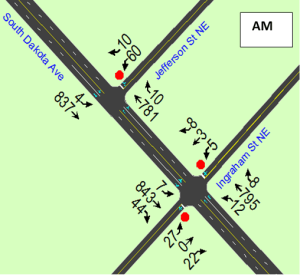
- AM Vehicle Count at Ingraham & Jefferson
-
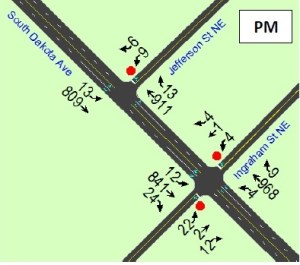
- PM Vehicle Count at Ingraham & Jefferson
-

- Pedestrian Count at Ingraham & Jefferson
DDOT conducted a study per their standard 2009 manual practice in response to “perceived unsafe crosswalk conditions [including for the blind and elderly].” A “Professional Traffic Engineer” assessed vehicular and pedestrian volumes at “stop-controlled intersections” on Wednesday, December 6, 2017, during the peak hours of 8:00 am to 9:00 a.m. and 5:00 pm to 6:00 pm.
| Ingraham | Jefferson | |
| Distance from Signalized Intersection | 250 ft from Hamilton | 275 ft from Kennedy |
| Vehicles | 1700-1900 | 1700-1900 |
| Pedestrians | 43 | 28 |
| Bicyclists | 4 | 4 |
| Vehicle-Vehicle Crashes (01/01/2013-12/31/2015) | 3 | 3 |
In addition to the pedestrian, bicyclists, and vehicular counts, the report also noted the following items related to the intersections:
- Posted speed limit was 25 Miles Per Hour
- Adequate minimum vehicle stopping and intersection sight distances
- Correct placement for existing signs and pavement markings, but no pedestrian warning signs at crosswalks
- Observed pedestrians using crosswalks
- Observed single drivers, but not those in “a platoon,” stopping for pedestrians
DDOT used a scoring matrix to evaluate the need for a HAWK signal. A simplified version is shown below with the score from their 2017 study (refer to the full report for explanation of the variables).
| Variable | Points Possible | Points Awarded |
| Pedestrian and Bicycle crashes (over recent 3-year period) | 20 | 0 |
| Vehicle Crashes (over recent 3-year period) | 10 | 6 |
| Street Traffic Volume | 30 | 30 |
| Number of lanes at peak hour | 30 | 10 |
| Elderly and disabled population | 10 | 0 |
| Proximity to K-12 School | 15 | 9 |
| Connection to parks, rec center, commercial, etc. | 15 | 15 |
| Metro station / bus stop | 20 | 0 |
| Posted speed limit | 15 | 5 |
| Distance to nearest signalized intersection | 30 | 0 |
| Crosses bike path | 5 | 0 |
| Total | 200 | 75 |
The Decision
According to their data, vehicular and pedestrian traffic counts warranted a HAWK signal at Ingraham street. But, as their report states, “satisfaction of meeting a warranting criteria shall not in itself justify the installation of a new traffic signal. Rather multiple site-specific factors must be considered, and engineering judgment applied before justifying any change in traffic control.”
Though we received an overall failing grade, the report also recognized pedestrian volumes would likely increase when the retail at the Modern opens.
Here is my take
For starters, their study does not appear to be the most rigorously designed. From being conducted on a single day, for only two hours, by one person, likely with temperatures that discouraged walking, lack of good lighting, and the Modern apartments barely open with no retail at that time, it seems unlikely that accurate and usable data would be obtained as the basis to make a decision.
The proximity to two other signalized intersections (Kennedy and Hamilton) appear to be the biggest reason why a HAWK signal was denied. Generally speaking, DDOT discourages traffic signals from being placed within 300 feet of each other because “challenges [exist] with signal coordination, driver confusion and lack of vehicle queuing space.” Putting aside the fact that HAWK signals have been installed to “help pedestrians safely cross [other] high traffic volume streets” (I’m looking at your ”mid-block crosswalk” Cleveland Park), I do find it dismaying that they would cite “driver confusion” here when pedestrian safety is just as critical (see any recent editorials on Vision Zero). The truly funny thing is that if the traffic signal had been installed at Ingraham to begin with, instead of being kept at Hamilton, then that would actually be more than 300 feet from the lights at Kennedy and Galloway.
DDOT also cites the “adequate sight distance for pedestrian visibility,” lack of pedestrian involved traffic crashes, and that “gaps” in through traffic are created with the current signal timing plan as additional factors to not install a HAWK signal. However, anybody waiting to cross those intersections would likely attest to the inadequate visibility they feel as pedestrians, especially when attempting to navigate the gaps in the platoon of cars barreling down South Dakota Avenue.
Speaking facetiously of course, I guess we need to have more pedestrian-involved crashes first to have more points on the DDOT scoring matrix, which would then help justify our request for increased pedestrian safety. But seriously, we really should not be waiting until any other unfortunate tragedies such as this one occur before the city takes action to install pedestrian safety measures within 250 feet of another signal. When it comes to the lack of pedestrian and bicycle crash incidents from 2013-2015, the Ingraham intersection in question did not even exist. The apartment building was under construction most of that time and the new street did not exist. A more appropriate use of pedestrian safety data would be all the 311 submissions neighbors have made regarding near crashes and other concerns since this intersection has been accessible by foot.
Going back to DDOT’s scoring matrix, no points were given for the elderly and disabled populations, despite that being part of the premise for the study. The intersection’s proximity to the metro did not yield points either, even though Ingraham is the through street to the metro.
Finally, DDOT did not independently act on a list of additional recommendations that were made in the report. Instead, neighbors needed to make numerous 311 requests to prompt the pedestrian safety enhancements. Such requests ended up being similar to the report’s recommendations unbeknownst to us, such as increasing crosswalk monitoring and installing high visibility pavement markings for the Jefferson Street crosswalk.
What’s Next
This is not the end of the story. At both the December Lamond-Riggs Citizens Association meeting and the brainstorming session, DDOT agreed to perform another study to evaluate if a HAWK signal is warranted now. Let’s hope they work with the community to design the best study possible.
Please join us at the next Advisory Neighborhood Commission 5A meeting where the topic of increasing pedestrian safety crossing South Dakota Avenue will be discussed. A draft resolution will be presented to the Commissioners as well. The meeting will be Wednesday, January 30, 2019 at 6:45 p.m. at UDC-CC Backus. If you want to submit a letter of support regarding this issue, please email a 250-word statement here.
January 17: Lamond-Riggs Library Reconstruction Community Meeting
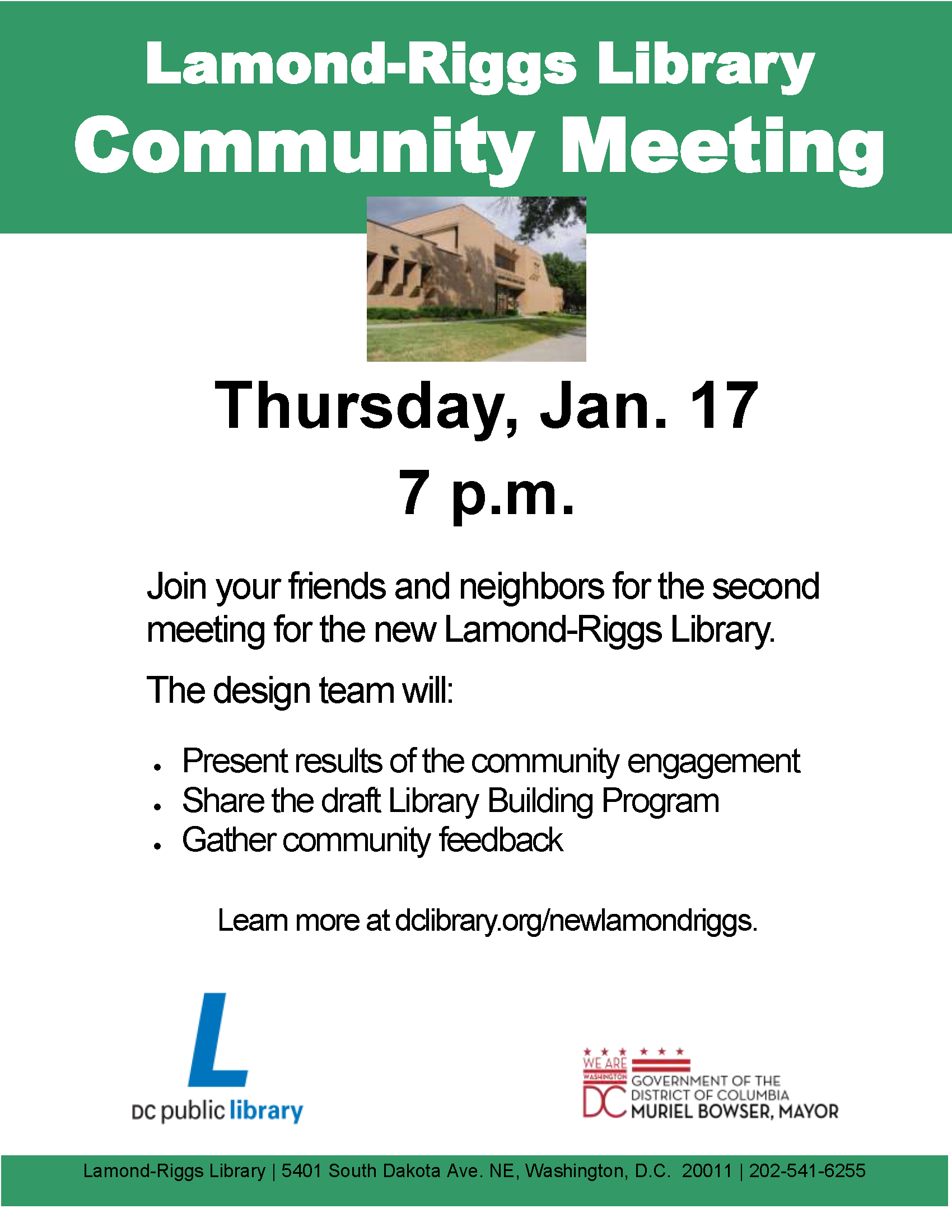
Lamond-Riggs Library
Reconstruction Community Meeting
January 17, 2019
7:00 pm
5401 South Dakota Avenue NE
Design team will present results of community engagement to date, share the draft Library Building Program, and gather community feedback
New Neighborhood PSA Boundaries
Map of old PSA boundaries (left) and new PSA boundaries (right)
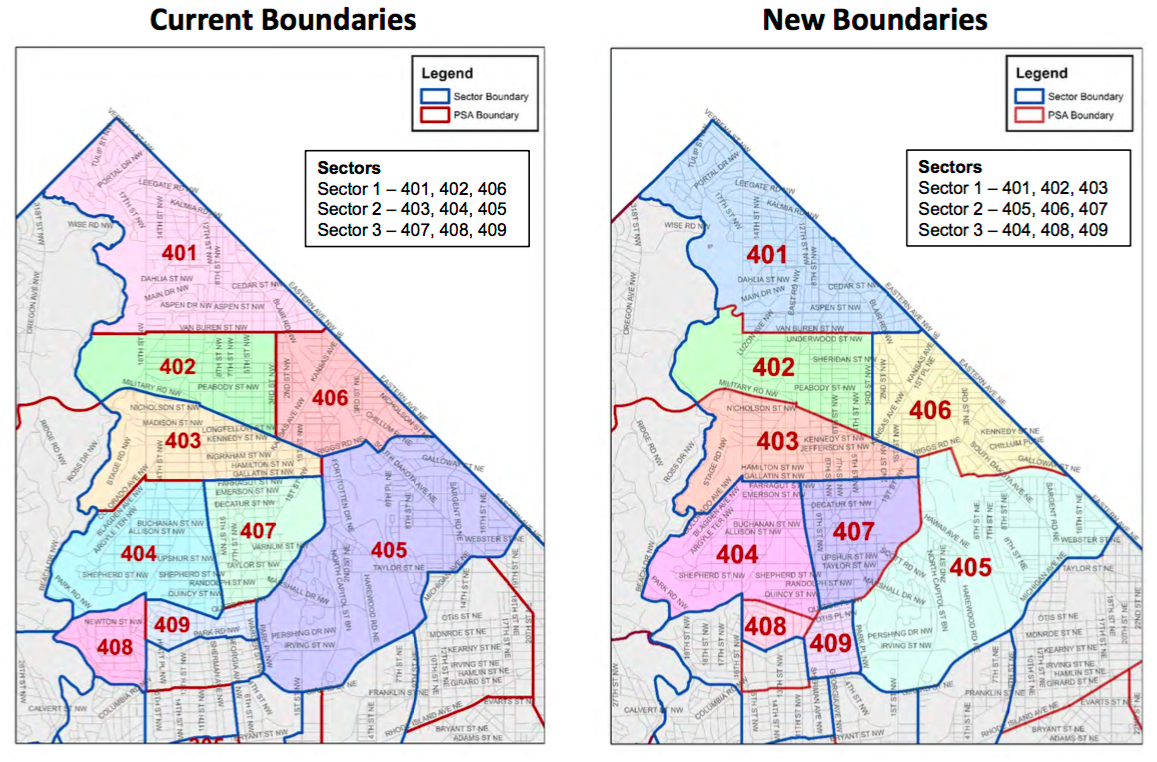
Effective today, MPD has realigned police service areas (PSAs) for the neighborhood. Previously, the neighborhood was served by two different PSAs in two different sectors–PSA 405 in Sector 2 served residents south of Kennedy Street NE and PSA 406 in Sector 1 served residents north of Kennedy Street NE. Now, all of Riggs Park will be served by PSA 406 in Sector 2.
Each sector consists of three PSAs and is managed by a captain. MPD lieutenants and captains change often so be sure to visit MPD’s Fourth District webpage to keep up-to-date if you ever need to contact your police officers (though it does not appear that MPD has updated the webpage as of the time of this writing).
January 17: Lamond-Riggs Library Reconstruction Community Meeting
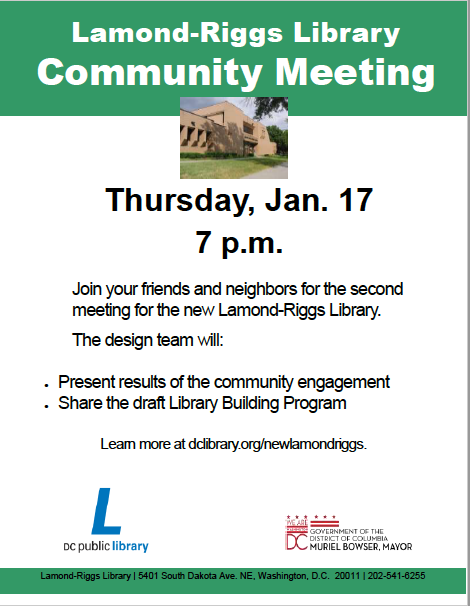
Lamond-Riggs Library Reconstruction Community Meeting
January 17, 2019
7:00 pm
Lamond-Riggs Library (5401 South Dakota Ave. NE)
Please join your neighbors for the 2nd community engagement meeting regarding reconstruction of the Lamond-Riggs Library with DCPL officials and the design team
Agenda:
(1) Hear about the results of community input to date
(2) Review the draft Library Building Program
Project website: https://www.dclibrary.org/newlamondriggs
 Next Stop...Riggs Park