The Washington Post did a profile on the neighborhood back in 2010. I think that feature provides a bit of context for the latest neighborhood profile published by the Post yesterday. Where the previous article highlighted the stable, established aspect of the community, this newer article focuses more on the development and “transition” taking place. The author took a tour of the neighborhood with Barbara Rogers, president of the Lamond-Riggs Citizens Association, and interviewed several residents. Readers will see the blog mentioned. I agreed to speak with the reporter and we talked about different aspects of the neighborhood for maybe 30 minutes. I was not sure what narrative the reporter was interested in pursuing, but I did know she wanted to speak to residents who had moved into the neighborhood in the past five years.
Rereading the previous profile, it is interesting to consider what has and has not changed since 2010, at least from my perspective.
Civic participation
“Among all of the neighborhood association meetings I attend, Lamond Riggs always has the most people — 50 to 60 folks” – then ward 4 councilmember Muriel Bowser in the Washington Post in 2010
The level of civic participation has not changed. I became involved in community affairs through an invitation by a resident to attend a community meeting . When I invited a DC agency official to discuss a city program at a recent civic association meeting, I advised him that around 70-80 people would likely attend. I think he was surprised to find out I was not exaggerating. Recently, many newer residents have signed on to committees to contribute to the work of the civic association.
Respect and appreciation for longtime residents
“The stable of longtime residents is complemented by a bevy of young families looking for affordable single-family homes in the city. Many of them say the longtime residents helped draw them to the neighborhood.” – Washington Post in 2010
I love talking to my older neighbors who have lived in the neighborhood for 40, 50 years. As I mentioned in my comments, they sincerely ask how I am doing and how my family is doing. People stop and chat as I work in my garden. I know I am not unique in that aspect. As new residents move in, they ask about the history of the neighborhood. For the most part, there is a level of engagement between newer and long-term residents that fosters mutual respect and allows us to work for the things we would like to see in the neighborhood.
Desire for more amenities
“Residents are hungry for more amenities, such as upscale retail stores, coffee shops and sit-down restaurants, said Gwen Cofield, co-chairman of the citizens association’s development task force.” – Washington Post in 2010
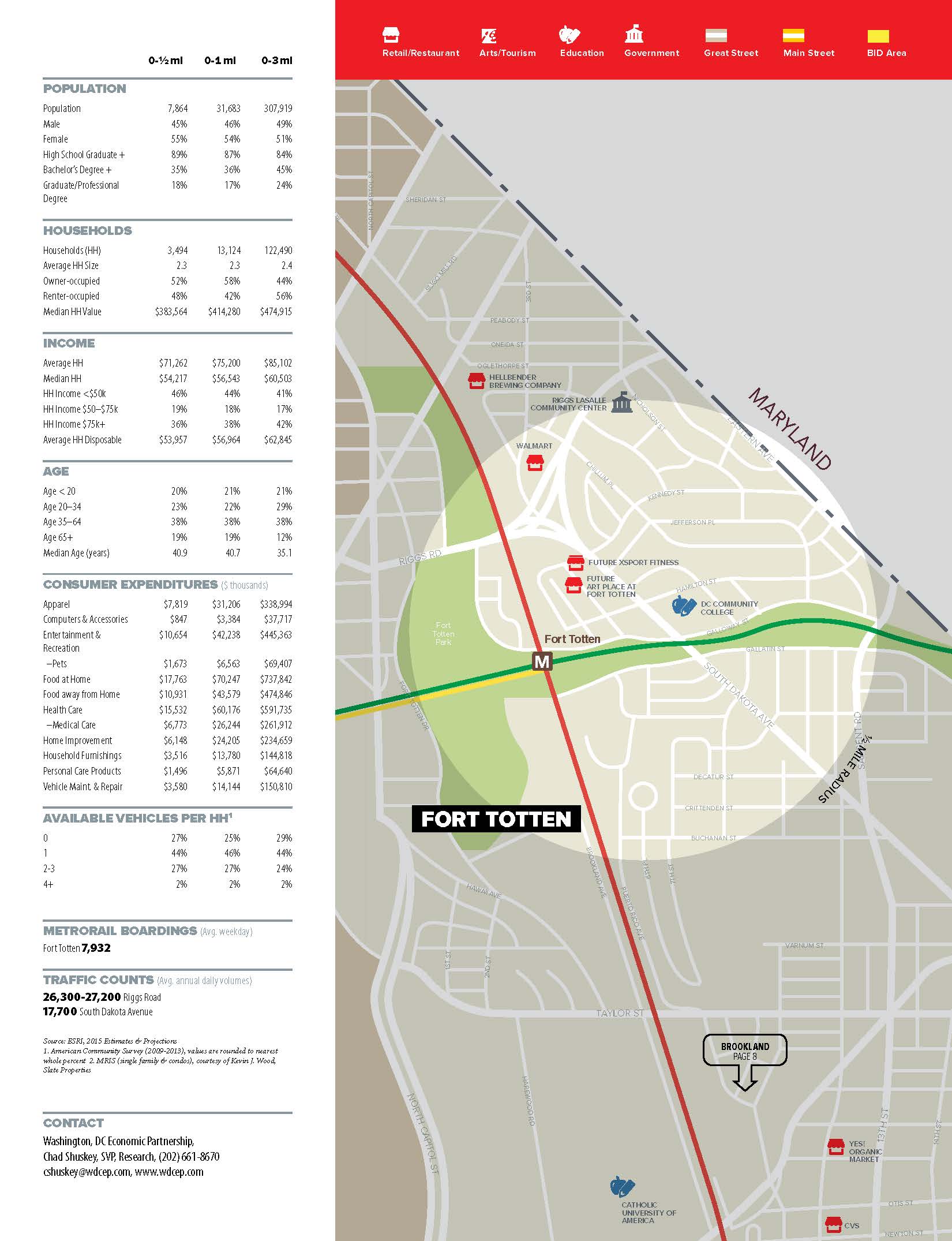
Residents still want amenities and some of them are on the way. In 2010, both Art Place at Fort Totten and Fort Totten Square (FTSQ) were in a lull phase. Now, FTSQ is pretty much done and construction is in full swing at Art Place. When I started the blog, I decided to publish a neighborhood wish list. Not much has changed since I first published it and the present as newer residents move in. Residents want quality sit-down restaurants, neighborhood bar, coffee shop, bookstore, bank, home goods store, pharmacy, gym, pet store, neighborhood pool, lots of folks would like a Trader Joe’s, and a number of other amenities.
Appreciation for what we do have
“‘We’re lucky to be close to many of the things we need . . . If we want groceries, there’s a Giant close by. If we want to go downtown, we’re close to public transportation. We aren’t isolated at all.'” – Lawrence Martin in the Washington Post in 2010
I told the reporter the neighborhood has a low crime rate, it is affordable, and it is close to a metro station and you usually do not get all three of those features in one place. Maybe two, but not all three. It has been easy to live without owning a car for three years and that is a lifestyle that is important to me. We now have a bikeshare station at the metro station, as well as Enterprise carshare (and before Enterprise there was Zipcar). Car2go vehicles can be spotted here and there. Planning is underway to finish the Metropolitan Branch Trail (MBT) between Brookland and Takoma.
Ultimately, I think what has made this neighborhood a desirable community is the collective effort of residents over many, many years to make it a good one. I know some express wariness about the evolution of the community. Some worry about more traffic, more opportunities for crime, and being priced out of the neighborhood. Those are real concerns. I certainly do not wear rose-colored glasses. I think it will be the continued collective efforts of all residents that will ensure we keep the community flavor people enjoy even as development draws new residents to the neighborhood.




 Next Stop...Riggs Park