ANC 5A January 7, 2019 Special Meeting Recap: Pax Liquor Protest & New PUD

ANC 5A held a special public meeting on January 8, 2019. By acclamation, the commission voted for the previous officers to continue serving in their respective positions. Ward 5 Councilmember Kenyan McDuffie swore in the officers.

Ronnie Edwards (5A05) – Chair
Gordon Fletcher (5A08) – Vice Chair
Sandi Washington (5A07) – Treasurer
Isaiah Burroughs (5A04) – Secretary
Grace Lewis (5A02) – Parliamentarian

Prior to the vote, there was discussion about having Commissioner Emily Lucio (5A03) serve as secretary rather than Commissioner Burroughs (5A04). The two commissioners decided beforehand though that Commissioner Burroughs will serve as secretary until he graduates from Catholic University in May, at which point Commissioner Lucio will assume full secretary duties. Until then, Commissioner Lucio will Commissioner Burroughs with getting a functioning website for the ANC and doing a better job in distributing timely meeting notices.

Pax Liquor Store Protest

The ANC continues to prepare for the protest hearing regarding the application of Pax Liquor to locate at 4944 South Dakota Avenue NE (near the McDonald’s). The ANC will have to make its case for why the establishment does not meet certain appropriateness standards. The hearing will be held at 4:30 pm on January 16, 2019, at the Reeves Building (2000 14th Street NW).

Commissioner Lucio (5A03), the new commissioner for the single member district (SMD) in which the liquor store seeks to locate, will appear on the local television show DREAMS the Capital View on January 10 to discuss the ANC’s protest. Residents are invited to be part of the audience. If you are interested in attending, please arrive at the station located at 901 Newton Street NE by 6:20 pm. Find archives of the tv show under DREAMS the Capital View. View a video of the street protest held by residents and commissioners earlier this year.

The commission also asked residents to pack the hearing room on January 16. The Reeves building is conveniently located near the green line. The ANC recommended GoGo Grandparent for seniors who are not able to use public transit. This service provides Uber and Lyft rides for seniors without a need for a smartphone. Call (855) 464-6872 for information.

Councilmember McDuffie submitted a letter in support of the ANC’s opposition to the liquor store and will have a staff member present at the hearing.

Wesley Housing Curb Cut Application & PUD

Representatives of Wesley Housing did not show up to discuss their application for a curb cut/driveway on the property located at 1 Hawaii Street NE in the Fort Totten/Pleasant Hills neighborhood. The property is bounded by Hawaii Street NE, Allison Street NW, and Rock Creek Church Road NW. The application was filed at the end of December; the ANC has 30 days to respond. The property is in the SMD of Commissioner Sandi Washington (5A07), who appeared to oppose the curb cut because it would take away on-street parking spaces on Allison Street. The application seeks to move the existing curb cut on Rock Creek Church Road to Allison Street.

Even more importantly though, on January 4, 2019, after the curb cut application was filed, Wesley Hawaii LLC, an affiliate of Wesley Housing, also filed an application for a planned unit development (PUD) and zoning map amendment for the property to change the zoning from RA-1 to RA-2 to permit greater density. The case number for the PUD application is 19-01. The property was acquired in 2018 from Sanford Capital, the infamous landlord sued by DC Attorney General Karl Racine to divest its properties in DC due to poor property management. The proposed plan would replace the existing apartment building at 1 Hawaii Avenue with a five-story apartment building with 78 units. The new building would have a 100% affordability covenant for a certain period of time. See Applicant Statement: Wesley Hawaii LLC Statement in Support of PUD Application (pdf)

Commissioner Washington thought it improper for the applicant to file for the curb cut before filing the PUD application. A footnote in the statement in support of the PUD application notes,

Though the Existing Building with 34 units has no parking, there is a curb cut from Rock Creek Church Road NW. However, pursuant to preliminary discussions with the District’s Department of Transportation, the Applicant will locate a new curb cut on Allison Street NW to provide access for parking and loading. The Applicant recently filed an application for concept review with DDOT’s Public Space Committee.

The commission tabled the curb cut issue until the next regular ANC meeting, which appears to be scheduled for January 30.


Riggs Road Bus Service Survey

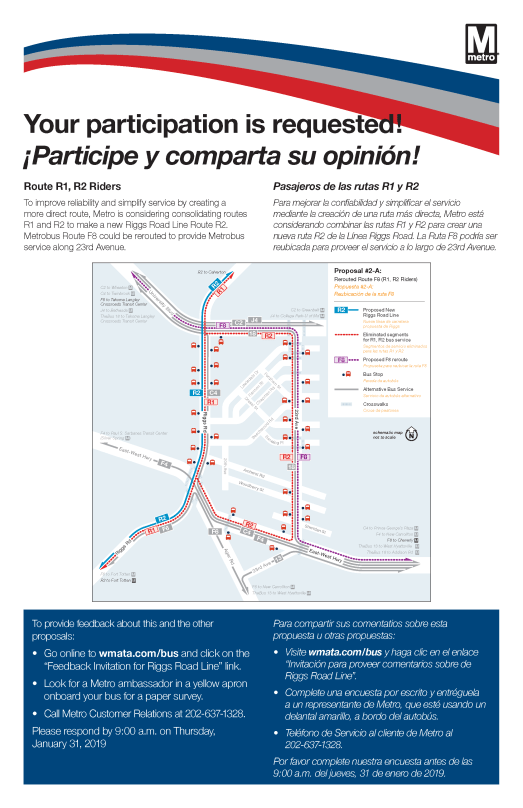
Post updated with flyers and correction to Proposal 3

Metro Riggs Road Service Evaluation Study

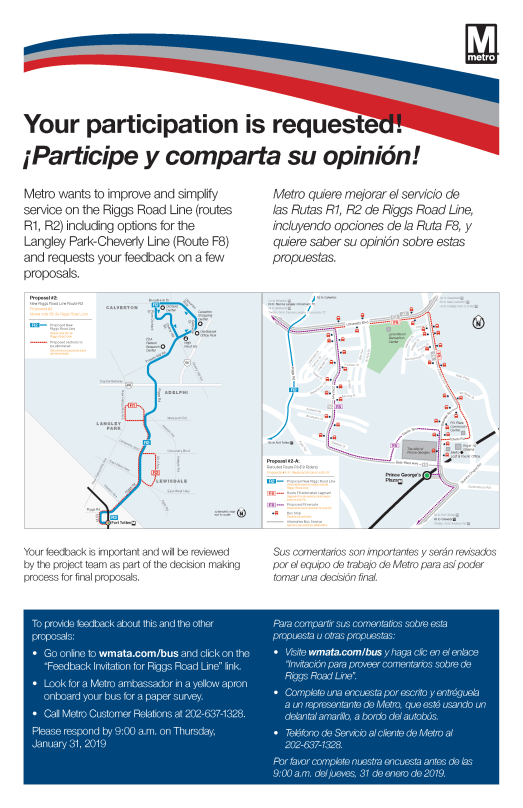
Metro is seeking input on proposals that will impact the Riggs Road Line (routes R1, R1). These proposals will impact service in the neighborhood.

Proposals:
1. Extend Route R2 beyond Calverton
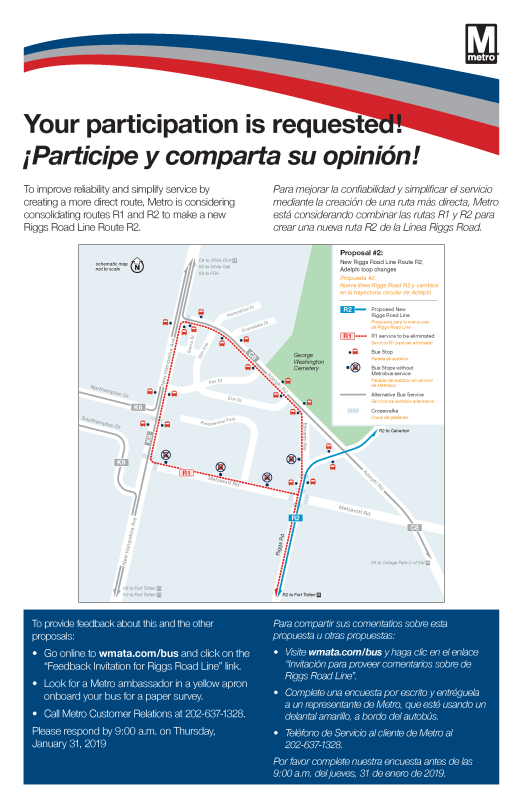
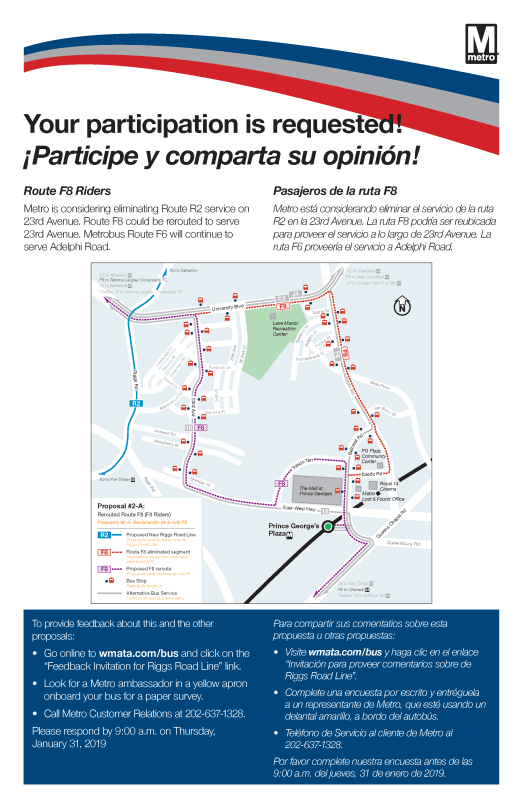
2. Consolidate Routes R1 & R2 to make a new R2 Line that will be more direct along Riggs Road; reroute F8 to serve areas that would be removed from the new R2 line, including parts of East-West Highway and University Boulevard
3. Consolidate bus stops on routes C4, C8, F8, R1, R2, & Z6 to remove stops that are not used frequently or that are close to other stops

How to provide feedback:

  • Take the online survey and provide comments
  • Complete a paper survey via a Metro ambassador in a yellow apron onboard your bus. Drop your completed survey at a collection box near the faregates at Fort Totten, Prince George’s Plaza, West Hyattsville or Cheverly Metrorail stations.
  • Call Metro Customer Relations at 202-637-1328.

Responses are due by 9:00 am on January 31, 2019

Preserving our Neighborhood Story: Documenting the History and Leadership of Lamond-Riggs

Guest post by Sarah Shank

Post updated

Before the widespread availability of the internet, communities were built in the streets and on porches. This is how and where neighbors connected, news was shared, and families celebrated. It was rare that neighborhood happenings would go unnoticed. Community leaders united the neighborhood by spreading neighborhood news, organizing neighborhood watches, igniting local activism, and welcoming new neighborhood residents.

Lamond-Riggs is a community of leaders. Our residents have done this for decades and continue to be a force in the District. Even the mayor got her start in politics living in this corner of the diamond–first as ANC, then councilmember, then mayor–before moving to Northwest.

After living in DC for more than 20 years – in many different neighborhoods across the District – I’m proud to now call Lamond-Riggs home. While I’m a newcomer to the neighborhood (going on only 2 years now), I picked to live in this neighborhood for a few reasons: its established community, commitment to its residents, and the neighborhood family feel that it retains. I’m continually amazed by the civic engagement that residents have and the rich history that surrounds us.

We are a neighborhood of firsts.

And while many of these firsts are from way before my time, but none are by any means small and I’m just naming a few!

  • The first Summer Cultural Enrichment Program under the sponsorship of the Urban Services Corps was held at LaSalle Elementary School.
  • The first comprehensive cultural enrichment program sponsored by the Neighborhood Planning Council and DC Public Schools was held at Bertie Backus Junior High School.
  • The Lamond-Riggs Athletic Association was the first to organize little league football teams in DC.

We are a neighborhood of activists.

As the headline to a 1988 Washington Post article notes, “For a small neighborhood tucked away in a corner of Northeast Washington, Riggs Park has made a lot of noise over the years.” So from the creation of Bertie Backus Junior High School in the 1950’s, to the freeway fights of the 1960’s and 1970’s, to construction of Fort Totten metro station in the 1970’s, to construction of the neighborhood library in the 1980’s and now again today – throughout  time, residents developed and maintained a thriving, mixed-income community with strong civic participation.

Come to any Lamond-Riggs Citizens Association monthly meeting and you’ll see that civic engagement still happening to this day.

We are a neighborhood of families.

Young and old. Then and now. Our homes have yards and alleys. Our homes are filled with hard-working DC families. While accessible by metro, our neighborhood provides refuge from the daily grind. It has big open sky and it’s our home away from the city but still in the city – aren’t we lucky!

Founded in 1980, the Humanities Council of Washington, DC (HumanitiesDC) aims to enrich the quality of life, foster intellectual stimulation, and promote cross-cultural understanding and appreciation of local history in all neighborhoods of the District. They allow neighborhood organizations and individuals to apply for grants to help document and share their story of DC through oral histories. Through these DC Oral History Collaborative grants, HumanitiesDC aims to document and preserve the stories and memories of residents by making existing oral history recordings more accessible and giving residents the training and financial resources they need to conduct quality interviews.

With this type of financial support, we together can record the stories that bore witness to the neighborhood’s early years, allowing us the opportunity to capture key moments in the neighborhood’s history over the past seven decades. These stories should be documented and shared with our own community as well as have our civic pride touted to every other corner of DC.

I’m eager to apply on behalf of our neighborhood because I see tremendous value in the stories that we have in Lamond-Riggs. But to do this, I need the help and support of all my neighbors and friends. Our residents have a unique view of this Capitol city that I want that not only recorded, but also shared.

Send me your ideas.

Send me your photos (I promise to scan and return them).

Tell me your memories.

The grant application is due on January 25, 2019. This means there is still time to include as many of our community ideas into the grant application as possible. If we are awarded the grant, the funds will be used to record oral histories from five to ten Lamond-Riggs residents. We will supplement the recordings with photos. And if we have more people who want to tell their stories, we can always do more! Also, if we don’t win the grant, I still hope to begin collecting stories and documenting the legacy of our community and its residents so that this rich history can live on for generations to come.

I’m confident that by collecting and sharing these stories, we’ll be able to instill the same sense of community and activism in the next generation, so that they can continue to make this neighborhood one of firsts and families – much like it has always been.

Please feel free to comment below with comments and/or ideas. Or please send me a note directly here.

South Dakota Avenue/Riggs Road Main Street Seeking Executive Director

The Center for Nonprofit Advancement is pleased to announce the creation of the South Dakota Avenue/Riggs Road Main Street Program.

Funded through a grant awarded by the District Department of Small and Local Business Development (DSLBD), the Main Street Program will utilize public-private partnerships and community volunteers, build on neighborhood assets, and implement strategies to support and improve the business corridors in the Riggs Park and Manor Park neighborhoods.

The search for an executive director is open! Submit a cover letter and resume to SouthDakotaRiggsMainStreet@gmail.com with “Application SDA-Riggs Road Main Street ED” in the subject line. Applications may be submitted in Microsoft Word or pdf format. The deadline to apply is 5:00 pm on January 14, 2019.

Hidden Neighbors Part 2: The Riggs

Guest Post by David Kosub

*** Please note David is only a citizen historian and apologizes for any incidental fake news. He hopes neighbors share these stories and are inspired to write about their community in the new year too.*** [Ed. Note: If you would like to contribute a blog post for Next Stop . . . Riggs Park, please send an email to nextstopriggs@gmail.com]

Welcome to Part 2 of our Lamond-Riggs naming story. As you may recall, we met the Lamonds in Part 1 of the series, learned to make Terra Cotta, and found out about a little ol’ horrific train disaster. With that introduction, let’s meet Riggs.

The President’s Banker 

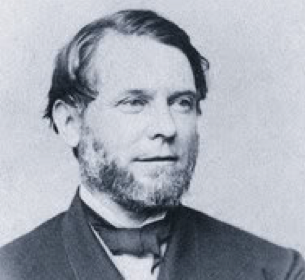
Picture of George Washington Riggs

Born on Independence Day in Georgetown in 1813, George Washington Riggs was definitely a firecracker. A true high-roller 19th century style, Riggs teamed with William Corcoran, of the present-day Dupont gallery fame, in what would become a very lucrative banking empire. Their bank, as a result of a government decision, was the only one allowed to obtain a large chunk of federal depositories in the city, leading to crazy profits. Rolling on all cylinders, they helped finance the Mexican-American War with over $15 million in loans from the federal government, provided over $7 million in gold for the purchase of Alaska, financed the development of the telegraph, provided funds to expand the Capitol, and resourced one of the first expeditions to the South Pole.

Multiple Presidents (including a Confederate one), Cabinet Secretaries, Senators, Generals, suffragettes, Red Cross founders, and many embassies entrusted their treasures with Riggs Bank. Riggs himself retired from the bank in the late 1840s, but his family had a stake in the institution until the early 20th century. In 1904, their new headquarters on Pennsylvania Ave was notable for its “Ladies’ Department,” designed to meet the special needs of women, including Clara Barton and Susan B. Anthony (ooh la la).

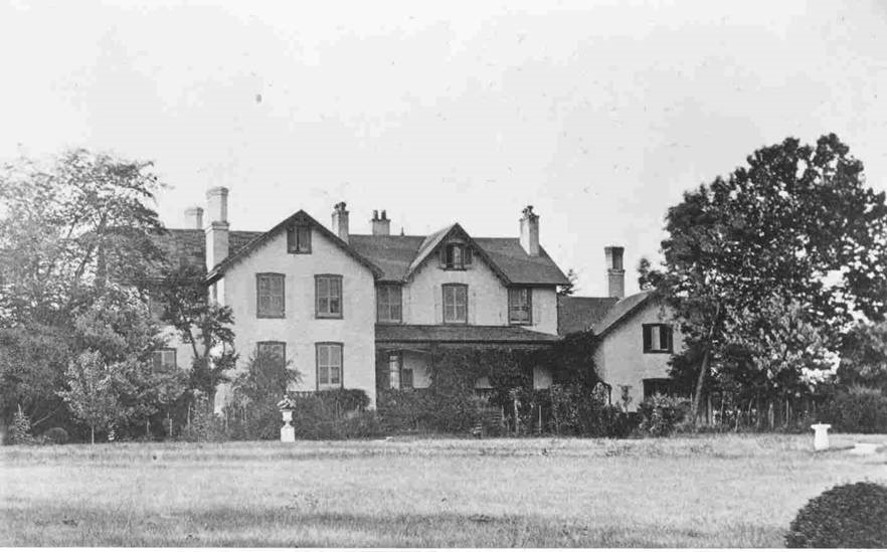
Riggs spent much of his time not too far from where you currently sleep. His 197-acre country estate was situated on a high vantage point, with views of the U.S. Capitol (though technically outside the city back then). You may know of this area now as the Armed Forces Retirement Home after the federal government purchased it from the Riggs estate in 1851 for $57,000 (after paying only $3,400 to purchase the site nine years earlier). It was on these grounds in the summer of 1862 where President Lincoln penned the final draft of the Emancipation Proclamation (only a dozen years after enslaved persons may have lived here too). Today, now recognized as a DC historic site and on the National Register of Historic Places, this property has sculptured landscapes, war memorials, and the original Gothic Revival-style cottage which bears the Riggs name.

Lincoln Cottage. Source

Because you cannot hide money, Riggs established a second country estate – a new, slightly more modest 140-acre one known for its “fine blooded cattle” in present day Silver Spring. Alas, this one had to be sold too, a mere week after a “skirmish” between Union and Confederate troops that left the nearby vicinity torched and plundered in 1864. Though 300 people died, the Riggs family suffered too, losing “some hay forage,” vegetables, and a valuable ox.” Today, the property serves as a private school for students with learning disabilities.

At the age of 68, Riggs passed away in his Green Hill home—yes, a third country estate, which was 342 acres in Hyattsville and included the only mill still surviving in Prince George’s County. An obituary crooned that Riggs was “remarkable for strength of mind and . . . power to grasp and fathom any subject presented to him . . . and in all his transactions, his judgement prompt, and his conclusions just.” Wow, it’s like reading a biography of yours truly. Not too far from the Lamonds, Riggs can also be found lazing around Rock Creek Cemetery too (section D, Lot 14) – just a 25-minute stroll from the community bearing his name.

Bankers to the Most Important Money in the World – Yours

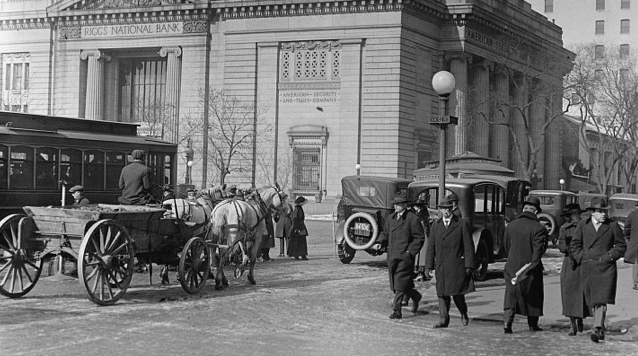
Now, let’s check back in with Riggs Bank (see these simply amazing commercials here, here, here and the 1980’s jingle here). Lasting over 150 years, with multiple iconic branches in the District, including Georgetown, Dupont, and across from the U.S. Treasury, it kind of fell with a thud. Though not as cool as this sort of Riggs downfall here, the bank’s failure in the early 21st century was just as epic and followed, wait for it . . . a handful of money laundering scandals resulting in the company paying millions in fines and penalties.

Image of Riggs National Bank ca. 1913-1918. Source

Remember those embassies mentioned earlier, and their treasures too? Well, various employees at Riggs Bank were caught embezzling over $30 million in oil revenues from the Embassy of Equatorial Guinea on behalf of that country’s dictator. One of the employees at the Dupont branch would apparently even walk up the road to the embassy and collect briefcases containing stacks of shrink-wrapped bills. The bank also was connected to yet another dictator, this time with Chile, helping him hide additional millions (see here how the bank tried to make good on this one). Federal reports also noted that the bank “inadequately monitored the destinations and uses of large amounts of cash, often more than $1 million at a time” in over 150 accounts linked to the Saudi Arabian embassy and ambassador (it even got a shout out on Meet The Press). And, of course, the bank was linked to the CIA too, because, why not?

 Alternative facts: What If . . . 

It is still unclear to me, however, why our neighborhood went from being known as Terra Cotta to Lamond-Riggs (Lamond & Riggs Park neighborhoods collectively) today. I find it a shame because Terra Cotta sounds pretty cool actually. I would like to believe that it goes deeper than just the nature of evolving communities and adjacent streets . . . like maybe the two families knew each other at some point in their life.

Perhaps Riggs issued a loan to Lamond to start the plant, who then reciprocated with a gift of the first clay tile hot out of the oven. Or, maybe Alcena caused an uproar at a citizen’s association meeting over the most hyper-local issue of the day — overgrown trees, unsafe pedestrian crossings at train tracks, silent invocations, and potholes, yes definitely potholes. Perhaps they shared stories over a pint during a Thirsty Third Terra Cotta Thursday too.

Regardless of the reason, we all live here together and have made it the tight, close-knit community it is today. As history happens every second of every day, let’s continue to create it, stroll through it, welcome it, and learn about the hidden mysteries that exist right under our noses.

Hidden Neighbors Part 1: The Lamonds

Guest post by David Kosub 

*** Please note David is only a citizen historian and apologizes for any incidental fake news. He hopes neighbors share these stories and are inspired to write about their community in the new year too.*** [Ed. Note: If you would like to contribute a blog post to Next Stop . . . Riggs Park, please send an email to nextstopriggs@gmail.com]

Back in 2011, all around the DMV, we found ourselves asking, “What is NoMA anyways”? After Amazon made its announcement, we found ourselves wondering something similarly–“National Landing, really”? I guess it’ll be called NaLa soon enough.

Even closer to our “scrappy, down-home” neighborhood, if you want to see sparks fly, then ask someone about what they think about the name “Fort Totten Square,” or about their initial impressions of “Fort Totten” metro. But, be careful. Make sure you do not call it Fort Totten-Riggs station though. For that matter, where did the name “Lamond-Riggs” come from anyways–or as I call it, LaRi?

Here, in this two-part series, I sought to uncover this mystery and meet the elusive Lamond and Riggs. In Part 1, let’s start by turning the clocks back about a century and a half and meet the Lamonds.

Terra Cotta Warriors: A Different Type of Baked Earth in Washington

There is a silty, reddish clay earth right beneath your feet. This soil, the bane of many area gardeners – like yours truly – who just want to grow some darn tomatoes and peppers in their yard, actually contributed to a vibrant industry over a century ago. Heating this ample clay-ground proved perfect for making a certain material commonly found in sculptures, flower pots, pipes, bricks, roofing tiles, and even metro platform embellishments.

And, voila, the Terra Cotta neighborhood was born. The Federal government officially recognized this description in 1979, the same year as the names Lamond-Riggs and Fort Totten Park, and it still existed as recently as 2007.

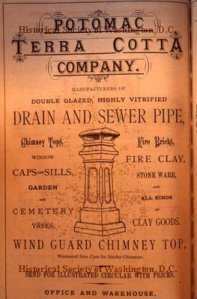
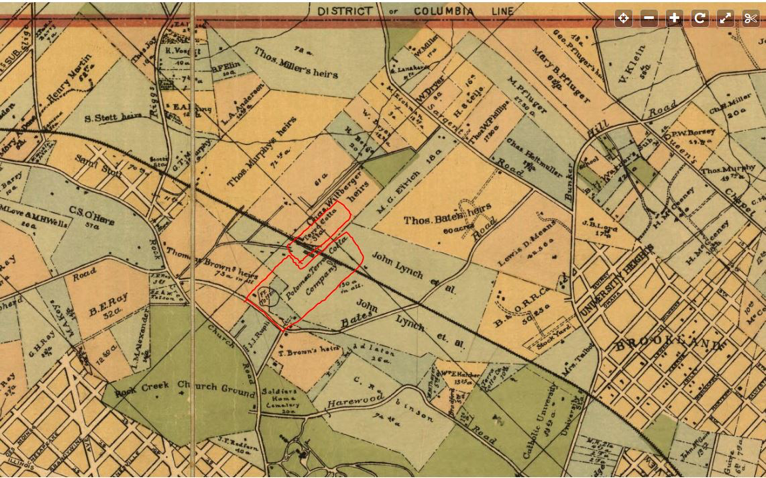
This name is linked to a thriving business established here in the latter half of the 19th Century, the Potomac Terra Cotta Company. Its impressive, large ovens could be seen creating clay tiles on the eastern side of the recently laid Baltimore and Ohio train tracks, near today’s Van Buren Street, Underwood Street, and Chillum Place.

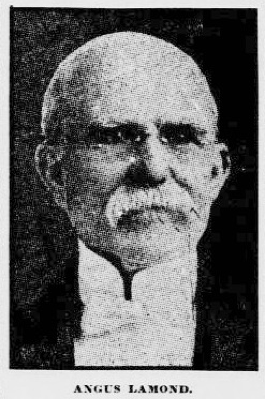
Picture of Angus Lamond

Drum roll please, this company was the brainchild of one Scottish-born Angus Lamond. He started the company some time after immigrating to the United States at the age of 25. With Gaelic and Norse origins, his family name meant “the law man” and was llikely pronounced “Laumon.” If you cannot get enough Game of Thrones, check out this actual ancestral history of the Lamonts of Tiree, from which our hero Angus may have derived.

In 1873, officials with the railroad, specifically the Metropolitan Branch rail line, moved the nearby Brightwood station closer to the company, renaming it Lamond Station or Terra Cotta. Likely located somewhere between where Fort Totten and Takoma metro stops are today, the relocation of this simple, three-sided wood-framed structure caused some consternation. The railway thus justified the move by explaining that the station was better protected from vandals at the new site.

Advertisement for Potomac Terra Cotta Company. Source:

The new station served another role too, incentivizing people to move to an unincorporated parcel of land destined to be a nuclear-free, suburban oasis located “high above the swampy, malaria-ridden Washington City.” When Alcena Lamond, Angus’s better half, encountered it in 1875, she lamented that the area “was all that a wilderness could be.”

Even with the fear of the unknown, the Lamonds would come to embrace the wild. The town would grow without regard for jurisdiction, incorporating part of the large Riggs estate (but we will get to Riggs later in Part 2). By 1889, this “place only for the wild creatures of nature” expanded from the original 5 homes—one of which was the Lamonds—to over 200.

The call of the wild was so strong that Angus and Alcena even donated land for a library, though not likely the one you are envisioning. Angus allegedly convinced his childhood friend Andrew to give a $40,000 construction grant, which together with the land, eventually became the Takoma Park Carnegie library in the early 20th century. Before it could become reality, the contribution of the “best men” in Takoma Park needed to testify at a House hearing in 1907, including Angus who was glorified as one of the “most generous” and “prominent” citizens during the lovefest. A Congressman touted the library would be a “valuable addition to the educational facilities of the District of Columbia . . . [and] that the remoter sections of the District are entitled to the largest possible use of the Washington  Public Library.” Let’s keep that in mind as our local branch gets its own upgrade over the next couple years!

1890 map of Terra Cotta neighborhood. Company and railroad are circled in red Source

Alcena, the true rock star she was, worked her magic on the 57th Congress to pass legislation in 1902 to incorporate the Eastern Star Home for the District of Columbia. This institution was a home for “needy and worthy [fathers, their widows and orphans, and members] of the Order of the Eastern Star of [the District of Columbia].” The Order of the Eastern Star is a Masonic group (complete with its own International Temple in Dupont) that recognized her as a Grand Matron in 1896. Angus was prominent in Masonic circles too, recognized as a Grand Patron. The Eastern Star Home, essentially a nursing home off New Hampshire Ave NE, naturally (being D.C. and all) was destined to be a future sight for a zoning fight between the District, neighbors, and developers over a century later.

Meanwhile, back at the Terra Cotta Plant, work was seemingly difficult producing those clay tiles. For starters, it claimed the life of one of their sons in a tragic clothing-related accident in 1922. The other son also lost an arm while working in the factory. But, despite this incident, this son would successfully manage the company for decades until its closing in the mid-1950s (so, give him a hand for that, he needs it). Some of their clay fixtures can even probably still be found on houses in our neighborhood today.

Angus, who died in 1917 around the age of 75, and Alcena, who died in 1932 around the age of 82, both now leisurely hang out right around the corner in Rock Creek Cemetery (Section R11, Lot 49, Grave 3 and Grave 1respectively). They are just a 25-minute stroll from the community bearing their name, so pay them a visit.

Train Spotters (caution ahead)

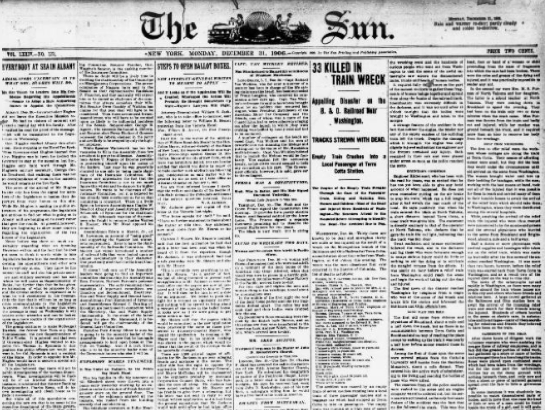
For an additional, unfortunate twist of fate, the Lamond/Terra Cotta station is known for the worst train disaster in Washington D.C. history, one hundred years before the one you are likely thinking about. This accident was later recounted in the book Undergraduate Days 1904-1908 as a “terrible noise…of an explosion, escaping steam, breaking wood, groaning brakes and human screams” heard as far away as Brookland and Catholic University. A newspaper recounted that “the butchery of the passengers was one of the most frightful things in the history of railroading.” They were cut into pieces and portions of their bodies scattered all along the track. When all was said and done, 53 passengers lost their lives, over 70 were injured, and none of the engineers on the offending train were found guilty of manslaughter.

Image of newspaper article on train crash

A citizen historian who spent 10 years studying the crash opined that this incident “hastened the conversion of passenger cars from wood to steel and led to improvements in railroad signaling,” so I guess there is that silver lining. Though if you need another pick-me-up right about now, as I did when writing this, then see this happy story about the Fort Totten metro train tracks before going to bed.

So, that was the Lamonds. Stay tuned for Part 2 of our naming saga in which we’ll learn about bankers, emancipation, and dictators, oh my . . .

ANC 5A Pax Liquor Protest

ANC 5A is protesting a liquor license for Pax Liquor, a liquor store proposed for 4944 South Dakota Avenue NE. The ANC is planning four protest rallies/marches to get residents involved.

  • December 22, 10:00 AM
  • December 23, 2:00 PM
  • December 29 (no time provided)
  • December 30 (no time provided)

The ANC considered but ultimately rejected a settlement agreement due to opposition from North Michigan Park residents. The commissioner representing the single member district where the proposed liquor store is located resigned earlier this year. As a result, other commissioners, along with neighborhood residents, have stepped in to fill the void.

An ABRA hearing is scheduled for January 16, 2019, at 4:30 pm. More information will be provided at tonight’s ANC 5A special meeting.

South Dakota Avenue-Riggs Road Main Street is Hiring

December 17, 2018

The Center for Nonprofit Advancement is pleased to announce the creation of the South Dakota Avenue/Riggs Road Main Street Program. Funded through a grant awarded by the District Department of Small and Local Business Development (DSLBD), the Main Street Program will utilize public-private partnerships and community volunteers, build on neighborhood assets, and implement strategies to support and improve the business corridors in the Riggs Park and Manor Park neighborhoods:

  • South Dakota Avenue NE between Galloway Street and Riggs Road NE
  • Riggs Road NE between Chillum Place NE and the Metro tracks
  • 5600 Block 3rd Street NE and 5700 Block 2nd Street NE between Riggs Road and New Hampshire Avenue NE
  • 3rd Street NW between Rittenhouse Street and Sheridan Street NW

The Founding Main Street Board of Directors includes leadership from the Lamond-Riggs and Manor Park communities including:

Board Chair: Barbara Rogers, 2nd Vice President, Lamond-Riggs Citizens Association

Treasurer: Alison Brooks, Acting President, South Manor Neighborhood Association

Secretary: Rhonda Henderson, President, Manor Park Citizens Association

The Center for Nonprofit Advancement is the largest and most comprehensive association serving nonprofits in the Country. The Center is located in the District of Columbia and has been providing capacity building and administration support services to local nonprofits for over 39 years. The Center will provide fiscal and organizational management, leadership and technical assistance for the South Dakota Avenue/Riggs Road Main Street.

The DC Main Street Program is administered by the Department of Small and Local Business Development and the South Dakota Avenue/Riggs Road Main Street is proud to be located in Wards 4 and 5. The Main Street Leaders, Board of Directors, and all at the Center for Nonprofit Advancement are especially grateful to District of Columbia Mayor Muriel Bowser, Ward 5 Councilmember Kenyan McDuffie, and DSLBD Director Kristi Whitfield for the opportunity.

An executive director will lead the South Dakota Avenue/Riggs Road Main Street Program. The position is open, and a job description can be found here.

For more information, please contact Glen O’Gilvie, CEO, Center for Nonprofit Advancement on gleno@nonprofitadvancement.orgor 202.457.0540.

December 20: ANC 5A Special Meeting

ANC 5A Special Meeting
December 20, 2018
7:00 pm
UDC-CC Backus (5171 South Dakota Avenue NE)

The purpose of the meeting will be to continue planning and organizing the community’s opposition to the proposed Pax Liquor, 4944 South Dakota Avenue NE.

Who should attend this meeting?
Protestors and Community Activists
Residents/Homeowners who don’t want a Liquor Store
Parents with children who are concerned about the introduction of alcohol establishments, associated pedestrian and traffic concerns, and overall safety for children
Anyone with prior knowledge about crime, violence involving prior liquor establishments (i.e., fish market; convenience stores, etc.)
Anyone with information or knowledge about the community’s efforts to resist/protest prior liquor establishments
Professionals/Experts who could help to analyze, evaluate and solidify studies, etc., that document the relationship between crime, violence and liquor establishments (potential witnesses)
Neighborhood Artists – Children/Adults with artistic skills who would like to help design and develop signs and posters

If you have any information you think would be helpful in our opposition to this liquor store, you should attend this meeting. If you are unable to attend the meeting please call 202-558-6389.

Please direct any questions to Commissioner Burroughs, ANC 5A’s Secretary at 5A04@anc.dc.gov

Actions from South Dakota Avenue Pedestrian Safety Community Brainstorming

Guest post by David Kosub

Dear Neighbors,

Thank you to all who participated in Wednesday’s Community Brainstorming session (in person or via email) to address pedestrian safety crossing South Dakota Avenue NE at Ingraham Street and Jefferson Street. Please find below the results from that meeting with specific actions we can take as a community to address this issue. Please share widely. These steps will also be shared with MPD and Cafritz Foundation representatives.

South Dakota Pedestrian Safety Community Brainstorming Session

Wednesday, December 12, 2018

Lamond-Riggs Library

Purpose: To hear from community members about concerns crossing South Dakota Ave at Ingraham St NE and Jefferson St NE intersections, as well as to identify possible solutions to increase pedestrian safety.

Attendees: ~10 Community members, DDOT (Wesley Dawson), MPD, Cafritz Foundation, and Mayor’s Office (Julia Irving). Councilmember McDuffie’s Office and ANC Commissioners were invited but did not attend. .

General Concerns from the Community

  • The Ingraham and Jefferson Streets NE intersections are a public health and safety issue, with community members reporting near-accidents from speeding cars not willing or able to stop (perhaps due to visibility issues). The community should not fear crossing the street, especially while going to the metro.
  • Vehicular traffic (including MPD patrol cars) regularly fail to stop for pedestrians at either intersection. Concerns about 8th and 10th St. NE intersections were raised as well.
  • There is a lack of adequate (or any) signage on South Dakota NE for pedestrian crossings.
  • It is unclear why the most appropriate path to the Fort Totten metro station at South Dakota and Ingraham Streets NE is not signalized already as part of the original plan to create a new through-way to the metro when Hamilton St NE, which previously served as a direct route to the metro station, was permanently closed by the Art Place at Fort Totten project.
  • 311 operators have misinterpreted pedestrian safety concerns related to aggressive driving when attempting to cross these intersections as 911 issues
  • Community members report being anxious that the issue will go unaddressed and become worse due to inaction from DDOT and Mayor’s Office (clear failure in achieving Vision Zero goals to avoid pedestrian injuries and fatalities) and with new construction projects scheduled.

Recommendations from Community Members (received during session and via email)

Actions to Take Immediately

  • Regularly and frequently submit 311 requests to improve pedestrian safety.
  • Request speed cameras per guidance on the MPD website. (Request link (updated 12/17/2018) – or contact MPD 4D community liaison)
  • Encourage MPD patrol cars to make audible noises and immediately stop traffic when pedestrians are seen waiting in intersections
  • Contact elected officials (Councilmember McDuffie’s OfficeANC commissioners Frank Wilds and Gordon FletcherMayor Bowser, and Mayor’s Office of Community Relations and Services) demanding this issue be addressed ASAP.
  • Request DDOT share all publicly available information on initial HAWK traffic/pedestrian study.
  • Contact local media to raise public awareness.
  • Request DDOT to place driver speed feedback signs on South Dakota Ave.
  • Request wider, perhaps artistic crosswalks similar to crosswalks at Georgia and New Hampshire NW or on Kennedy Street NW, so that these crosswalks are even more noticeable to drivers (added 12/17/2018)

 Actions Beginning in February 2019

  • Request MPD increase the number of cars patrolling intersections.
  • DDOT install static signage (including Pedestrian Crossing, Yield, Radar announcements, etc.) for pedestrian crossings with red flashing lights.
    • Note: DDOT representative indicated that signs were ordered and will look into expediting installation (within 30-45 days of order). DDOT will determine if infrastructure exists to operate flashing lights.
  • DDOT will begin new study for HAWK Beacon signal (see section below).

 Actions over Next Year

  • DDOT should either move signalized intersection from Hamilton St NE to Ingraham St NE or put new signal at Ingraham.
  • DDOT should improve lighting on entire South Dakota NE Corridor from Riggs Road NE to Galloway St NE, particularly at intersections so that drivers can see pedestrians waiting to use crosswalks.
  • DDOT should investigate the timing of signalization lights along South Dakota NE and at Kennedy St NE (apply lessons learned from the street light modernization project). The green cycle is very long, the yellow light seems long, and both of those could be encouraging drivers to speed down South Dakota and not stop for pedestrians at Ingraham.

 Actions that Cannot be Implemented

  • CM McDuffie Constituent Services Director Kelley Cislo forwarded a recommendation from MPD to have crossing guards at Ingraham St. NE intersection during morning and afternoon rush – Mr. Dawson said Traffic Control Officers (i.e. crossing guards) are only stationed near schools.
  • Install physical impediments (e.g. raised crosswalks) to slow vehicles on South Dakota – DDOT indicated “upward deflections” are not allowed on major arterials.

Considerations from Other Stakeholders

District Department of Transportation (DDOT)

  • Acknowledges community concerns and takes pedestrian safety seriously.
  • Reminds community that South Dakota NE is a major roadway (i.e. arterial road) in and out of the city. DC does not permit traffic calming measures on arterial roads.
  • HAWK (High-Intensity Activated crosswalk) Beacon Signal Study
    • Previous DDOT study counted only 20 pedestrians crossing South Dakota NE at Ingraham St NE (i.e. it did not meet threshold for HAWK installation).
    • Unclear how rigorous the study protocol was to make an informed decision from data acquired. When conducted in January 2018, the Modern Apartments were not yet fully open, commercial retail not in place, high-visibility (zebra) striping at roadway was not yet completed, and the lighting was minimal.
    • DDOT will study both Ingraham and Jefferson intersections, but will likely prioritize Ingraham; DDOT will follow up on timeline
  • DDOT can install flex posts in roadway (but they are regularly knocked down by cars).

Metropolitan Police Department (MPD)

  • Reiterated that only two or three officers are available for traffic issues in 4th District.
  • Shares community complaints to officers.
  • Cannot have officers dedicated to specific streets 24/7 (lack of resources) and recognize that pedestrian safety/vehicular traffic are commonly cited concerns across the city.

Cafritz Foundation – Art Place Phase 1 and 2 projects

  • Favors safer pedestrian crossings at these intersections and supportive of solutions, specifically supporting the idea of speed cameras.
  • Indicated original development plan did not include a signalized intersection at the new Ingraham St. NE intersection (rather a signal was required at the parking garage entrance at Hamilton St.) and recognizes that it would aid pedestrian access to commercial retail space and metro.
  • Installed bump-outs on sidewalks to slow vehicles approaching intersection at Ingraham.
  • Will share their internal traffic studies with DDOT to help hasten traffic study process.
  • Considering additional parallel parking in projects to help calm traffic (though cars still speed by parallel parked vehicles).

Selected Actions Taken to Date

  • November 15, 2017: Resident Uchenna Evans submitted a traffic safety investigation request through 311 requesting a traffic or HAWK signal at Ingraham
  • December 4, 2017: Evans submitted a 2-page traffic safety investigation form to Ty’on Jones, DDOT, for a traffic safety investigation of South Dakota and Ingraham. Mr. Jones provided the form to Evans to fill out, stating that residents cannot request a hawk signal, they can only request a traffic safety investigation. On December 6, 2017, DDOT closed the 311 request submitted on November 15, with a closing note that “DDOT Traffic Signal Engineers will have the intersection evaluated to determine the need for a traffic signal and other safety measures.”
  • January 11, 2018: Evans, in her capacity as LRCA President, wrote DDOT Director Marootian about issues related to increasing pedestrian safety at these intersections noting the 311 requests and the traffic safety investigation form that had been previously submitted and specifically requesting a hawk signal at Ingraham if DDOT determined a traffic signal was not feasible (available upon request).
  • February 6, 2018: DDOT responded that it was completing the traffic study.
  • March 9, 2018: Community walk with then DDOT Ward 5 liaison Ty’on Jones, then Ward 5 CM McDuffie Constituent Services Coordinator Wesley Dawson, then Ward 5 MOCR Lionell Gaines, and ANC Commissioner Gordon Fletcher (5A08) to observe pedestrian concerns along the South Dakota Avenue and Fort Totten metro corridor. Mr. Jones stated that the traffic study was nearly complete, that DDOT would install a HAWK signal within six months, that DDOT would evaluate if traffic signal at Hamilton should be moved, and that DDOT would evaluate whether a traffic signal was needed at Ingraham.
  • March 10, 2018: Evans spoke with Director Marootian at Ward 4 ANC/Civic Association Summit about need for hawk light at Ingraham. Director Marootian stated DDOT was waiting for developer to finish doing utility work at South Dakota Ave and Ingraham
  • July 28, 2018: Evans spoke with Director Marootian at Metropolitan Branch Trail groundbreaking about need for hawk light at Ingraham. Director Marootian again stated DDOT was waiting for developer to finish doing utility work at South Dakota Ave and Ingraham
  • September 12, 2018: Evans followed up with new DDOT Ward 5 liaison Wesley Dawson about outstanding DDOT items, including Ingraham hawk light. Mr. Dawson did not respond.
  • October 18, 2018: Evans again asked Mr. Dawson for status reports on all outstanding DDOT concerns, including the Ingraham intersection
  • October 2018: High-visibility road striping finally completed on Jefferson St NE following many 311 requests and contacts with city agencies by community members.
  • November 9, 2018: Mr. Dawson responded with status reports, and the report for Ingraham stated there was no update – that DDOT was waiting for the developer to finish doing utility work at the intersection
  • November 19, 2018: Evans reached out to developer to find out if they were doing utility work that was preventing DDOT from installing hawk light. Developer responded it had long finished any utility work for the first phase of the development project and that any utility work it planned to do for the second phase was years away. Evans conveyed this information to Mr. Dawson
  • December 3, 2018: Mr. Dawson stated at LRCA meeting that DDOT conducted a traffic study, which showed low usage of crosswalk at Ingraham. Therefore, DDOT will do another study in 2019
  • 2017/2018: General submissions to 311, DDOT, Ward 5 CM office, Ward 5 MOCR, and MPD about pedestrian safety and unlawful speeding and not following pedestrian crossing laws.

FEZ News Roundup

Below are links to a few of the outlets that reported on the news that Meow Wolf is coming to DC to operate the family entertainment zone as part of the second phase of Art Place at Fort Totten.

DCist: https://dcist.com/story/18/12/11/meow-wolf-is-building-a-huge-immersive-museum-experience-in-fort-totten/

Washington Business Journal: https://www.bizjournals.com/washington/news/2018/12/11/huge-multimedia-museum-meow-wolf-coming-to-fort.html

Washington Post: https://www.washingtonpost.com/business/santa-fe-based-arts-venture-sets-sights-on-washington/2018/12/12/8fab6160-fdcf-11e8-a17e-162b712e8fc2_story.html?utm_term=.337b62887d1a

Reaction seems to be mostly positive. Some have wondered why it is not slated to open until 2022. Recall that this project is a planned unit development (PUD), and earlier this year in September, the developer filed for second-stage review and modification of the first-stage PUD approval. At some point next year, DC’s Zoning Commission will hold a hearing on the project. Between the required regulatory process and construction, three years for completion is a reasonable estimate.

The developer has provided FAQs and a project overview for the second phase, available on the Lamond-Riggs Citizens Association website development page. (Disclosure: I serve as president of the LRCA and maintain the website). Those documents should provide answers to a lot of questions. One note, the FAQs mention that the developer had planned to announce the name of the grocery store around Thanksgiving. That did not happen. The developer anticipates naming the grocery store “soon.”

Tonight: South Dakota Avenue NE Pedestrian Safety Brainstorming Session

Reminder about tonight’s community meeting on pedestrian safety along the South Dakota Avenue NE corridor near Fort Totten metro station. DDOT representatives will be present.

What:
Special Community Brainstorming Session Focused on Pedestrian Safety on South Dakota Avenue

When:
Wednesday, December 12, 2018 at 6:30 pm

Where:
Lamond-Riggs Library, Meeting Room 1

Why:
To identify and implement solutions as well as engage community members, elected leaders, and city agencies to make crossing South Dakota Avenue safe for all pedestrians

Meow Wolf to operate the FEZ at Art Place

News hit the PR wire this morning that Meow Wolf will operate the “family entertainment zone” (or FEZ) that will anchor the second phase of Art Place at Fort Totten. See press release below

MEOW WOLF TO CREATE HUGE EXHIBITION IN WASHINGTON D.C.

Former Fringe DIY Collective Announces Third New Massive Installation This Year

WASHINGTON, D.C. December 11, 2018: Meow Wolf rocketed into 2018 with back-to-back January announcements of huge new permanent installations in Denver and Las Vegas. Now the booming arts startup bookends a phenomenal orbit around the sun with news of a major permanent installation coming to the nation’s capital: Washington, D.C.

The project is the result of a partnership with the Cafritz Foundation and will be a three-level, 75,000 square foot structure located in the Fort Totten community. The exhibition will feature a new immersive narrative with uniquely interactive art experiences. Meow Wolf will reveal more details about plans for D.C. in 2019.

Grand opening will be in 2022.

“Washington, D.C. is an international cultural powerhouse and an ideal setting for the evolving Meow Wolf story universe that began with House Of Eternal Return,” said CEO Vince Kadlubek. “Our intergalactic, transmedia story is rooted in a community of underdogs who overcome ‘The Powers That Be,’ and we will have something really special for all the fellow underdogs who seek a transformative experience when we unveil the D.C. chapter.”

Meow Wolf credits the Cafritz Foundation for taking that chapter from possibility to reality.

“One of the chief reasons we committed to Washington, D.C. is the quality of our partnership with the Cafritz Foundation,” said Kadlubek. “We are very honored to work with this world-class developer and foundation in a project that will focus so strongly on positive community impact.”

The Morris and Gwendolyn Cafritz Foundation is the largest private, independent, local foundation dedicated exclusively to the Washington, D.C. metropolitan area. The Foundation is the legacy of Morris Cafritz—one of Washington’s leading commercial and residential builders from the early 1920’s to the mid-60’s—and is committed to improve the quality of life for residents of the area. Since 1970, the foundation has granted awards totaling more than $447 million. In just the last ten
years, $185 million has been awarded to more than 961 organizations in Community Services, Arts & Humanities, Education, Health and the Environment.

“We are excited to announce this new partnership with Meow Wolf,” said Jane Cafritz of the Morris and Gwendolyn Cafritz Foundation. “Meow Wolf has grown beyond the innovative DIY art collective to a nationally renowned, immersive art experience. This opportunity will be an important addition to Washington, DC and the Northeast DC. As a team that has been involved in the arts for decades, we are thrilled to see that the future of the art experience will be coming to the Nation’s capital.”

A Bigger Story For A Better Time

As a blue wave rolls to Washington, a Meow Wolf wave grows in all directions. House Of Eternal Return was recently named the #4 Best Experience In The World and the just-released feature documentary Meow Wolf: Origin Story received sold out shows and glowing reviews from coast to coast. The group challenges a wide variety of paradigms as it invents a whole new form of storytelling, pays artists commensurate with our culture’s high-demand for art, gives generously throughout community, and always goes maximal. Meow Wolf makes discoverers of the half million guests who visit Santa Fe every year and gives them each the agency to access the unknown.

Because the group’s vision and energy accept no bounds, Meow Wolf presents imaginative, unique creation all the time:

• January
Huge new permanent installations announced in Denver and Las Vegas

• February
House Of Eternal Return expands with new portal, rooms, artwork, David Loughridge Learning Center programs and free art supplies for young and disabled people, and Float Café

• March
Premiere of film, virtual reality experience and epic party wins Spirit Of SXSW Award at SXSW

• April
Launch of Score Wars with the Galaga World Championship makes headlines around the globe

• May
Mikey Rae’s Talent Show animation and art series premieres, benefits Humane Shelter

• June
Passportals series opens with free, live talent all summer throughout House Of Eternal Return

• July
House Of Eternal Return celebrates one millionth guest in only two years of operation

• August
Debut of experiential music festival Taos Vortex and first talent management recording artist release: Carlos Medina: El Cantador

• September
World’s first artist-driven dark ride Kaleidoscape announced for April 2019, Audio Tours debut, Anomaly Tracker app released, DIY Fund expanded, Educator Appreciation Program launched

• October
Stunning new AR/VR and fabrication work The Navigator premieres to rave reviews at Magic L.E.A.P. Conference, House Of Halloween opens for third year in Santa Fe

• November
Meow Wolf: Origin Story feature documentary premieres in 700 theaters throughout 50 states to stellar reviews, streaming version opens new online Meow Wolf Entertainment portal

• December
75,000 square foot new permanent installation announced in Washington, D.C.

More major location announcements are expected in 2019, but Meow Wolf is especially thrilled and
humbled to be welcomed to the world-renowned city on the Potomac.

“As with all our immersive experience projects, the exhibition in D.C. will be family-friendly and
accessible to local

residents as well as the many tourists and VIP’s who visit our nation’s capital from around the
world,” said Kadlubek. “Audiences should expect dazzling, inspired and wild experiences totally
unlike anything they have ever known before.”

For more Meow Wolf → meowwolf.com.

###

Meow Wolf is a Santa Fe-based arts and entertainment group that creates immersive, interactive experiences to transport audiences of all ages into fantastic realms of story and exploration. The company’s first location showcases the THEA Award-winning, international sensation House Of Eternal Return where over one and a half million visitors have discovered a multidimensional mystery house with secret passages, portals to magical worlds, climbing apparatus, and surreal, aximalist & mesmerizing art exhibits along with a Learning Center and Float Café. The location is also home to a music venue, bar, and outdoor dining scene. In 2018 Meow Wolf announced plans for massive new permanent locations, in Denver, Las Vegas & Washington, D.C., and the world’s first artist-driven dark ride at Elitch Gardens with more major announcements to come soon.
www.meowwolf.com

Providence Hospital Update

Yesterday, Providence Hospital issued a press release providing more details to explain its previous announcement that the hospital would provide “low-acuity” emergency and attendant services until April 2019, rather than closing down its emergency room on December 14, 2018, as previously anticipated. See press release below.

Providence Health System to Continue Providing Emergency Services through April 30, 2019

Dec 10, 2018

(Washington, D.C.) December 10, 2018 – Reflecting its continued commitment to the residents of the District of Columbia, Providence Health System will operate its Emergency Care Center with necessary support services through the current flu season. The Emergency Care Center will remain open through April 30, 2019 and supported by services needed for emergency care, including lab, diagnostic imaging, respiratory care, discharge planning, and other ancillary services and support. All other Providence services not necessary to support the Emergency Care Center will end as planned on December 14, 2018. Providence will continue to provide services at Carroll Manor as well as primary care and outpatient behavioral health related services.

“This decision reflects our ongoing commitment to serving the needs of the community and was reached following conversations with our internal team, elected officials, the Department of Health, the DC Hospital Association and members of the community,” said Patricia A. Maryland, Dr.PH, Executive Vice President, Ascension, and President and Chief Executive Officer, Ascension Healthcare, the care delivery division of Ascension.

“To support the provision of emergency care, we will continue to provide an appropriate level of supporting services, such as laboratory, imaging and inpatient beds through the end of April,” said Keith Vander Kolk, Providence Health System President and CEO.

“Providence and Ascension remain committed to the District and are pleased to be able to respond to the community need for this extended period,” Dr. Maryland said. “We continue to build a new vision for the future and look forward to partnering with key local leaders in collaboratively building those plans.”

Providence Health System has been engaged in discussions with key local leaders, in addition to examining public and private data to thoughtfully understand and explore how it can best meet the evolving health needs of the District. As Providence embarks on this innovative approach to improve the health of the community, its focus will be inclusive of both health and services not traditionally considered part of healthcare but that have an impact on the health of individuals and communities.

“Changing the focus to providing preventive health and wellness services in collaboration with the community marks a new phase in Providence’s commitment,” said Dr. Maryland. “We want to truly improve the health and well-being of all persons in the community by taking a greater and more active role in their overall healthcare.”
“With that being the case, we will be transforming the services Providence provides with a focus on the specific needs of the community, including primary and behavioral health, senior living and health services, community outreach and engagement; and access to care,” Dr. Maryland said.

“We will build on our longstanding history of servicing the District’s health needs by redeploying our resources, and we are committed to investing upwards of $30 million in the future of Providence.”

About Ascension
Ascension (www.ascension.org) is a faith-based healthcare organization dedicated to transformation through innovation across the continuum of care. As the largest non-profit health system in the U.S. and the world’s largest Catholic health system, Ascension is committed to delivering compassionate, personalized care to all, with special attention to persons living in poverty and those most vulnerable. In FY2018, Ascension provided nearly $2 billion in care of persons living in poverty and other community benefit programs. Ascension includes approximately 156,000 associates and 34,000 aligned providers. Ascension’s Healthcare Division operates more than 2,600 sites of care – including 151 hospitals and more than 50 senior living facilities – in 21 states and the District of Columbia, while its Solutions Division provides a variety of services and solutions including physician practice management, venture capital investing, investment management, biomedical engineering, facilities management, clinical care management, information services, risk management, and contracting through Ascension’s own group purchasing organization.
###

December 12: Community Brainstorming Session on South Dakota Ave. Pedestrian Safety

Guest post by David Kosub

What:
Special Community Brainstorming Session Focused on Pedestrian Safety on South Dakota Avenue

When:
Wednesday, December 12, 2018 at 6:30 pm

Where:
Lamond-Riggs Library, Meeting Room 1

Why:
To identify and implement solutions as well as engage community members, elected leaders, and city agencies to make crossing South Dakota Avenue safe for all pedestrians

Please come with your thinking caps on! We will hear  what strategies our neighbors have used thus far, any new ideas for possible future solutions, and determine next steps for a unified approach to continue addressing this concern. Though we will be targeting the Jefferson and Ingraham intersections, we welcome hearing your best practices learned following similar concerns related to traffic safety at other intersections too. Please recognize that this is just the start of  direct joint community engagement and partnership to solve this problem, rather than simply viewing this meeting as an opportunity for a blame game or to bash city government.

All are welcome to attend, so please share this with others.

MBT Progress Report

DDOT has a dedicated website for the Metropolitan Branch Trail (MBT) Brookland to Fort Totten extension. The agency posts weekly progress reports and two-week look ahead reports on the site, so it is a good way to stay abreast of where work is being performed and will be performed in the future. At the ANC 5A meeting on November 21, I managed to catch up with DDOT Bicycle Program Specialist Michael Alvino to get an update. I left before his formal presentation to the ANC, as the discussion around Pax Liquor took up most of the meeting. We spoke separately though, and he gave me a few updates on the trail.

The project is being done in phases. Construction work is currently taking place on Phase A near the southern end on John McCormack Drive NE. DDOT is finishing up design for Phase B, the northern end near 1st Place, Gallatin Street, and Fort Totten Drive NE. Residents will start to see some construction impacts near the northern end around February/March 2019, especially those who access Fort Totten metro station from the northwest.

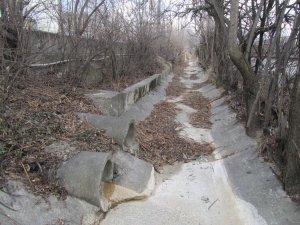
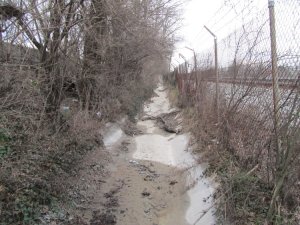
As the most recent progress report notes, the agency has combined Phases C & D. This is the longest and the most complicated portion of the trail, going from Bates Road to 1st Place NE. Part of it will wrap around the Fort Totten metro station tunnel. There have been some concerns that DDOT does not have approval from Metro for this part yet. That is because it is still in the design phase, and Metro is reviewing that part of the plan to make sure everything is okay. Things like what kind and weight of construction equipment will be near the tunnel, adequate plans to properly protect the tunnel during construction operation, are all things that Metro is looking at. In addition, the middle portion will be built close to the train tracks in essentially what is a ditch. That ditch apparently carries stormwater from the Aggregate Industries cement plant. If DDOT is going to cover that ditch with a trail, DDOT will need to have an appropriate stormwater plan in place, so that also needs to be addressed in the design. The design is mostly done, and DDOT does not expect issues with getting the final design approved. Mr. Alvino said he expects construction on this phase to begin around summer 2019.

Mr. Alvino noted that the contractor is behind schedule, but he did state that the project is still on track to be completed in 2020. Expect a visit from DDOT’s team to the neighborhood early next year to discuss the impacts on the northern end near Fort Totten metro station. Until then, be sure to visit the project website for weekly updates.