
On September 24, 2015, the Lamond-Riggs Citizens Association teamed up with DC’s Office of Planning and Streetsense to host “Vibrant Retail Streets – Fort Totten.” This post is the first in a three-part series providing a recap of the presentation. (A brief synopsis was provided on the listserv). Fort Totten is one of eight commercial areas in which OP and Streetsense are offering technical assistance to promote vibrant and sustainable retail options. This meeting was one part of their technical assistance and was designed to give residents the vocabulary, data, and tools to be able to champion our own vibrant streets. The Vibrant Street boundary selected for this neighborhood is Riggs Road NE between South Dakota/3rd Street and Chillum Place NE with a second node on South Dakota Avenue NE between Galloway Street NE and Kennedy Street NE. A copy of their presentation is available here: Fort Totten – Application of DC Vibrant Retail Streets (pdf).
Why we want Vibrant Streets
In the words of OP and Streetsense, the purpose of the Vibrant Streets toolkit is “to give every neighborhood the necessary tools to create a Vibrant Street of their own, regardless of population, ethnic composition, location, income, or budget.” Streetsense began the presentation by noting that retail is fundamentally a commercial activity. It has to make money and it has to be sustainable. With that, OP and Streetsense outlined several attributes that successful vibrant streets share:
(1) Managed by a civic/nonprofit or merchant association;
(2) Retail-appropriate spaces like transparent storefronts and wide sidewalks;
(3) Mix of tenants;
(4) Safe as perceived by shoppers and pedestrians;
(5) Championed by private and/or public sectors;
(6) Anchored by a cultural feature that attracts people for a non-commercial use;
(7) Walkable as part of a walkable community; and
(8) Unified by a common character.
Steps one through four are the most important steps, with step one being the most significant in their view. There should be some entity (a civic association, business association, committee, something) that has the sole purpose of engaging residents in the retail process and creating dialogue among residents, retailers, public sector officials, and other stakeholders.
Fort Totten Retail Market Analysis: Supply & Demand
The second part of the technical assistance Streetsense and OP offered was a mini market assessment of the Fort Totten area. They presented their preliminary analysis at the meeting. A market analysis was done because the neighborhood is changing rapidly and most of the retail is coming online around the same time in the near future. Therefore, we wanted to have a more realistic picture of what retail could legitimately be supported by the neighborhood in the next three to five years. We also wanted to know what impact the Walmart would have on retail activity.
In a nutshell, Streetsense looked at current consumption patterns in the neighborhood and projected future consumption patterns based on a similar neighborhood with the density this neighborhood is expected to have.
There are three large-scale projects planned or under construction.
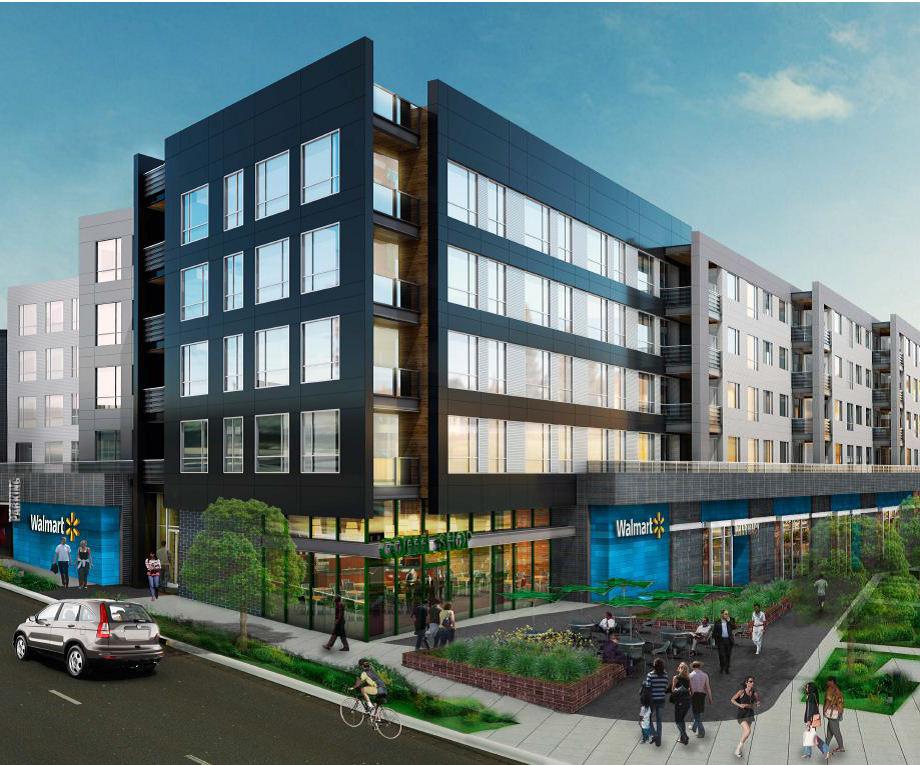
1. Fort Totten Square
- Phase 1: 345 apartments; 130,000 square feet of retail, including approximately 120,000 square foot Walmart (opening in the next couple of months)
- Phase II (Proposed): 170 townhomes; 27,000 square feet of retail
2. Art Place at Fort Totten
- 1st phase: 500 apartments; 100,000 square feet of retail (scheduled for 2017)
- Ultimately 920 apartments; 300,000 square feet of retail; children’s museum; cultural/art spaces
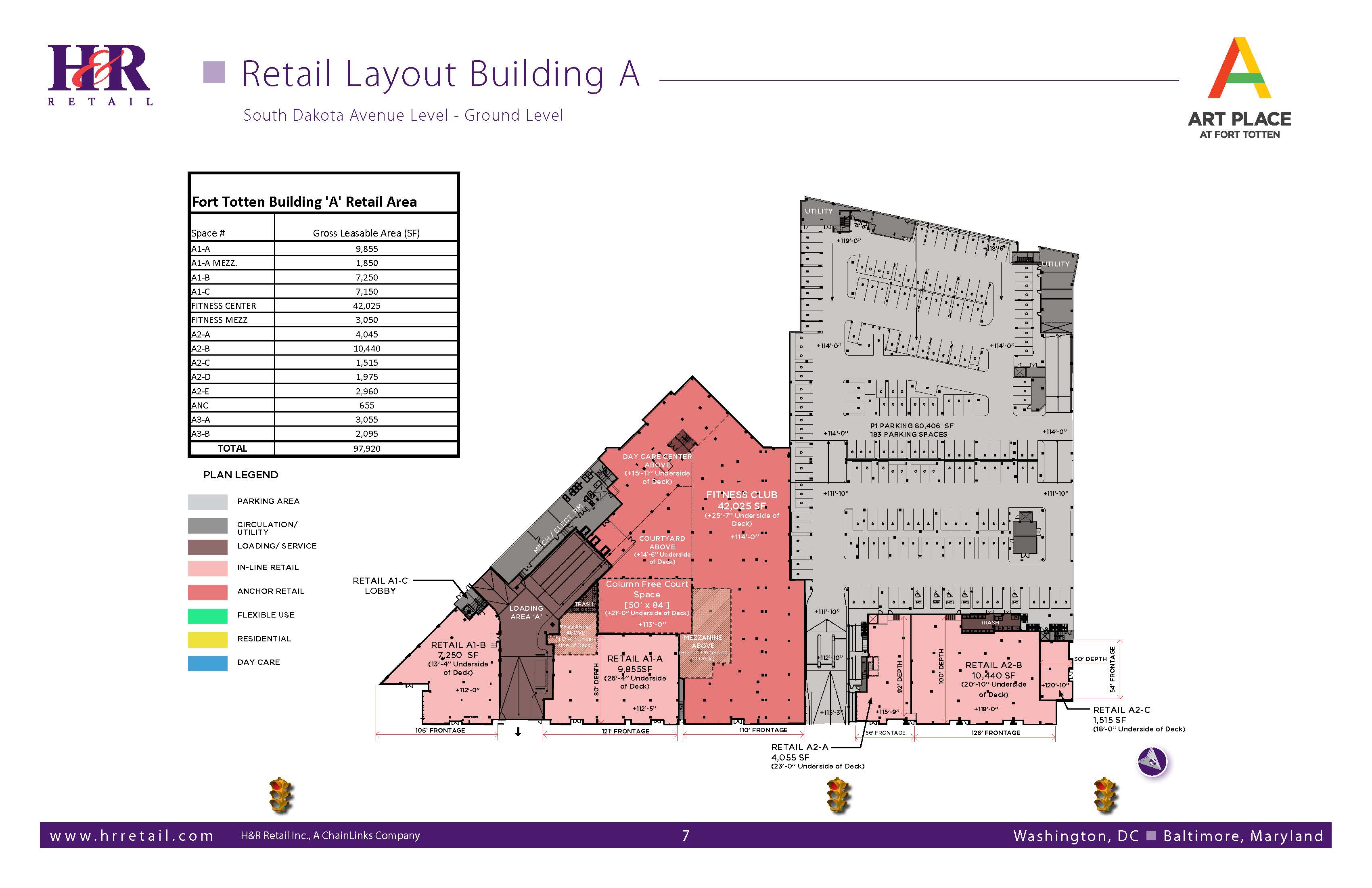
Art Place Building A Site Plan, South Dakota Ave
3. Fort Totten metro/Donatelli
- 345 apartments; 10,000 square feet of retail (scheduled for 2017)

Existing retail demand totals 277,200 square feet. Additional demand created by new residents from new development totals 32,000 square feet for a subtotal of 309,200 square feet of new retail demand.
Streetsense noted the commercial node around South Dakota Avenue and Riggs Road creates an east-west trade area that is somewhat unique in DC and is almost shaped like a star, which creates trade areas in several directions. That said, the market analysis found that there will be some competitive pressure from Brookland (retail activity spurred by Monroe Street Market); the Walmart on Georgia Avenue NW; Petworth (clusters just north of Petworth metro station); Hyattsville (Arts District); and Prince George’s Plaza.
Walmart Effect
Walmart throws a monkey wrench into the supply-demand analysis. Streetsense determined that Walmart will create a larger trade area (called a tertiary trade area) that will draw more people into the neighborhood. This will increase the retail demand, so Streetsense calculated a revised total retail demand of 440,200 square feet.
Existing retail demand: 277,200 square feet
Projected total retail demand: 440,200 square feet
At the same time, Walmart will have an impact on what kind of retail can be sustainably supplied in the future. Here we will get a little technical. Streetsense calculated the retail demand as follows:
- 54% for Neighborhood Goods & Services (think basic needs like grocery, pharmacy, florist, dry cleaners, hair salon, wine/liquor store). NG&S is supported by regular, multiple trips within a small trade area (less than 1 mile).
- 18% for Food & Beverage (think dining out). Food and beverage retailers rely on a larger trade area than neighborhood good retailers (1-3 miles).
- 28% for General merchandise, Apparel, Furnishings, & Other (GAFO). GAFO is supported by even fewer trips from an even larger trade area (for example, clothing, hardware, pet, furniture, electronics, office supply, toy, home décor, jewelry stores).
Walmart will supply a sizable portion of the General Merchandise demand (but not all) as well as a small portion of the Neighborhood Goods demand. We also know that Subway and Five Guys have signed leases, so those will supply a small portion of the Food & Beverage demand.
Positive News for the Retail Market
Ultimately the preliminary analysis provides positive news for the retail market. The types of retailers that Streetsense concludes can be sustainably supported by the neighborhood is great news for those residents who have been clamoring for more retail.
Suggested tenant mix provided by Streetsense:
- General merchandise (GAFO):
- A few small shops
- Possibly junior anchor
- Neighborhood Goods/Services:
- Gourmet/organic grocery store
- Children’s activity center (like a Gymboree)
- Drugstore/pharmacy
- Hair/nail salon
- Dry cleaner
- Food & Beverage:
- 1 – 3 full-service restaurants
- 5 – 7 quick service eateries
- 3 – 5 take-away service eateries
This list might contain a few surprises for some. In our neighborhood wish list, we suspected that there could be a market for a smaller organic grocery store in the neighborhood, so it is nice to see that view supported by the data. Also, the neighborhood is viewed by some as a majority elderly neighborhood when it is not. There are plenty of families with young children in the neighborhood and plenty more moving in, so there is a market for a children’s activity center in the neighborhood.
Keep in mind, this analysis was done by Streetsense, so this is just one view from one retail brokerage firm. Streetsense is not a broker for any of the neighborhood projects though so we can trust that the data comes from a disinterested party.
In the next two posts in this series, we will look at suggestions made for ways to impact retail attraction and forming a retail organization.
 Next Stop...Riggs Park